
 YouTube
The tribe’s filing comes amid heightened attention to the Trump administration’s aggressive anti-immigrant agenda. Government agents have brutalized Native people and have taken Native people into custody despite American Indians and Alaska Natives being citizens of the United States for more than a century. In Minneapolis, Minnesota, for example, several tribal citizens reportedly have been detained by Immigration and Customs Enforcement (ICE) agents. On Tuesday, the Oglala Sioux Tribe said it has been given only the first names of four Oglala citizens who were taken into custody as part of a violent — and deadly — immigration crackdown in a state where Native people make up about 1.2 percent of the population. According to the tribe, one of its citizens was released after being detained by ICE in Minnesota. But the others are reportedly being held at a federal facility in Fort Snelling, the same place where Native people were once held as prisoners prior to the hanging of 38 Dakota men in the largest single-day mass execution in U.S. history in December 1862. Two Dakota chiefs were later executed — at Fort Snelling. “The irony is not lost on us,” President Frank Star Comes Out said in a news release on Tuesday. “Lakota citizens who are reported to be held at Fort Snelling — a site forever tied to the Dakota 38+2 — underscores why treaty obligations and federal accountability matter today, not just in history.” “This is not a misunderstanding or an enforcement discretion issue,” Star Comes Out added. “This is a treaty violation.” “Treaties are not optional,” Star Comes Out said. “Sovereignty is not conditional. Our citizens are not negotiable.”"This is a treaty violation. Treaties are not optional. Sovereignty is not conditional. Our citizens are not negotiable": Oglala Sioux Tribe says at least four tribal citizens were detained by #ICE in Minnesota. One released but others still in custody, according to news release. pic.twitter.com/Ny8R5MsDmm
— indianz.com (@indianz) January 13, 2026
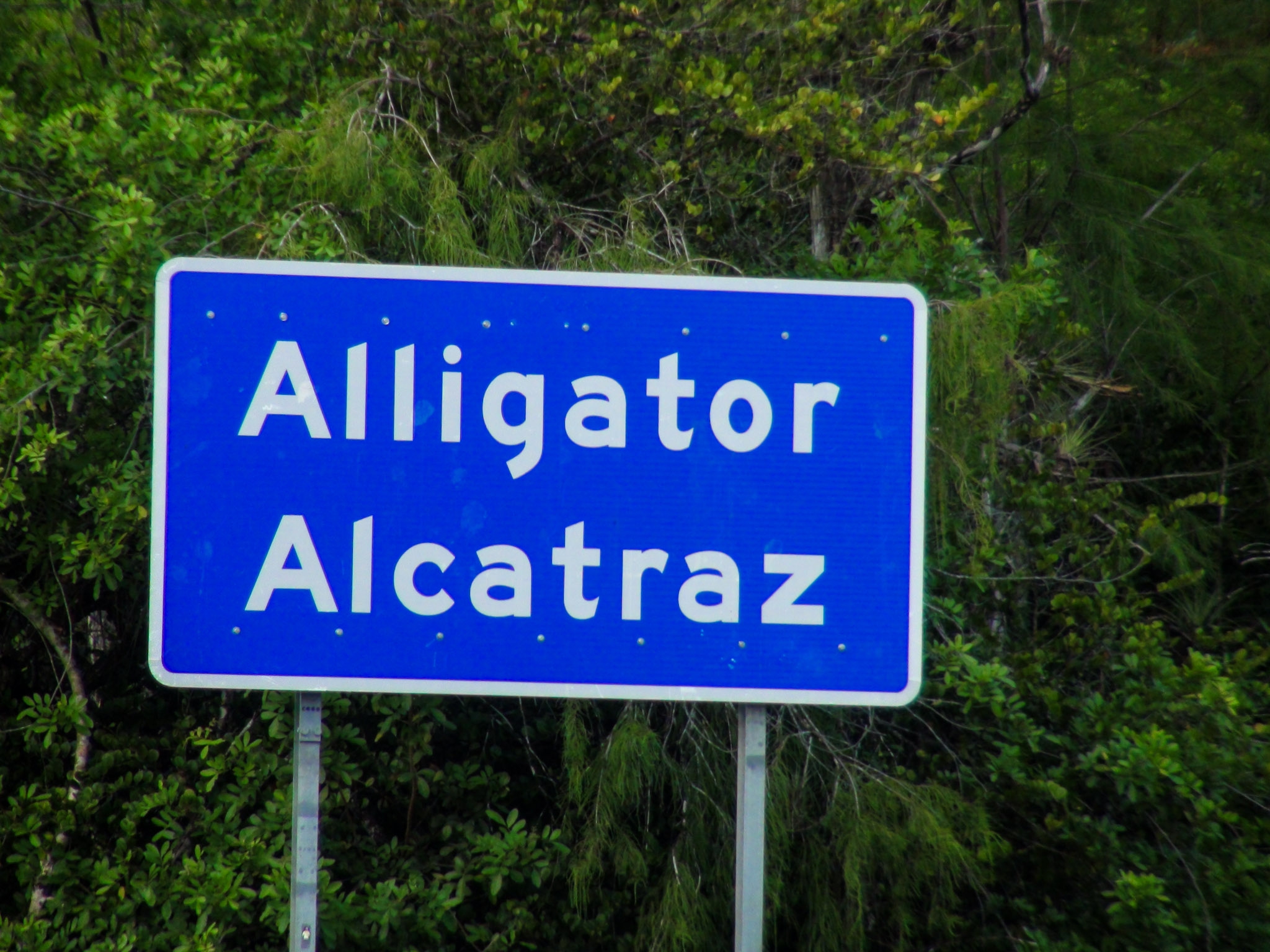
The Red Lake Nation has been just as blunt in addressing ICE on their homelands in Minnesota. According to the tribe, 8,000 Red Lake citizens live in the Minneapolis-St. Paul metropolitan area — with one Red Lake descendant having reported being dragged from a car by federal agents before being detained. According to ICT, 20-year-old Jose Roberto “Beto” Ramirez was sent to the ICE facility at Fort Snelling in the Twin Cities. “We all need to be extra careful, and we must assume that ICE will not protect us, the Red Lake Nation said in a statement on January 7. “In fact, we can assume that anyone associated with the Trump administration, especially ICE, is hostile to us and that ICE will only detain us, or hurt us.” The ongoing crackdown resulted in the killing of Renee Nicole Good, a non-Native woman, by an ICE agent on January 7. Lt. Governor Peggy Flanagan (D), a citizen of the White Earth Nation who is the highest-ranking Native woman in state executive office, is calling on the Trump administration to withdraw its presence in Minnesota “This is happening across the state of Minnesota — and it’s not OK,” said Flanagan, who is campaigning to be the first Native woman to serve in the U.S. Senate. Minnesota, which is home to 11 tribal nations, happens to led by Governor Tim Walz (D), who ran against Trump during the 2024 presidential election. Walz was the running mate of former U.S. vice president Kamala Harris, who was the Democratic nominee for president. In comparison, Florida Governor Ron DeSantis (R) has been far more friendly to Trump. Although Alligator Alcatraz is operated by the state, the federal government has provided significant funding for it — one of the many issues at contention in the lawsuit that the Miccosukee Tribe has joined. “To be sure, a state contractor that operates a federal prison retains day-to-day operational authority, but no one would suggest the prison is therefore not a federal facility,” the tribe points out in its brief. “What matters is whether the federal government exercises ‘substantial control and responsibility’ — not whether it micromanages every operational detail.” Along with environmental and conservation groups, the tribe secured a legal victory when a federal judge put a halt to the federal government’s involvement at Alligator Alcatraz. The 11th Circuit Court of Appeals, however, allowed work to continue without fully hearing the dispute on the merits. And while Alligator Alcatraz became operational last October, President Trump accused the tribe of hindering his immigration agenda. Without overtly citing the lawsuit, he said the Miccosukees “actively sought to obstruct reasonable immigration policies” when he vetoed a Republican-led bill that seeks to add a 30-acre tribal village known as the Osceola Camp to the Miccosukee Reservation in the Everglades of Florida. In addition to being sponsored by Republicans, H.R.504, the Miccosukee Reserved Area Amendments Act, has enjoyed broad bipartisan support. The bill passed the U.S. House of Representatives by a voice vote under a suspension of the rules, a process typically reserved for non-controversial legislation.Two Dakota chiefs were later hanged at Fort Snelling: "Lakota citizens who are reported to be held at Fort Snelling—a site forever tied to the Dakota 38+2-underscores why treaty obligations and federal accountability matter today, not just in history," says Oglala President.
— indianz.com (@indianz) January 13, 2026
Republicans, however, quickly abandoned the tribe and refused to stand up to Trump. Last Thursday, they failed to speak in support of overriding the veto on H.R.504 — not even Rep. Carlos Gimenez (R-Florida), the Republican sponsor of the bill, came to the floor of the House to explain, defend or promote the legislation. “No one voted against this bill,” observed Rep. Debbie Wasserman Schultz (D-Florida), who was seen rushing to the floor in hopes of reviving H.R.504. “This bill is entirely non-controversial and it is so narrowly focused that it makes absolutely no sense — other than the interest in vengeance that seems to have emanated in this result,” added Wasserman Schultz, accusing Trump of retribution for vetoing H.R.504. The only Republican who spoke about H.R.504 was Rep. Bruce Westerman (R-Arkansas), who chairs the House Committee on Natural Resources, which is the legislative panel with jurisdiction over Indian issues in the chamber. However, he did not encourage Republicans to override Trump’s veto or rebut the White House’s reasoning for rejecting the bill. “I respect the president’s views on this legislation and his commitment to fiscal responsibility,” Westerman said on January 8.FAILED! The Republican-led U.S. House of Representatives was unable to override the veto of H.R.504, the Miccosukee Reserved Area Amendments Act.
— indianz.com (@indianz) January 8, 2026
The roll call was 236 to 188, with the "Yea" votes falling short of the two-thirds need to override the veto. #HR504 #TribalHomelands pic.twitter.com/LMbt4K68tP

.jpg)
Chuck Hoskin: Cherokee Nation makes tribal government easy to reach
Native America Calling: Persistent heat puts strain on people, the environment, and the economy
Chuck Hoskin: Cherokee Nation creates opportunities close to home
Native America Calling: Increasing hurdles and uncertainty put strains on Native beef producers and farmers
Chuck Hoskin: Cherokee Nation keeps our language alive
‘Let’s go’: Peggy Flanagan wins Democratic primary for U.S. Senate seat in Minnesota
Native America Calling: Native Playlist with Thomas Michael Swensen and Debora Iyall
Native America Calling: Tribes face record-setting wildfire destruction
NAFOA: 5 Things You Need to Know This Week (August 10, 2026)
Chuck Hoskin: Cherokee Nation invests in tomorrow’s leaders
Native America Calling: August primary elections offer insights on Native candidates’ prospects
Native America Calling: Testing the limits of religious freedom in Indian Country
Native America Calling: When is it OK to let a Native language die?
NAFOA: 5 Things You Need to Know This Week (August 3, 2026)
More Headlines