Indianz.Com >
News > ‘We’re here too late’: Indian Country slams changes to education programs
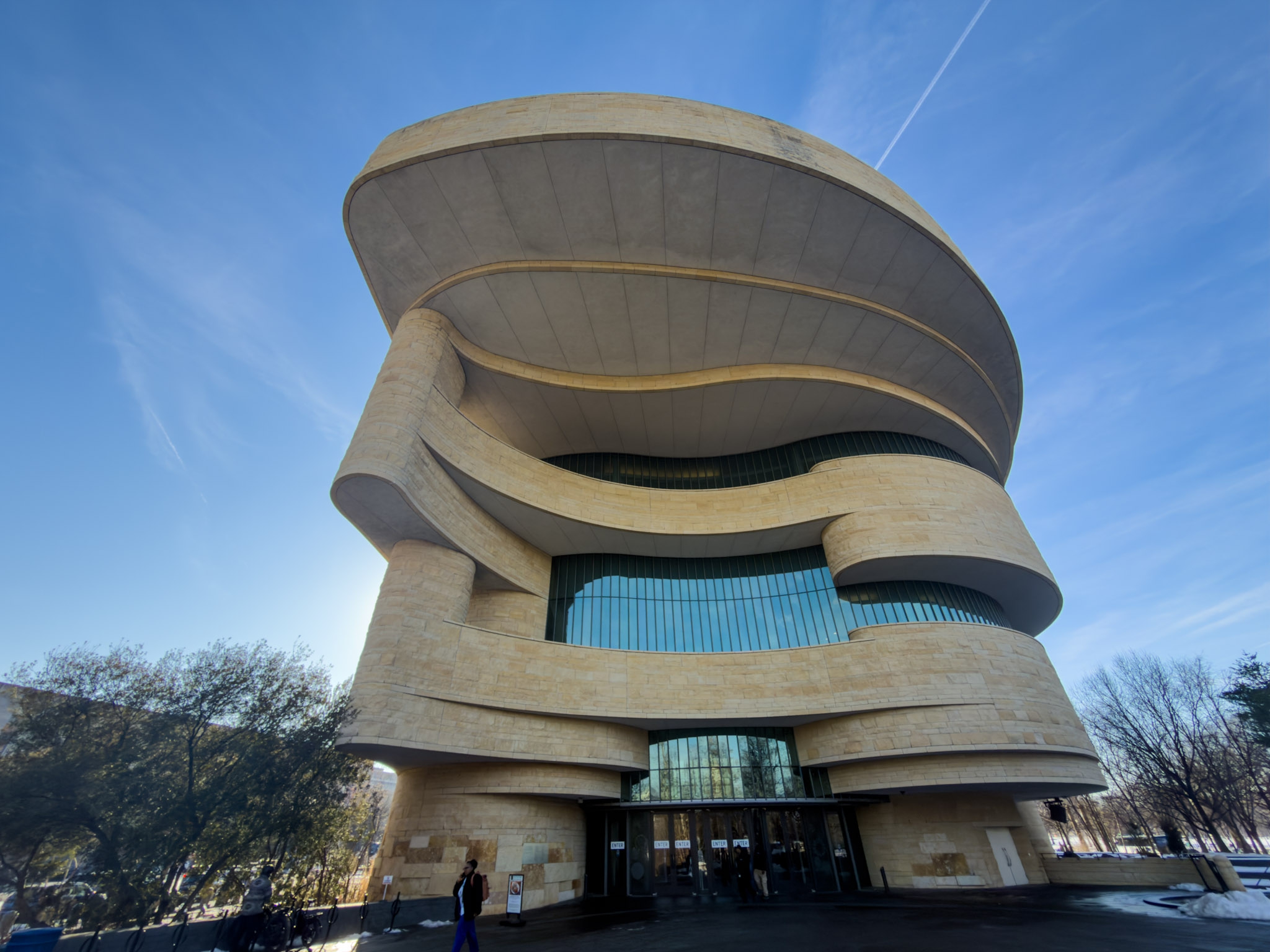 The National Museum of the American Indian is seen on the National Mall in Washington, D.C., on February 10, 2026. Photo by Indianz.Com (CC BY-NC-SA 4.0)
‘We’re here too late’: Indian Country slams changes to education programs
Tuesday, February 10, 2026
By Acee Agoyo
Indianz.Com
WASHINGTON, D.C. —
A
controversial restructuring of Indian education programs is moving forward at the national level despite widespread opposition from tribes and educators.
With the
Department of Education being dismantled, the
Department of the Interior has agreed to take over a number of key programs affecting nearly half a million American Indian and Alaska Native public school students. The
Department of Labor is also planning to take over some high-profile initiatives, including about $1.6 billion in
Impact Act funding for schools.
But at a heavily-attended tribal consultation in the nation’s capital on Tuesday, tribes and educators voiced outrage at the changes. A major complaint focused on the fact that the
Trump administration already signed agreements to implement the restructuring without informing Indian Country.
“I have to be frank,” observed Principal Chief Chuck Hoskin, Jr. of the Cherokee Nation, one of the two largest tribes in the United States. “We’re here too late.”
“The agreements have been developed and are at the execution stage,” Hoskin said to applause at the
National Museum of the American Indian in Washington, D.C.
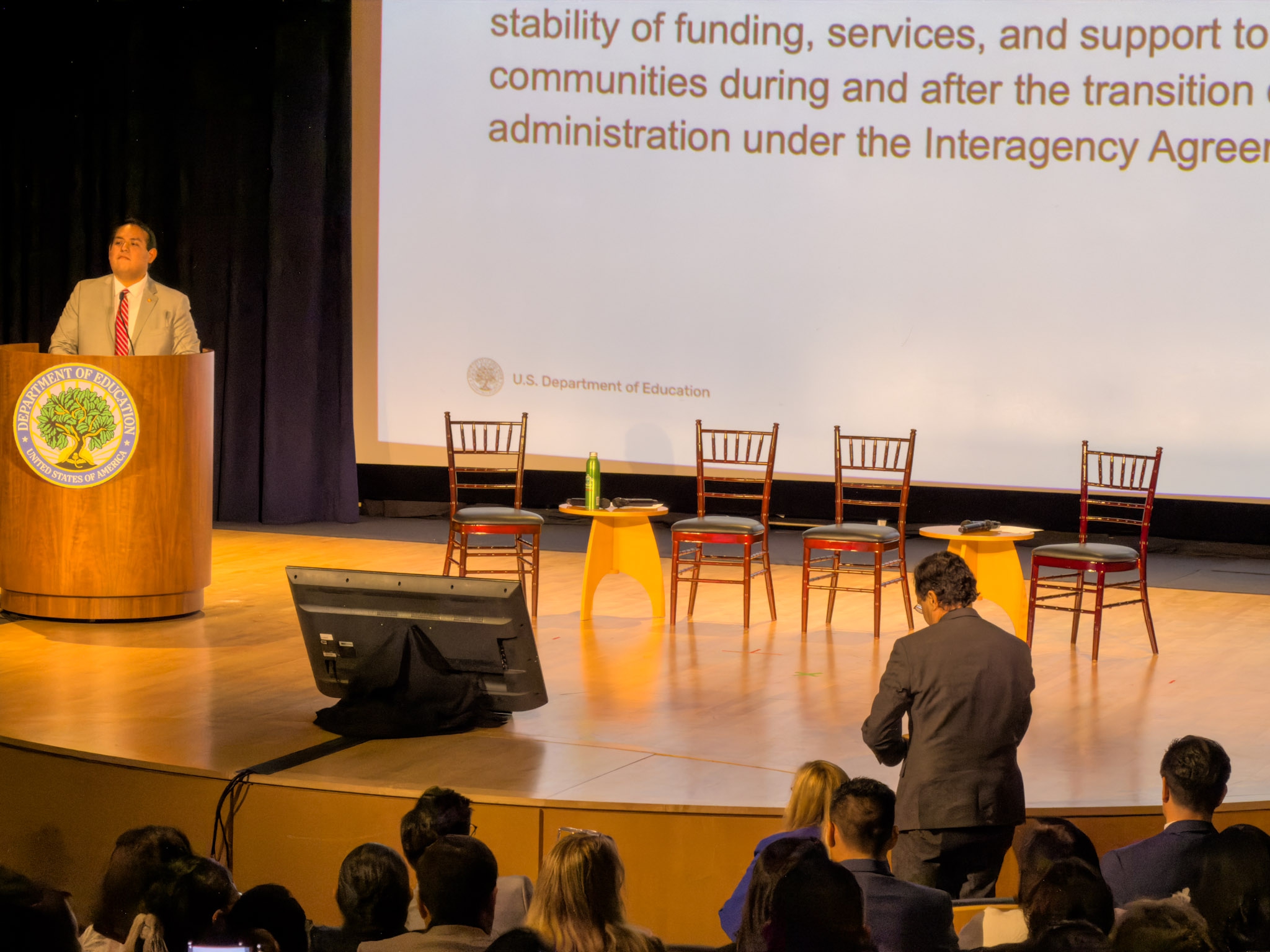 Principal Chief Chuck Hoskin Jr. of the Cherokee Nation, standing at right, provides comments at a tribal consultation on Indian education while Julian Guerrero, Jr., Director of the Office of Indian Education, looks on at the National Museum of the American Indian in Washington, D.C., on February 10, 2026. Photo by Indianz.Com (CC BY-NC-SA 4.0)
Hoskin’s comments were the first at the consultation and they set the tone for the hours-long meeting. More than 1,000 tribal leaders and Native educators signed up for the session, which is the only one scheduled for such a major federal undertaking.
“
Executive Order 13175 requires timely and meaningful tribal consultation,” said Vice President Richelle Montoya of the
Navajo Nation, the other largest tribe in the U.S., citing a decades-old
policy requiring government-to-government talks whenever decisions affect Indian programs.
“Yet the
November 2025 announcement to transfer more than two dozen Native education programs was made without consultation,” said Montoya, whose students and educational institutions span the states of Arizona, New Mexico and Utah.
As a result of the lapse in coordination, a number of tribal and education leaders refused to accept the session on Tuesday as a true consultation. Several called on the Trump administration to put a halt to the restructuring in order to provide Indian Country with a chance at being true partners in the initiative.
“
Crow Creek Sioux Tribe opposes this format today and does not consider this robust and meaningful consultation,” Chairman Peter Lengkeek said to applause.
“You are holding the future of our nations within your hands,” said Lengkeek, who also serves as chair of the school board on his tribe’s reservation in South Dakota. “We do not take this lightly.”
To correct the oversight, Lengkeek and other leaders called on the Departments of Education, Interior and Labor to meet with tribes at the regional level to discuss the changes, which affect everything from elementary schools to tribal colleges and universities. Currently, the only other method of participation is to submit written comments by March 12.
“This is not meaningful consultation,” said
Prairie Band Potawatomi Nation Chairman Joseph Rupnick, who also serves on the board of regents for
Haskell Indian Nations University, a federally-operated tribal college in Kansas.
“This should have been done well before we got to these IAAs,” said Rupnick, referencing the interagency agreements that were initially signed by the three Cabinet departments last September — two months before they were
made public in November and more than three months before
Tuesday’s consultation was scheduled.
And while Interior is the Cabinet department with the most trust and treaty obligations, tribal representatives said the
Bureau of Indian Education (BIE) lacks the ability to take on new programs and run them in a successful manner. A number of comments focused on the impacts on higher-level institutions.
“Institutional knowledge cannot be lost in transition,” said Eugene DeCora Sr., a council member from the
Winnebago Tribe, which operates
Little Priest Tribal College in Nebraska. “BIE currently only has three officials managing post-secondary education and does not have the capacity to absorb additional grants.”
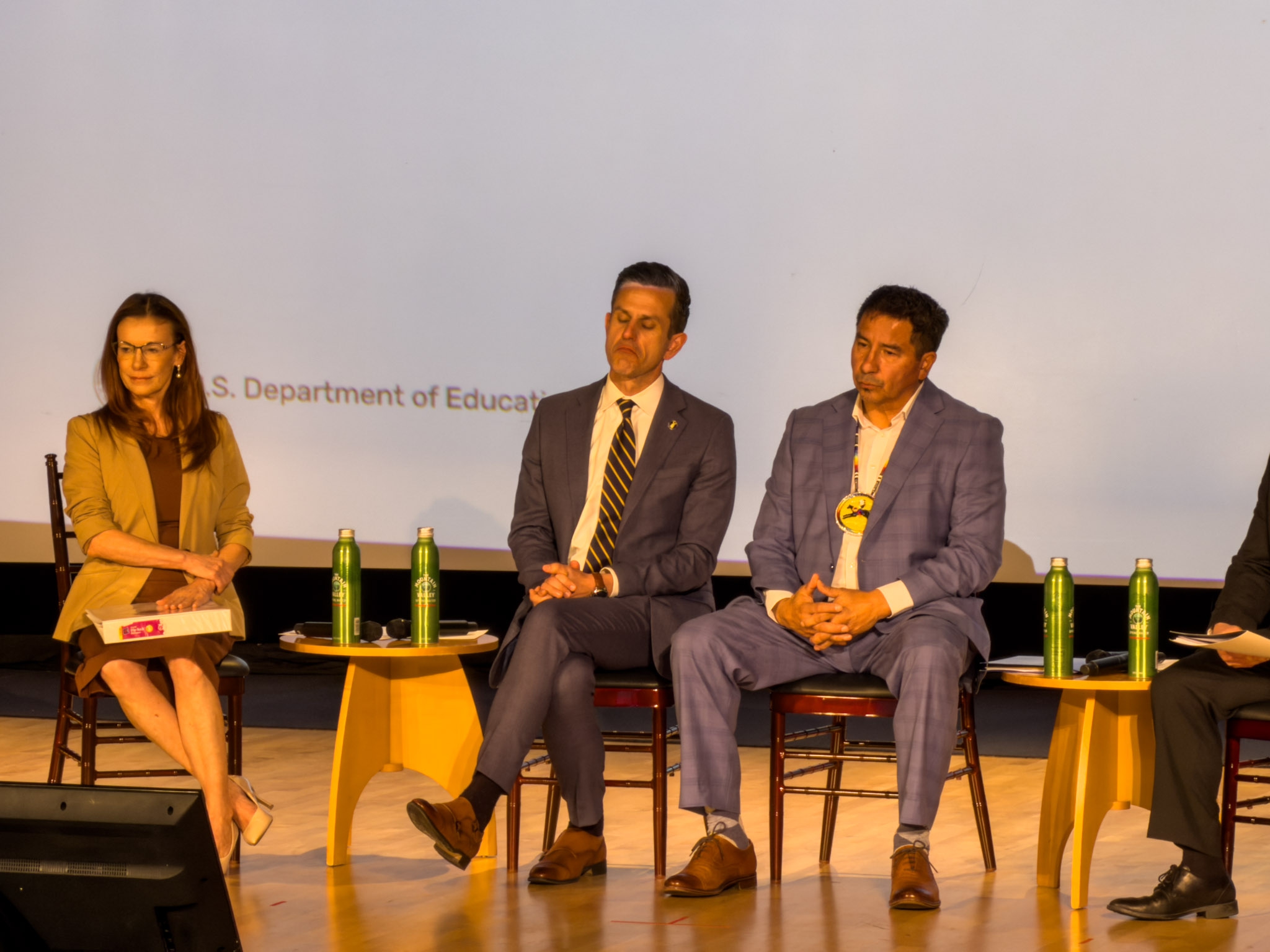 From left: Assistant Secretary for Elementary and Secondary Education at the Department of Education Kirsten Baesler, Assistant Secretary for Employment and Training at the Department of Labor Dr. Henry Mack and Deputy Assistant Secretary for Indian Affairs at the Department of the Interior participate in a tribal consultation at the National Museum of the American Indian in Washington, D.C., on February 10, 2026. Photo by Indianz.Com (CC BY-NC-SA 4.0)
At the onset of the session, officials from Education, Interior and Labor insisted they were present in order to hear from tribes and accept feedback. Two representatives from Interior attended — though Billy Kirkland, the Assistant Secretary for Indian Affairs, was not there.
The interagency agreement between Education and Interior, in fact, was executed on September 30, 2025, about a week before Kirkland, a citizen of the Navajo Nation, was confirmed to his post by the U.S. Senate. After he came on board, he signed a small addendum to the document on January 9, 2026. The
tribal consultation was announced on the same day.
“The Department of the Interior is committed to delivering education programs that produce results for Native students,” Kirkland said in the announcement. “Consultation strengthens coordination and helps shape decisions affecting Native education. We are excited to work with tribes to improve program delivery, enforce accountability, and drive measurable outcomes for Native students.”
Assistant Secretary for Elementary and Secondary Education Kirsten Baesle and
Assistant Secretary for Employment and Training Dr. Henry Mack provided remarks at the start of the consultation. So did Scott Davis, the
Deputy Assistant Secretary for Indian Affairs at Interior, and Tony Dearman, the
Director of the BIE at Interior.
Davis, a citizen of the Standing Rock Sioux Tribe, has a background in education, having worked in numerous roles at Indian schools and at the United Tribes Technical College in his home state of North Dakota. He confirmed to the crowd that he learned about the restructuring last year, when he was serving as the “acting” Assistant Secretary for Indian Affairs, before Kirkland officially joined the Trump administration.
“When they handed me a booklet, if you will, of the Department of Education functions, I’m like, ‘Wow, this is pretty exciting,'” Davis said of his reaction at the time. “But I knew it’d be complicated.”
“So I talked to my good colleague here, Director Dearman, about what this is going to look like,” continued Davis. “So here we are on this path together.”
The
BIE provides education for about 40,000 students at 183 elementary and secondary schools on 64 reservations in 23 states. When it comes to post-secondary, the agency operates Haskell in Kansas and the Southwestern Indian Polytechnic Institute in New Mexico, and provides funding to 29 tribal colleges and two tribally-controlled technical colleges.
“Our focus today is making sure that strong, uninterrupted support to our students and our schools continues,” noted Dearman, a citizen of the Cherokee Nation.
“We want to make sure that nothing’s interrupted through this transition.”
“Today is about listening,” Dearman said, adding that “tribal input will shape how we move forward and ensure implementation reflects the realities and the strengths of our schools and the communities that we serve.”
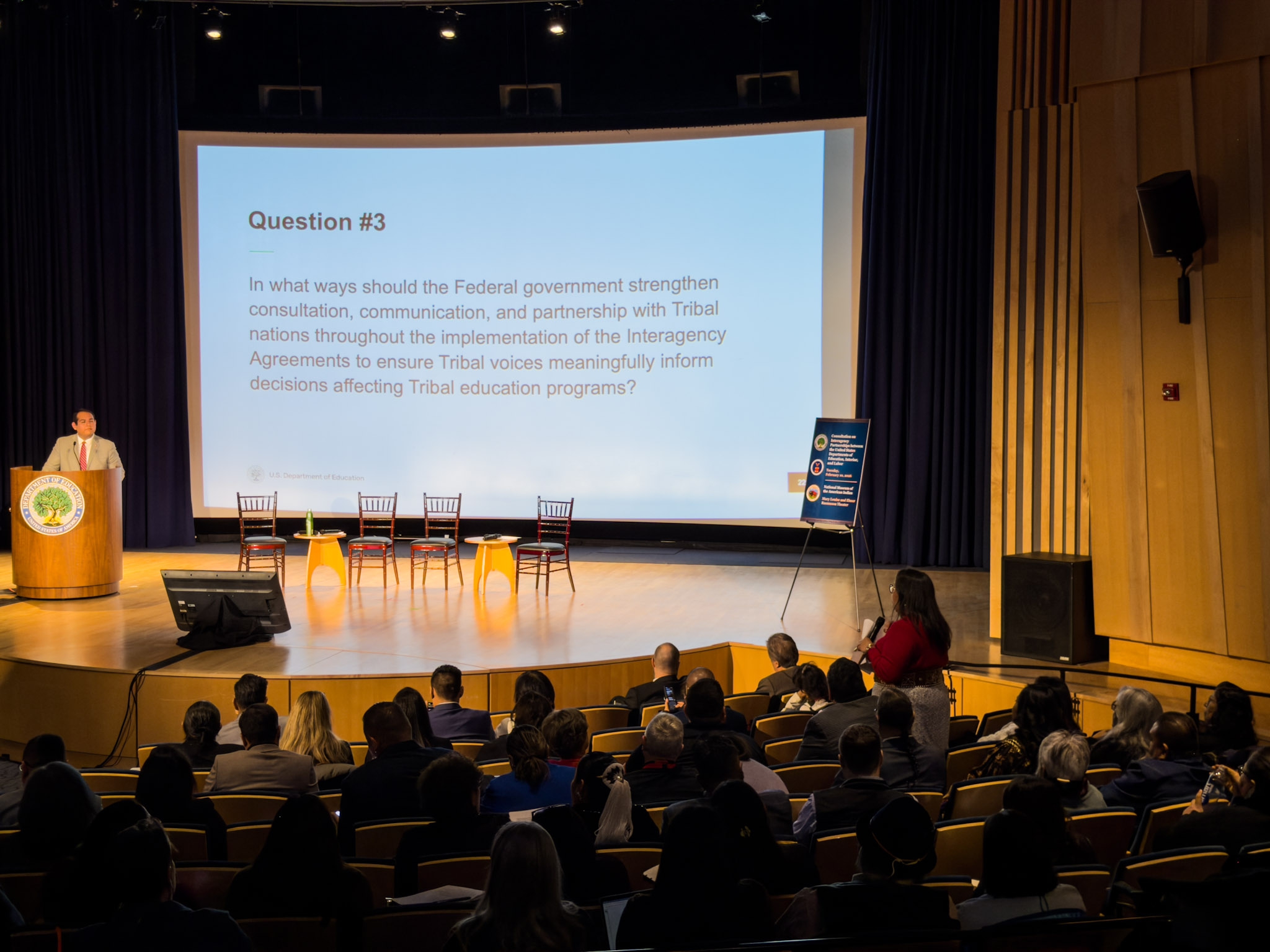 President Thora Padilla of the Mescalero Apache Tribe, standing on right with microphone, addresses a stage with empty chairs at the National Museum of the American Indian in Washington, D.C., on February 10, 2026. Photo by Indianz.Com (CC BY-NC-SA 4.0)
But by the time the consultation portion started, all of the government officials with decision-making authority had left the stage so tribal leaders and educators ended up talking to empty chairs on the stage of the Rasmuson Theater at NMAI.
“Consultation must included accountability — and feedback loops,” said President Thora Padilla of the Mescalero Apache Tribe in New Mexico. “Tribal input must be visibly connected to outcomes.”
“Meaningful consultation is not demonstrated by the number of meetings held, but whether tribal voices shape decisions,” added Padilla, who said the federal government was attempting to substitute quantity for quality when it comes to nation-to-nation engagement.
The vast majority of American Indians and Alaska Natives — about 93 percent — attend public schools across the nation, coming to about 459,000 students,
according to the National Indian Education Association (NIEA). When Native Hawaiians and Pacific Islanders are included, the figure jumps to about 639,000 students.
According to NIEA, five states have the largest proportions of American Indians and Alaska Natives in public schools: Alaska (22 percent), Oklahoma (12 percent), Montana (11 percent), South Dakota (10.7 percent), and New Mexico (10.3 percent). Tribal leaders and education representatives from all five states participated in the consultation on Tuesday, both in person and virtually.
The session was moderated by
Julian Guerrero, Jr., a citizen of the Comanche Nation who serves as Director of the
Office of Indian Education at the Department of Education.
His office is being transferred to the Department of the Interior as part of the restructuring.
According to
testimony provided by NIEA to the Senate Committee on Indian Affairs, seven of the nine employees at the Office of Indian Education were “terminated” on October 29, 2025. The reductions in force happened on the same day as a
Senate hearing on the shutdown of the federal government, which ended up being the longest in U.S. history.
The 119th Congress ended up passing an appropriations bill that directed the executive branch to “rescind” any reductions in force notices that had been issued during the shutdown, or between October 1, 2025, and November 12, 2025.
The Office of Indian Education is currently part of the
Office of Elementary and Secondary Education, which is overseen by Assistant Secretary Baesle, the official who attended the consultation on Tuesday. She is scheduled to address the
National Congress of American Indians executive council winter session in D.C. on Wednesday.
National Congress of American Indians Executive Council Winter Session in Washington, D.C.