
 YouTube
 Tribal and Pueblo governments, elected officials and conservation groups last week intensified calls for federal officials to limit the areas surrounding Chaco Canyon from further oil and gas development.
Situated in the Mancos Shale formation in the San Juan Basin, Chaco Canyon holds paramount spiritual and cultural significance to several New Mexico Pueblos, the Hopi Indians of Arizona and the Navajo Nation.
Since the Trump Administration took office, the federal government has moved to reverse a Biden administration policy — Public Land Order No. 7923 — that banned further oil and gas development on federal lands within 10 miles of the historic site for 20 years. This includes a Republican-backed bill in Congress to terminate the order.

 Source New Mexico
 On June 17, The National Congress of American Indians, a congress of American Indians and Alaska Natives, adopted a resolution calling on Congress to ratify federal legislation from the New Mexico’ delegation to make the withdrawal permanent. The resolution further called on the U.S. Interior Department to complete a study looking at the area’s resources and consult with tribal governments before any final decision is made.
The buffer zone policy was hard-won, said Pueblo of Acoma Governor Charles Riley, who carried the resolution in the National Congress of American Indians.
“Over a thousand years ago, our Pueblo ancestors called Chaco Canyon and the Greater Chaco Region home, creating one of the most magnificent civilizations in North America,” Riley said in a written statement this week. “Today, we stand at a crossroads where we must choose between short-term energy profits and the permanent preservation of our most sacred ancestral homeland. The choice is clear – we cannot allow the desecration of this World Heritage Site for minimal energy gains.”
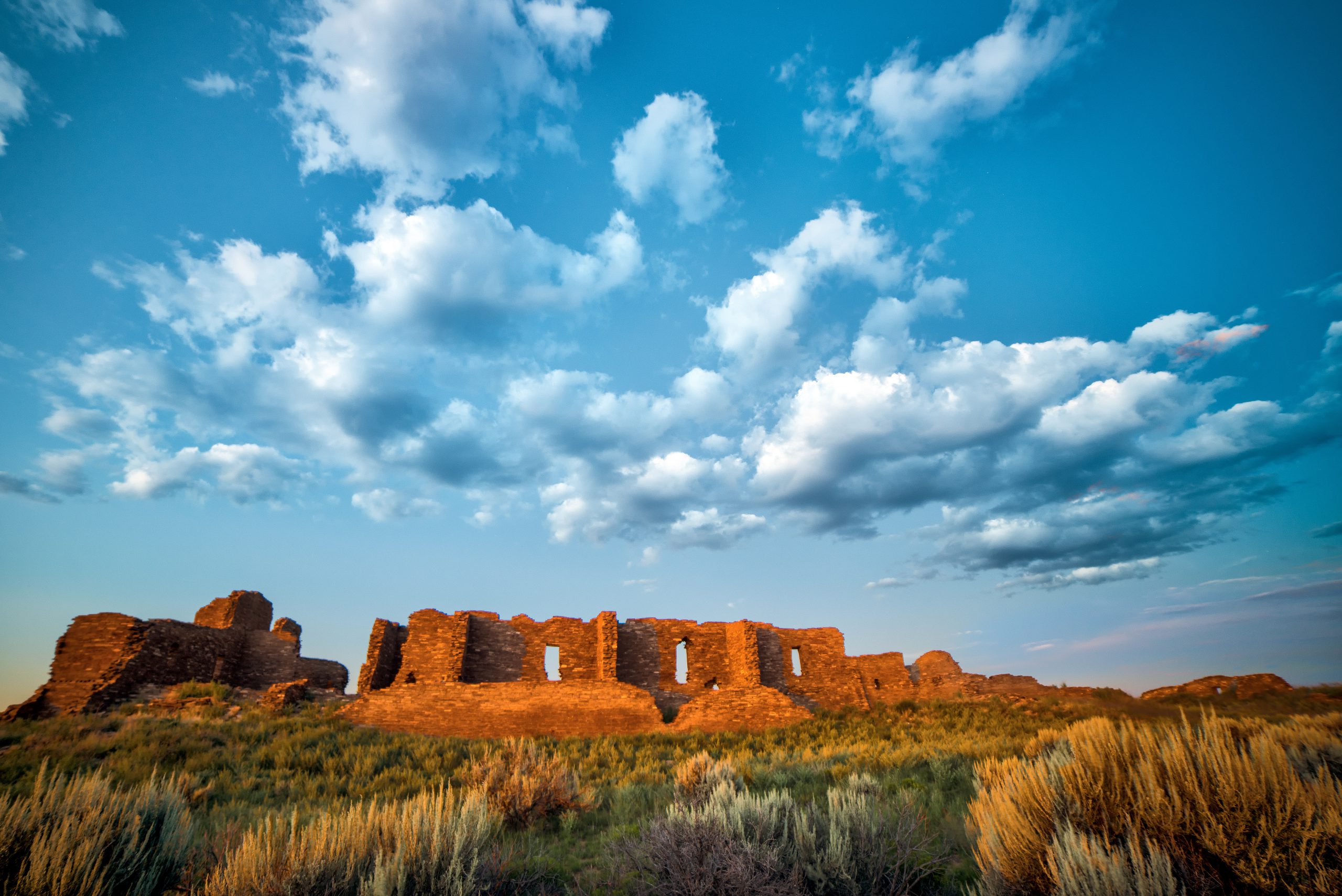
A coalition of more than two dozen conservation, Indigenous and historical preservation groups and 38 members of local and state government also this week submitted letters to U.S. Interior Secretary Doug Burgum, urging him to reverse course on removing the buffer zone.
“Chaco Canyon transcends politics—it is a place of reverence that is beloved throughout our nation,” the letter reads. “The 20-year mineral withdrawal represents years of careful tribal consultation, a triballyled ethnographic study, collaborative design, and thoughtful balancing of multiple uses. It provides essential protection for sacred sites and cultural resources while respecting Tribal sovereignty and development rights.”
This story originally appeared on Source New Mexico on June 26, 2025. It is published under a Creative Commons license (CC BY-ND 4.0).
Source New Mexico is part of States Newsroom, a nonprofit news network supported by grants and a coalition of donors as a 501c(3) public charity. Source New Mexico maintains editorial independence. Contact Editor Julia Goldberg for questions: info@sourcenm.com.
Testimony: Stephanie Bryan, Poarch Band of Creek Indians
Testimony: Michell Hicks, Eastern Band of Cherokee Indians
Testimony: Mark Macarro, Pechanga Band of Indians
Testimony: Patricia Leach, Catawba Nation
Testimony: Bryan Mercier, Bureau of Indian Affairs
Senate Committee on Indian Affairs holds business meeting and legislative hearing
Native America Calling: How Indigenous voices adapt to rapidly-evolving media
Native America Calling: PBS documentary ‘Knowledge Keepers’ explores Native scientific innovations
Testimony: Alicia Puente Cackley, Government Accountability Office
Testimony: Hilary Atkin, Department of Housing and Urban Development
Testimony: Bryan Warner, Cherokee Nation
VIDEO: H.R.741 – Stronger Engagement for Indian Health Needs Act of 2025
VIDEO: H.R.6021 – Archie Cavanaugh Migratory Bird Treaty Clarification Act
Senate Committee on Indian Affairs takes up Native housing
More Headlines