Tribal and Pueblo governments, elected officials and conservation groups last week intensified calls for federal officials to limit the areas surrounding Chaco Canyon from further oil and gas development.
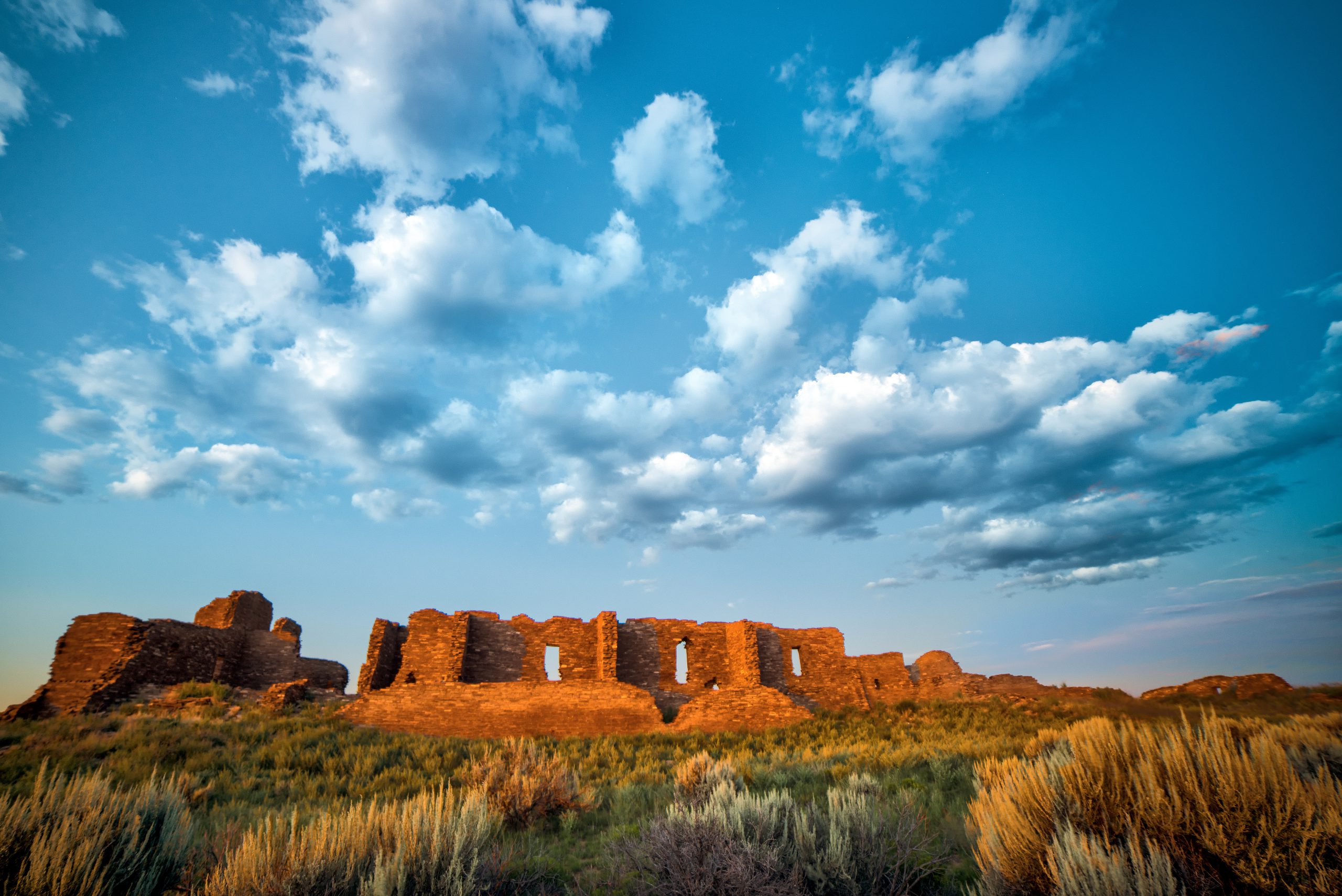
Situated in the Mancos Shale formation in the San Juan Basin, Chaco Canyon holds paramount spiritual and cultural significance to several New Mexico Pueblos, the Hopi Indians of Arizona and the Navajo Nation.
Since the Trump Administration took office, the federal government has moved to reverse a Biden administration policy — Public Land Order No. 7923 — that banned further oil and gas development on federal lands within 10 miles of the historic site for 20 years. This includes a Republican-backed bill in Congress to terminate the order.

On June 17, The National Congress of American Indians, a congress of American Indians and Alaska Natives, adopted a resolution calling on Congress to ratify federal legislation from the New Mexico’ delegation to make the withdrawal permanent. The resolution further called on the U.S. Interior Department to complete a study looking at the area’s resources and consult with tribal governments before any final decision is made.
The buffer zone policy was hard-won, said Pueblo of Acoma Governor Charles Riley, who carried the resolution in the National Congress of American Indians.
“Over a thousand years ago, our Pueblo ancestors called Chaco Canyon and the Greater Chaco Region home, creating one of the most magnificent civilizations in North America,” Riley said in a written statement this week. “Today, we stand at a crossroads where we must choose between short-term energy profits and the permanent preservation of our most sacred ancestral homeland. The choice is clear – we cannot allow the desecration of this World Heritage Site for minimal energy gains.”
A coalition of more than two dozen conservation, Indigenous and historical preservation groups and 38 members of local and state government also this week submitted letters to U.S. Interior Secretary Doug Burgum, urging him to reverse course on removing the buffer zone.
“Chaco Canyon transcends politics—it is a place of reverence that is beloved throughout our nation,” the letter reads. “The 20-year mineral withdrawal represents years of careful tribal consultation, a triballyled ethnographic study, collaborative design, and thoughtful balancing of multiple uses. It provides essential protection for sacred sites and cultural resources while respecting Tribal sovereignty and development rights.”
This story originally appeared on Source New Mexico on June 26, 2025. It is published under a Creative Commons license (CC BY-ND 4.0).
Source New Mexico is part of States Newsroom, a nonprofit news network supported by grants and a coalition of donors as a 501c(3) public charity. Source New Mexico maintains editorial independence. Contact Editor Julia Goldberg for questions: info@sourcenm.com.
Native America Calling: Heard Museum art fair and Native culture in miniature
Native America Calling: Taxes, roads, and law enforcement: how tribes are asserting their sovereign rights
Native America Calling: Fighting to preserve hard-won gains in K-12 lessons about Native Americans
Press Release: Sovereignty Symposium XXXVIII set for June 2026 in Oklahoma
Native America Calling: Proximity and family outreach hold promise for tribal addiction treatment
House of Representatives set to take action on Indian Country bills
House Subcommittee on Indian and Insular Affairs sets hearing on three bills
NAFOA: 5 Things You Need to Know This Week (March 2, 2026)
Tom Cole: Getting ready for another storm season
Chuck Hoskin: Cherokee Nation builds a stronger future
Native America Calling: Native crews help solve the growing marine trash problem
Native America Calling: Native Playlist with Cary Morin and Status/Non-Status
Native America Calling: Native Hawaiians work to save birds with rich ecological and cultural significance
Native America Calling: Commod Bods, a standout frybread stand and Afro-Indigenous mutual aid
More Headlines