Indianz.Com > News > Aaron Payment: Investing in infrastructure in Indian Country
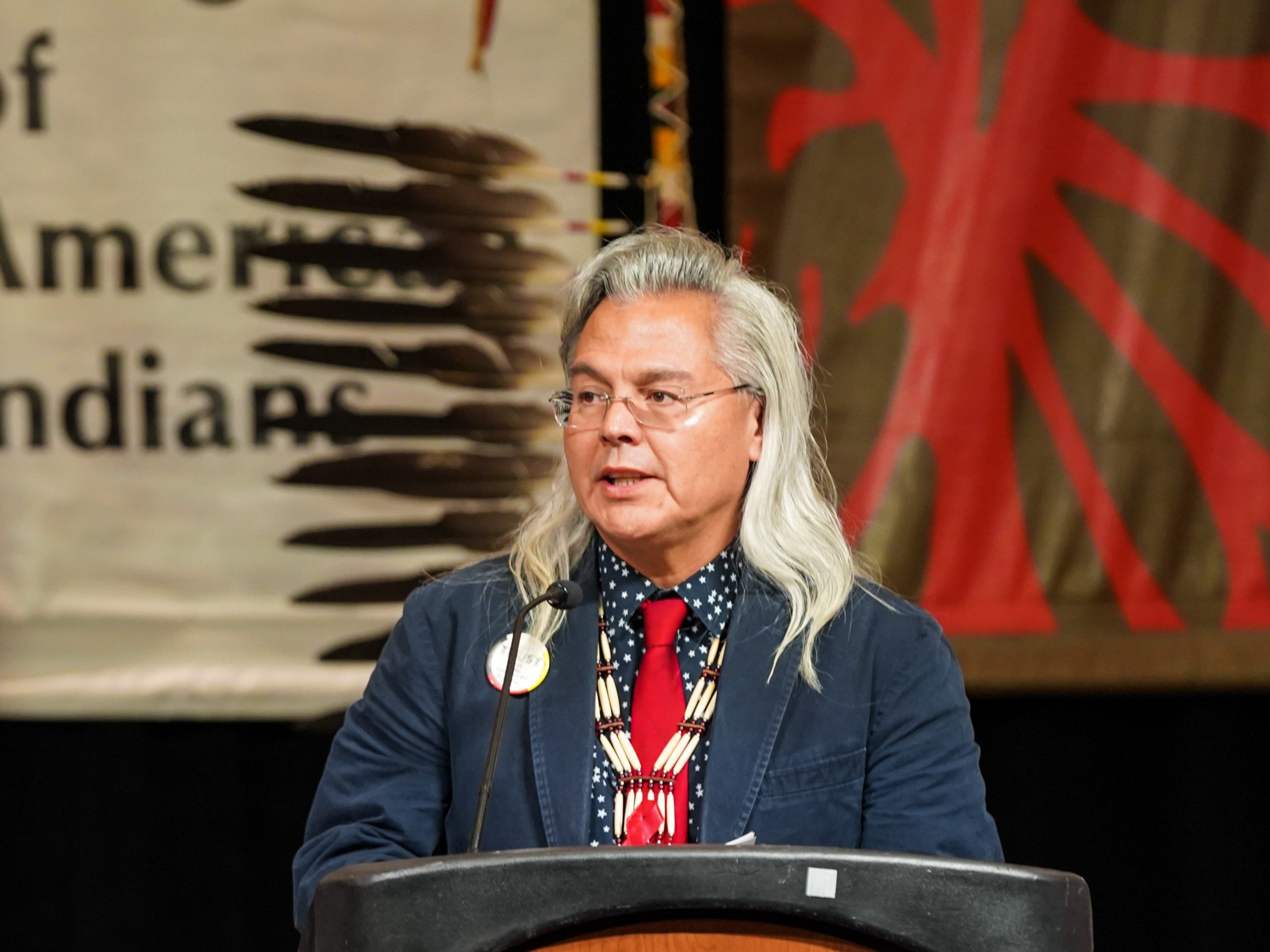
Indian Country Proposed Infrastructure $12 Billion Needed and Welcomed
Wednesday, August 4, 2021
Chairperson, Sault Ste. Marie Tribe of Chippewa Indians
It is especially gratifying to see President Joe Biden lead in pushing to address the Nation’s aging infrastructure with roads, bridges, water systems, schools, newer and greener energy platforms, public transit and high-speed rail, and much needed technology and broadband upgrades.
President Biden’s and key members of Congress announcement of a compromise deal for $1.2 Trillion American Job’s Infrastructure plan will bring an additional $12 Billion to Indian Country and a total appropriation to Indian County to historical levels to more than $44 Billion dollars in the first year of this Administration and Congressional session.
As Chairperson of the largest tribe east of the Mississippi, the Sault Ste. Marie Tribe of Chippewa Indians and 1st Vice President of the National Congress of American Indians, I routinely remind the White House, Senate and the House to recognize and honor the federal treaty and trust obligation due to the over 500 million acres of land ceded in exchange for “health, education and social welfare” into perpetuity.
During the 2020 Presidential campaign and during the Biden presidential transition, tribal nations collectively pushed for a cabinet post, our share of the American Rescue Plan Act, full funding (mandatory and advanced appropriations) and inclusion in an infrastructure package.
So far, we have done well under a Biden-Harris Administration. Here are a few “glows and grows”:NCAI is encouraged by President Biden's support for the Bipartisan Infrastructure Framework. Read the full statement: https://t.co/5G0f6GEO90 pic.twitter.com/xqgDoVTEzb
— National Congress of American Indians (@NCAI1944) June 25, 2021
GLOWS
• Biden’s Presidential Memo on extending EO 13175 on Tribal Consultation with deadlines was monumental and issued within the first five days of office;
• Secretary Haaland’s nomination and appointment was historic;
• $2.5 B proposed increase in the President’s first Indian Health Service budget submitted to Congress;
• $31 B in Rescue Act Funds and deadline extension of Cares Act funding;
• $1 B for Broadband ushered through by VP Harris, the White House and Treasury;
• With Biden-Harris proposed select mandatory and advanced appropriations, we are taking not steps but great leaps forward.
• Now, $12 B more in proposed infrastructure funds (broadly $6 B for water, sewer and sanitation; $4 B for BIA roads and bridges; and +$2 B more for broad band) & eligibility for additional funds to states, territories and tribes.
We still have work to do but I am gratified that we are working our way through the tick sheet. Here are a few additional policy items (Grows) deserving our attention.
GROWS
• Violence Against Women Act reauthorization with key Indian country provisions;
• Clean Carcieri fix;
• Full participation by Indian Country in key provisions of the Affordable Care Act including “Indian Health Care Portability” through automatic enrollment of American Indians in Medicaid Expansion and the Exchange under a 51st state concept;
• Indian Education reform for our American Indian students (7% under the Bureau of Indian Education and the 93% under the Department of Education) including self-governance-like education tribal grant schools for districts who have statistically significant lower Native American student graduation rates;
• Missing and Murdered Indigenous Persons tribal pilots and permanence and Indian Boarding School reconciliation and repatriation as the first MMIP at the hands of federal Indian policy;
• Permanently institutionalizing the White House Counsel and codifying an accountability measure for Tribal Consultation, Tribal Advisories and Budget Formulation for cogent federal Indian policy that transcends Presidential administrations; and
• Administrative leadership in a federal Tribal Action Plan for ameliorating the legacy of Federal Indian Policy that led to historical and inter generational trauma as evidenced through the US. Civil Rights Commission Broken Promises Report.
Specific and quantitative benchmarks need to be established to ensure positive change and measurable success. Just a reminiscence from my college professor days (teaching policy, political science and native studies) on how policy soup becomes political platforms and — subsequently — administrative agendas. The first step in this process, however, is the advocacy and direct representation tribal leaders are called upon to do to honor our ancestors and prepare for future generations.
Chairperson Aaron Payment, a high school dropout at 15, earned a GED at 16 and entered college at 17. Dr Payment holds a doctorate degree in education, a master’s in education specialist, a master’s in education administration and a master’s in public administration. He also serves as the 1st Vice President of the National Congress of American Indians, President of the Midwest Alliance of Sovereign Tribes, and President of the United Tribes of Michigan.
Related Stories
Search
Filed Under
Tags
More Headlines
Native America Calling: Euchee food, whale hunting and young gardeners on The Menu
Cronkite News: Navajo psychiatrist addresses mental health needs
Chuck Hoskin: Tell the whole story about the theft of tribal lands
Native America Calling: A sample of Native Guitars Tour 2024
Cronkite News: Native organization carries on horse traditions
Native America Calling: How Native literature is changing the mainstream narrative
Native America Calling: No ordinary animal
Native America Calling: Safeguards on Artificial Intelligence
NAFOA: 5 Things You Need to Know this Week
Chuck Hoskin: Cherokee Nation takes the lead for our environment
Native America Calling: Earth Day assessment for Native peoples
Cronkite News: Gathering addresses ‘epidemic’ among Native people
VIDEO: Cody Desautel on tribes and federal forest management
AUDIO: Legislative Hearing on Discussion Draft of Forest Management Bill
Native America Calling: Remembering the 1974 Navajo border town murders
More Headlines
Cronkite News: Navajo psychiatrist addresses mental health needs
Chuck Hoskin: Tell the whole story about the theft of tribal lands
Native America Calling: A sample of Native Guitars Tour 2024
Cronkite News: Native organization carries on horse traditions
Native America Calling: How Native literature is changing the mainstream narrative
Native America Calling: No ordinary animal
Native America Calling: Safeguards on Artificial Intelligence
NAFOA: 5 Things You Need to Know this Week
Chuck Hoskin: Cherokee Nation takes the lead for our environment
Native America Calling: Earth Day assessment for Native peoples
Cronkite News: Gathering addresses ‘epidemic’ among Native people
VIDEO: Cody Desautel on tribes and federal forest management
AUDIO: Legislative Hearing on Discussion Draft of Forest Management Bill
Native America Calling: Remembering the 1974 Navajo border town murders
More Headlines