Indianz.Com > News > ‘Endangers everyone on Indian reservations’: Supreme Court urged to respect tribal sovereignty
‘Endangers everyone on Indian reservations’
Supreme Court urged to respect tribal sovereignty
Wednesday, March 24, 2021
Indianz.Com
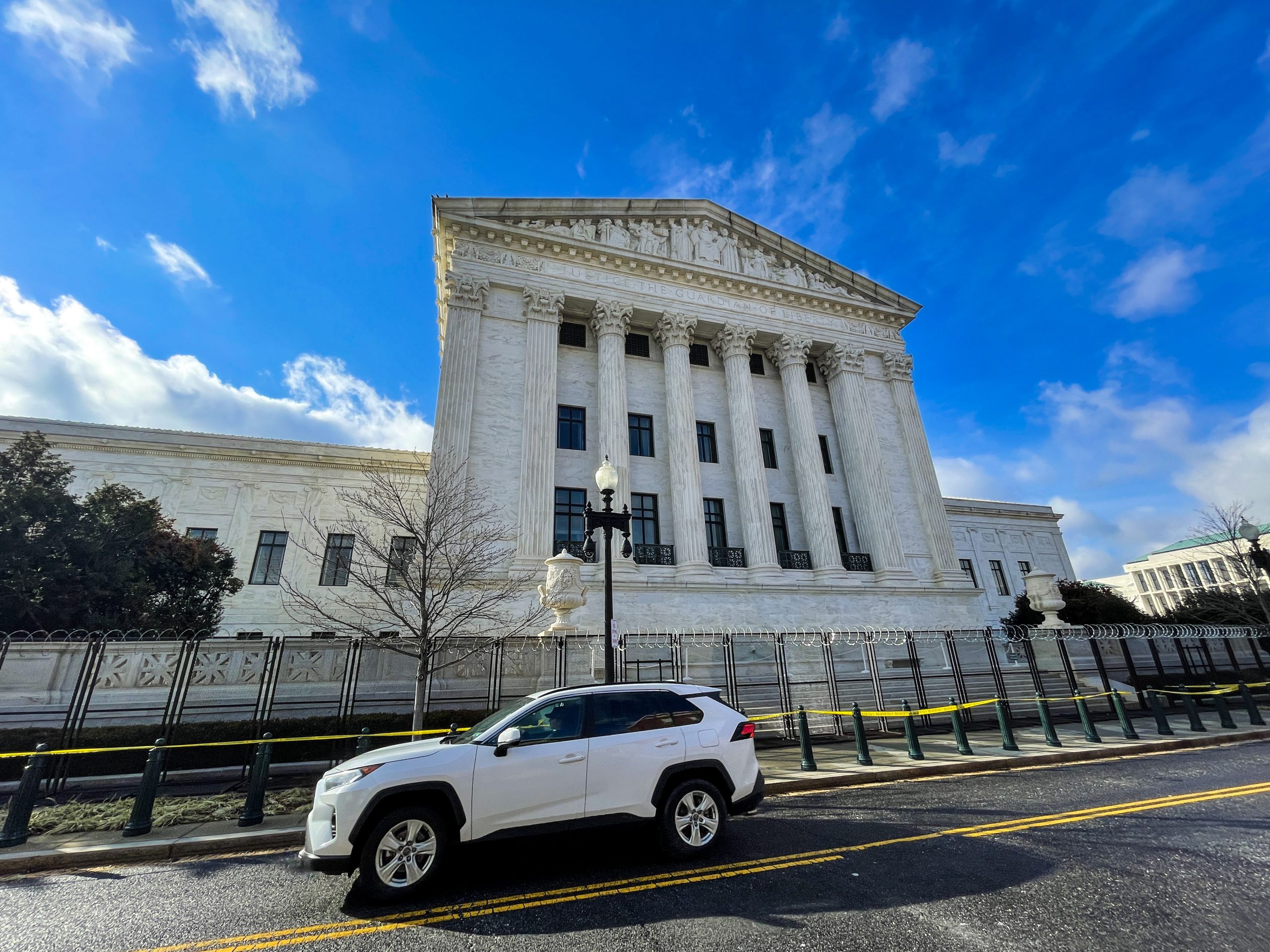
The nation’s highest court has taken up its first Indian law case of the term, with a surprising number of justices seemingly ready to stand up for the sovereign authority of tribal governments, at least when it comes to policing on reservations.
During oral arguments in United States v. Cooley on Tuesday, several members of the U.S. Supreme Court took interest in bolstering public safety in Indian Country. They voiced concerns about the ability of non-Indians to come onto tribal land and get away with criminal activity.
“Consider the situation where the tribal officer has reasonable suspicion that a driver is driving under the influence and would present a danger if allowed to continue to drive, but the officer is pretty certain this person is not an Indian,” Justice Samuel A. Alito, Jr. said during the hearing.
“What can the tribal officer do there? Just let the person go?” Alito wondered, seemingly in awe of the idea that such an individual would in fact be allowed to keep driving simply by being non-Indian.
The question wasn’t the only one of its kind during the hearing, which ran over the 60 minutes allowed for arguments. Justice Clarence Thomas, who is widely considered to be the most conservative member of the court, took the non-Indian offender situation to an even greater extreme.
“Let’s change the facts,” Thomas told the attorney for a non-Indian who claims a police officer from the Crow Tribe had no authority to investigate his client for suspicions actions on the reservation in Montana.
“Rather than the police officer looking and determining that the respondent was nervous and that he may have had bloodshot eyes, rather, he fit the description of a serial killer … a serial killer who did not commit any of the crimes on the reservation but happened to be exactly where respondent was,” Thomas continued.
“Would you make the exact same argument in that case?” asked Thomas.
Unsurprisingly, the response from the attorney for Joshua James Cooley did not appear to sit well with some of the justices. Eric R. Henkel told the court that a tribal police officer might have to let the potential serial killer go, regardless of the danger posed to the local community.
“I do not think that the tribal officer would have authority to investigate and search, beyond just trying to determine the person’s identity and whether they fit the description,” said Henkel, an attorney from Montana.
The tribal officer, in other words, would just have to wait for other authorities, maybe a local sheriff or a federal agent, to come in and assist with the investigation.
Justice Stephen G. Breyer, who hails from the more liberal wing of the court, seemed to have a problem with that kind of policing. He repeatedly pushed Henkel to explain why someone who merely appears to be non-Indian could get away with criminal behaviors.
“You can’t just look at them and see whether they’re Indian or not,” Breyer noted.
“People look different, so I think that would be a tough one to do.”
Under longstanding federal law and policy, American Indians and Alaska Natives are considered to belong to a distinct political class. The characterization is not based on race — but on their status as citizens of Indian nations with government-to-government relationships with the United States.
Prior decisions from the Supreme Court, however, have limited the ways in which tribes, as separate sovereigns, can exercise authority over non-Indians. They cannot arrest, prosecute or sentence non-Indians except in certain situations involving domestic violence offenses.
In this dispute, the Crow Tribe isn’t even seeking to hold Cooley accountable for bringing methamphetamine and a multiple firearms to the reservation, all while driving a car with a young child as a passenger. The drug trafficking and weapons charges he is facing were filed in federal court.
Instead, the federal government wants the nation’s highest court to acknowledge that tribal police officers, as primary responders on their lands, should be able to carry out their duties just like their colleagues in other jurisdictions.
“Indian tribes, like other sovereigns, have the core inherent authority to investigate and detain suspects within their borders for the violation of another sovereign’s law,” Eric Feigin, a U.S. government attorney, said in his opening remarks to the justices.
“As this court has recognized and as Congress has recognized, these areas are policed primarily often by tribal officers,” Feigin said later on during the hearing.
“And if they lack this authority, it’s going to endanger everyone on the reservation,” said Feigin, a deputy solicitor general at the Department of Justice.


 www.facebook.com
Related Stories
U.S. Supreme Court: United States v. Joshua James Cooley (March 24, 2021)SCOTUSBlog: Supreme Court takes up messy tribal sovereignty case (March 22, 2021)
Native America Calling: Oliphant: four decades of hampered tribal jurisdiction (March 4, 2021)
U.S. Supreme Court sets oral argument in ‘bad men’ treaty rights case (February 4, 2021)
Search
Filed Under
Tags
More Headlines
Native America Calling: Assessing college campus safety in light of troubling allegations at Cornell University
Native America Calling: Native authors and book sellers reflect on a record year for banned books
Native America Calling: Native Playlist with Jeremy Dutcher and Mali Obomsawin
Native America Calling: What removing questions about race from the U.S. Census means for Native Americans
Chuck Hoskin: Cherokee Nation employees serve their communities
Native America Calling: One tribe breaks from the pack on prediction markets
Native America Calling: Finding success through the art of contemporary horsemanship
Testimony: Stephanie Bryan, Poarch Band of Creek Indians
Testimony: Michell Hicks, Eastern Band of Cherokee Indians
Testimony: Mark Macarro, Pechanga Band of Indians
Testimony: Patricia Leach, Catawba Nation
Testimony: Bryan Mercier, Bureau of Indian Affairs
Senate Committee on Indian Affairs holds business meeting and legislative hearing
Native America Calling: How Indigenous voices adapt to rapidly-evolving media
Native America Calling: PBS documentary ‘Knowledge Keepers’ explores Native scientific innovations
More Headlines
Native America Calling: Native authors and book sellers reflect on a record year for banned books
Native America Calling: Native Playlist with Jeremy Dutcher and Mali Obomsawin
Native America Calling: What removing questions about race from the U.S. Census means for Native Americans
Chuck Hoskin: Cherokee Nation employees serve their communities
Native America Calling: One tribe breaks from the pack on prediction markets
Native America Calling: Finding success through the art of contemporary horsemanship
Testimony: Stephanie Bryan, Poarch Band of Creek Indians
Testimony: Michell Hicks, Eastern Band of Cherokee Indians
Testimony: Mark Macarro, Pechanga Band of Indians
Testimony: Patricia Leach, Catawba Nation
Testimony: Bryan Mercier, Bureau of Indian Affairs
Senate Committee on Indian Affairs holds business meeting and legislative hearing
Native America Calling: How Indigenous voices adapt to rapidly-evolving media
Native America Calling: PBS documentary ‘Knowledge Keepers’ explores Native scientific innovations
More Headlines