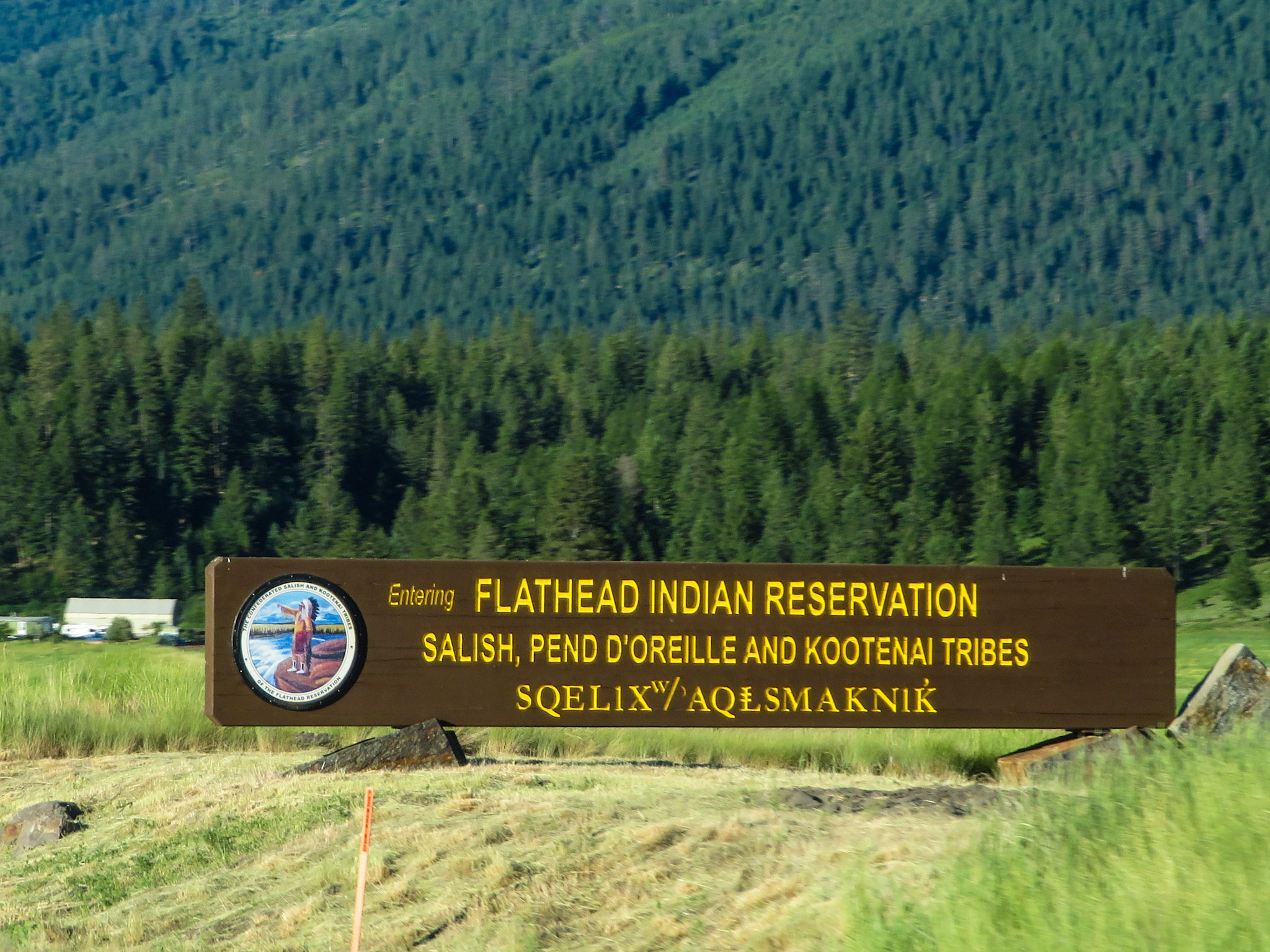
By virtually any measure, the Confederated Salish-Kootenai Tribal Nation is an incredible success story against all odds. Forcibly removed from their homeland in the Bitterroot Valley, despite not having waged war against the white settlers or army, their own “Trail of Tears” brought them to the Flathead Valley to live within the boundaries of the vastly reduced lands they retained in the Hellgate Treaty of 1855.
Although the Hellgate Treaty is widely regarded as one of the best treaties signed by any of the nation’s Indigenous people, even land supposedly reserved for the exclusive habitation of the Salish-Kootenai was opened to purchase by non-tribal settlers by the Dawes Act of 1887.
The act’s intentions were to allocate reservation lands the tribes already owned to individual families as private property and, as part of the “civilization” of Native Americans, it required tribal members to register with the federal government to receive their “allotment.”
The entire debacle was part of the Allotment and Assimilation Era from 1887 to 1934. Simply put, the federal government’s plan was to force Native Americans to be “assimilated” into European-American culture.

 Daily Montanan
 Importantly, any reservation lands not allocated to tribal members was deemed “surplus” land and opened to purchase by non-tribal settlers. This excursion into reservation lands was further exacerbated by the ability of tribal members to sell their allotment parcels to non-tribal members.
The fracturing of the Salish-Kootenai’s tribal lands through sales to non-tribal members continues to cause serious problems today, including the long and on-going battle to retain their water, hunting and fishing treaty rights.
Article III of the Hellgate Treaty could not be more clear regarding the Tribe’s fishing rights:
Yet, just last month the Confederated Salish-Kootenai Tribal Nation issued a very serious warning to tribal members regarding the fish they have treaty rights to catch because they are poisoned.
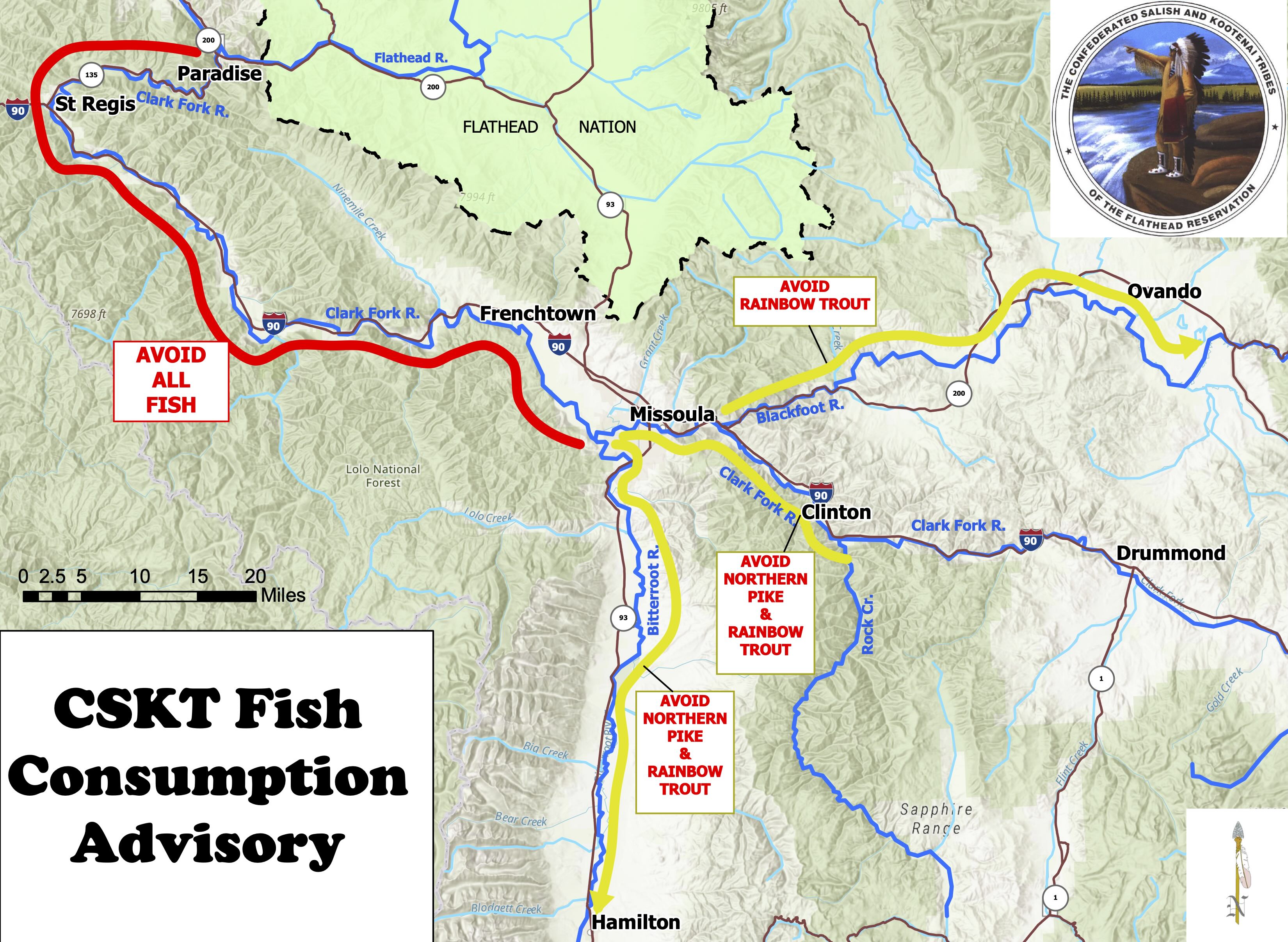
The Fish Consumption Advisory urges “all tribal members to avoid consuming all species and sizes of fish harvested from the lower Clark Fork River from the Bitterroot River near Missoula to the Flathead River near Paradise. Recent testing has confirmed the presence of polychlorinated biphenyls, dioxins and furans in fish at levels that are unsafe for consumption by Tribal peoples. It is also advisable to avoid consuming rainbow trout and northern pike harvested from the Bitterroot River and the upper Clark Fork River above the Bitterroot River to Rock Creek, and, to avoid consuming rainbow trout from the Blackfoot River.
As the Advisory explains: “These contaminants pose a health risk to all fish consumers, and an even greater health risk to the most sensitive members of the Tribal population including women of child bearing age, pregnant nursing women, and young children. These contaminants have been linked to negative health effects in the immune, and nervous systems and may be associated with birth defects…PCBs and dioxins are classified as probable and definite human carcinogens, respectively.”
So what good are treaty fishing rights if you can’t eat the fish because they’re poisoned? Are they really “rights” — or is this just another in our nation’s long and shameful history of abrogating its treaties with Native Americans?
Moreover, Montana’s poison fish affect us all. Just as our government has failed the Salish-Kootenai, they have likewise failed to uphold our rights to the “swimmable/fishable waters” guaranteed by the Clean Water Act — because no one, tribal or non-tribal, is immune to poisoned fish.
This story originally appeared on Daily Montanan on June 27, 2025. It is published under a Creative Commons license (CC BY-ND 4.0).
Daily Montanan is part of States Newsroom, a nonprofit news network supported by grants and a coalition of donors as a 501c(3) public charity. Daily Montanan maintains editorial independence. Contact Editor Darrell Ehrlick for questions: info@dailymontanan.com.
VIDEO: H.R.3620, the Southcentral Foundation Land Transfer Act of 2025
VIDEO: H.R.2815, the Cape Fox Land Entitlement Finalization Act of 2025
AUDIO: H.R.2400, the Pit River Land Transfer Act of 2025
AUDIO: H.R.3620, the Southcentral Foundation Land Transfer Act of 2025
AUDIO: H.R.2815, the Cape Fox Land Entitlement Finalization Act of 2025
Native America Calling: Native in the Spotlight with Randy Taylor
NAFOA: 5 Things You Need to Know this Week (December 15, 2025)
Chuck Hoskin: Cherokee Nation celebrates milestone in tribal gaming
Native America Calling: A Native entrepreneur’s view of the retail shopping season
VIDEO: H.R.2916, a bill to ratify the Akwesasne Mohawk Land Claim
VIDEO: H.R.2389, the Quinault Indian Nation Land Transfer Act
VIDEO: H.R.2388, the Lower Elwha Klallam Tribe Project Lands Restoration Act
VIDEO: H.R.2302, the Shingle Springs Band of Miwok Indians Land Transfer Act
Native America Calling: Persistence pays off for tribes working to remove disturbing public monuments
More Headlines