Indianz.Com > News > Montana Free Press: Governor silent on reservation law enforcement
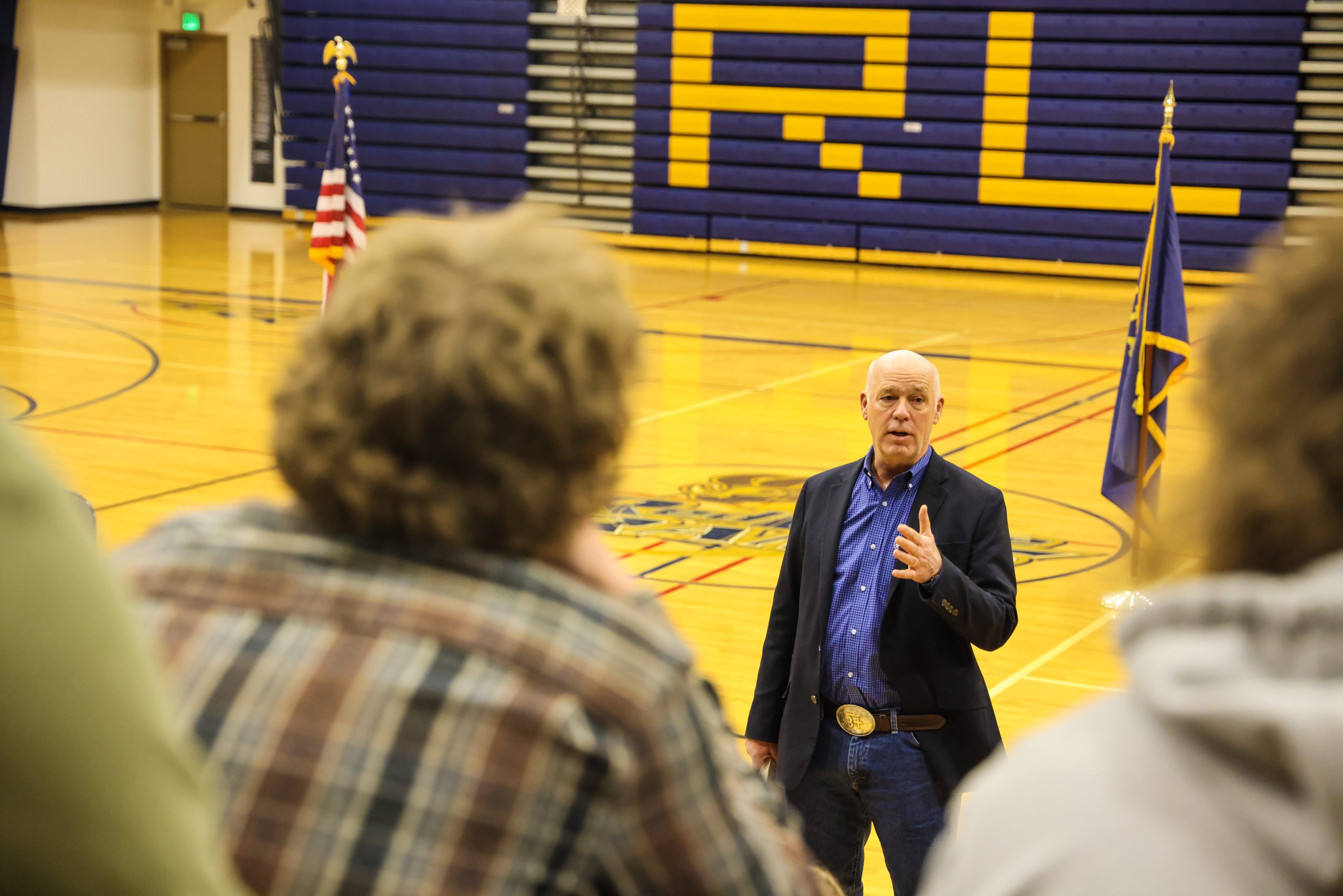
Governor still mum on tribal law enforcement in Lake County
County officials frustrated with Gov. Gianforte’s silence over pending changes to reservation law enforcement.
Thursday, February 8, 2024
Montana Free Press
Officials in Lake County say the clock is ticking for the state to assume felony law enforcement duties on the Flathead Indian Reservation, but so far they’ve heard nothing from Gov. Greg Gianforte.
In November, the Lake County Commission sent a letter to Gianforte informing him that the local sheriff’s office and criminal justice system would no longer handle felony law enforcement on the reservation under what is called Public Law 280. The agreement between the state and tribe is one-of-a-kind in Montana. Under the law, the governor has six months to make a proclamation releasing Lake County of its duties. But more than two months after notifying the governor that it wanted out, the county has had no conversations with the state about what law enforcement there would look like in the future.
“We have heard nothing,” Commissioner Gale Decker told Montana Free Press this week. “The clock is ticking and [the deadline of] May 20th is going to be here really soon.”
At the root of Decker’s frustration is the fact that many logistical issues need to be sorted out if Lake County is indeed going to give up its previous law enforcement duties on the reservation.
“What do we do with the inmates who are tribal members? What do we do with felony prosecutions already in the works? We just have a lot of questions,” he said.
Since the 1960s, most law enforcement on the northwest Montana reservation has been handled locally, rather than by federal officers. Lake County’s justice system handles felony crimes, and (since the 1990s) the tribal system handles misdemeanors. Officials, including Lake County Sheriff Don Bell, said the agreement has been successful because things don’t fall through the cracks like they might with federal agents from out of town.
But for the last few years, officials in Lake County have said fulfilling those law enforcement duties has wreaked havoc on its budget. According to the county, the agreement is costing local taxpayers more than $4 million annually. In years past, county officials said the bill was easier to pay thanks to taxes generated by the Séliš Ksanka QÍispé Dam, but once the dam was sold to the Confederated Salish and Kootenai Tribes, that revenue dried up. There was also no way for Lake County to pull out of the agreement establishing Public Law 280; only the state or tribe could.
Over the years, there have been multiple attempts in the Legislature to get the state to help foot the bill. In 2021, one of those passed, but the state only appropriated $1 to the cause. However, that bill did give the county a mechanism to pull out of the agreement, which it is now exercising. Last year, House Bill 479 would have authorized the state to pay $2.5 million annually for two years to Lake County. But despite passing both chambers, Gianforte vetoed it. In his veto letter, the governor — who in the past has hailed the Public Law 280 agreement as a success — said the county wanted all the benefits of the agreement without having to pay for it. But the county sees it differently, arguing that since the state entered into the agreement with the tribe, it’s the state’s responsibility to cover the costs.
The county has tried other ways to get the state to help pay, including filing a lawsuit last year. That suit ultimately failed, but the judge did encourage the county to pull out of the agreement.
“If the financial burden Lake County bears is unacceptable, which by all accounts it appears to be, its remedy is to withdraw,” wrote District Court Judge Amy Eddy in her ruling.


Related Stories
Search
Filed Under
Tags
More Headlines
Native America Calling: Persistent heat puts strain on people, the environment, and the economy
Chuck Hoskin: Cherokee Nation creates opportunities close to home
Native America Calling: Increasing hurdles and uncertainty put strains on Native beef producers and farmers
‘Let’s go’: Peggy Flanagan wins Democratic primary for U.S. Senate seat in Minnesota
Native America Calling: Native Playlist with Thomas Michael Swensen and Debora Iyall
Native America Calling: Tribes face record-setting wildfire destruction
NAFOA: 5 Things You Need to Know This Week (August 10, 2026)
Chuck Hoskin: Cherokee Nation invests in tomorrow’s leaders
Native America Calling: August primary elections offer insights on Native candidates’ prospects
Native America Calling: Testing the limits of religious freedom in Indian Country
Native America Calling: When is it OK to let a Native language die?
NAFOA: 5 Things You Need to Know This Week (August 3, 2026)
Chuck Hoskin: Cherokee Nation keeps fiscal promises
Native America Calling: New outbreak of food-borne illness shakes public confidence in food supply
AUDIO: Legislative Hearing to receive testimony on S.3573, S.3617, S.4368, S.4417 & S.4890
More Headlines
Chuck Hoskin: Cherokee Nation creates opportunities close to home
Native America Calling: Increasing hurdles and uncertainty put strains on Native beef producers and farmers
‘Let’s go’: Peggy Flanagan wins Democratic primary for U.S. Senate seat in Minnesota
Native America Calling: Native Playlist with Thomas Michael Swensen and Debora Iyall
Native America Calling: Tribes face record-setting wildfire destruction
NAFOA: 5 Things You Need to Know This Week (August 10, 2026)
Chuck Hoskin: Cherokee Nation invests in tomorrow’s leaders
Native America Calling: August primary elections offer insights on Native candidates’ prospects
Native America Calling: Testing the limits of religious freedom in Indian Country
Native America Calling: When is it OK to let a Native language die?
NAFOA: 5 Things You Need to Know This Week (August 3, 2026)
Chuck Hoskin: Cherokee Nation keeps fiscal promises
Native America Calling: New outbreak of food-borne illness shakes public confidence in food supply
AUDIO: Legislative Hearing to receive testimony on S.3573, S.3617, S.4368, S.4417 & S.4890
More Headlines