Indianz.Com > News > Supreme Court hears cases with high stakes for Indian Country

 YouTube
 Supreme Court hears cases with high stakes for Indian Country
Monday, February 21, 2022
Indianz.Com
Content Note: The second half of this story contains references to domestic violence.
WASHINGTON, D.C. — Amid a high-stakes political battle, the nation’s highest court is gearing up for some major decisions that will affect Indian Country for generations to come.
The U.S. Supreme Court only has three Indian law cases on the docket for its current term. But they will be the last that are decided with the involvement of Justice Stephen G. Breyer, who is retiring after nearly three decades on the bench.
Breyer’s exit has set off a major debate over the makeup of the highest court in the land, with Democrats and Republicans once again at odds over his replacement. But the development also underscores the difficulties that tribes have faced in judicial forums all over the country
“Tribal nations and tribal communities are impacted by federal laws and courts more so than anyone else,” President Fawn Sharp of the National Congress of American Indians noted last Monday in her State of Indian Nations address.
Two cases being heard by the Supreme Court on Monday reflect the harsh realities of Sharp’s statement. The outcome in Denezpi v. United States will impact the ability of tribes to protect women and children from violence while Ysleta del Sur Pueblo v. Texas affects the livelihoods of thousands of people who depend on employment in Indian Country.
“When we do not have Native voices perspectives or experience on the federal bench, often decisions are made that ignore history, sovereignty and our truth,” said Sharp, who also serves as vice president of the Quinault Nation.
“These decisions have long lasting effects,” Sharp added.
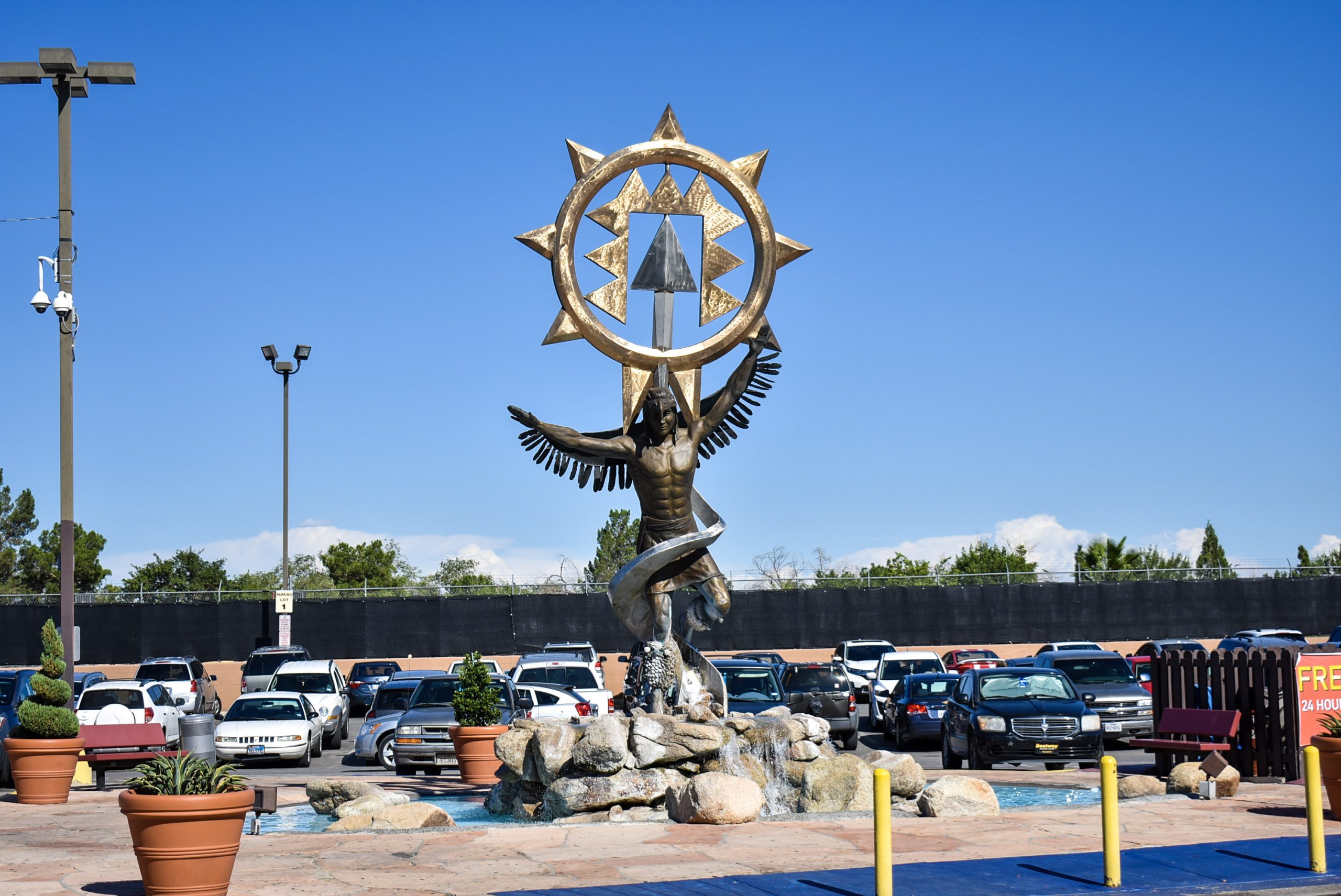
Ysleta del Sur Pueblo v. Texas
For the Ysleta del Sur Pueblo, also known as the Tigua Tribe, getting to the Supreme Court has been an ordeal in and of itself. For the past 20 years, the tribe has been battling the state of Texas over the right to engage in gaming on its small reservation.
The tribe has repeatedly suffered from rulings in the lower courts that have led to the loss of significant revenues and jobs at its Speaking Rock Entertainment Center near El Paso. These earlier decisions primarily rely on an interpretation of a federal law that treats Ysleta del Sur’s sovereignty in a manner different than almost every other Indian nation.
Prior attempts, dating back to the early 2000s, to get the Supreme Court to address the disparity have not been successful. But with a big player now involved — that is, the United States government — there is finally hope that the justices will finally change course and reaffirm the tribe’s inherent rights under the Indian Gaming Regulatory Act.
“From the earliest days of the Republic, Indian tribes have been recognized as distinct and independent sovereigns, predating formation of the United States itself,” the National Indian Gaming Association, the United South and Eastern Tribes Sovereignty Protection Fund and NCAI wrote in a brief urging the high court to side with the Ysleta del Sur Pueblo.


Denezpi v. United States
At stake in the second case being heard on Monday is an issue that is close to many in Indian Country and one that has been the subject of decades of work across the nation: protecting women and children from violence, no matter who the perpetrator.
In the case of Denezpi v. United States, the perpetrator is Merle Denezpi, a citizen of the Navajo Nation who has been convicted of domestic violence in multiple judicial forums. He pleaded guilty to assault and battery charge after being prosecuted by the Ute Mountain Ute Tribe and was subsequently indicted by the U.S. government for aggravated sexual assault.
There is no dispute that the tribal case and the federal case arise from the same incident on the Ute Mountain Ute Reservation in Colorado, where Denezpi’s partner at the time resided. But what the Supreme Court will be resolving is whether the offender’s rights under the U.S. Constitution are being violated by being prosecuted for the same crime more than once.
According to a brief filed by Denezpi’s attorneys, the “Double Jeopardy Clause plainly bars a single sovereign from prosecuting the same defendant twice for substantively identical criminal offenses.”
Since tribal governments exercise sovereignty independent of the United States, the Supreme Court previously held that the Double Jeopardy Clause does not come into play when one of the prosecution occurs in a tribal judicial forum. The 2004 decision in United States v. Lara, coincidentally, involved a crime against a law enforcement officer, an issue central to ongoing work in Congress to renew the Violence Against Women Act.

Tuning In to Supreme Court
With the Supreme Court operating under COVID-19 protocols, the building in the nation’s capital remains closed to visitors. Arguments have been broadcast on the internet since May 2020, with audio available on supremecourt.gov and carried by a number of media outlets, including C-SPAN.
Indianz.Com is hosting a room on Clubhouse, the audio-based social media platform, to listen to the argument on Tuesday morning. The Clubhouse app is available for Apple and Android devices.
Readers who are not yet members of Clubhouse can join the Indianz.Com club and participate with their device.
Support from StrongHearts Native Helpline
StrongHearts Native Helpline, which is available for free nationwide, is a culturally-appropriate, anonymous, confidential service dedicated to serving Native American and Alaska Native survivors of domestic, dating and sexual violence and concerned relatives and friends. Knowledgeable advocates provide peer support, crisis intervention, personalized safety planning and referrals to Native-centered support services. Call or text 1-844-7NATIVE or visit strongheartshelpline.org for chat advocacy 24 hours a day, 7 days a week.
Related Stories
Progress cited in improving Violence Against Women Act for Indian Country (February 11, 2022)Gaylord News: Supreme Court takes another look at Indian Country dispute (January 31, 2022)
Chuck Hoskin: Cherokee Nation deserves to be treated with respect (January 31, 2022)
Supreme Court surprises by taking up contentious Indian law case (January 21, 2022)
SCOTUSBlog: Supreme Court takes action in COVID-19 vaccine cases (January 14, 2022)
Montana Free Press: Supreme Court takes up COVID-19 vaccine mandates (January 12, 2022)
Gaylord News: Indian Child Welfare Act in limbo amid high-stakes challenge (January 4, 2022)
‘No one else needs to die’: Biden administration faces another test of commitment to Indian Country (December 17, 2021)
Supreme Court takes up Indian law cases as tribes face new ‘unknown’ (October 19, 2021)
Chuck Hoskin: Protecting tribal sovereignty in Oklahoma (October 12, 2021)
Supreme Court returns to in-person arguments as justice tests positive for COVID-19 (October 1, 2021)
Indian Country Today: Alaska Native corporations finally receive COVID-19 funds (September 27, 2021)
Muscogee Nation: Tribal sovereignty is not a threat to Oklahoma (August 27, 2021)
Gaylord News: Funding bill passes without additional support for tribal justice systems (August 2, 2021)
Chuck Hoskin: Cherokee Nation celebrates sovereignty milestone (July 12, 2021)
Muscogee Nation proclaims Sovereignty Day on anniversary of historic Supreme Court ruling (July 9, 2021)
Nation’s highest court sides with Alaska Native corporations in COVID-19 dispute (June 25, 2021)
‘I wanted to cry’: Tribes welcome ruling in long-running health care dispute (June 21, 2021)
SCOTUSBlog: Supreme Court decision marks a first for tribal sovereignty (June 11, 2021)
Montana Free Press: Supreme Court supports tribal sovereignty in law enforcement case (June 11, 2021)
Cronkite News: Supreme Court finally ‘got it right’ on tribal sovereignty (June 4, 2021)
SCOTUSBlog: Supreme Court supports tribal sovereignty over non-Indians (June 3, 2021)
Supreme Court backs tribal sovereignty in law enforcement case (June 1, 2021)
Chuck Hoskin: Cherokee Nation seeks to strengthen sovereignty (May 17, 2021)
Indian Country nearly locked out of U.S. Supreme Court hearing (April 19, 2021)
Search
Filed Under
Tags
More Headlines
Native America Calling: Persistent heat puts strain on people, the environment, and the economy
Chuck Hoskin: Cherokee Nation creates opportunities close to home
Native America Calling: Increasing hurdles and uncertainty put strains on Native beef producers and farmers
‘Let’s go’: Peggy Flanagan wins Democratic primary for U.S. Senate seat in Minnesota
Native America Calling: Native Playlist with Thomas Michael Swensen and Debora Iyall
Native America Calling: Tribes face record-setting wildfire destruction
NAFOA: 5 Things You Need to Know This Week (August 10, 2026)
Chuck Hoskin: Cherokee Nation invests in tomorrow’s leaders
Native America Calling: August primary elections offer insights on Native candidates’ prospects
Native America Calling: Testing the limits of religious freedom in Indian Country
Native America Calling: When is it OK to let a Native language die?
NAFOA: 5 Things You Need to Know This Week (August 3, 2026)
Chuck Hoskin: Cherokee Nation keeps fiscal promises
Native America Calling: New outbreak of food-borne illness shakes public confidence in food supply
AUDIO: Legislative Hearing to receive testimony on S.3573, S.3617, S.4368, S.4417 & S.4890
More Headlines
Chuck Hoskin: Cherokee Nation creates opportunities close to home
Native America Calling: Increasing hurdles and uncertainty put strains on Native beef producers and farmers
‘Let’s go’: Peggy Flanagan wins Democratic primary for U.S. Senate seat in Minnesota
Native America Calling: Native Playlist with Thomas Michael Swensen and Debora Iyall
Native America Calling: Tribes face record-setting wildfire destruction
NAFOA: 5 Things You Need to Know This Week (August 10, 2026)
Chuck Hoskin: Cherokee Nation invests in tomorrow’s leaders
Native America Calling: August primary elections offer insights on Native candidates’ prospects
Native America Calling: Testing the limits of religious freedom in Indian Country
Native America Calling: When is it OK to let a Native language die?
NAFOA: 5 Things You Need to Know This Week (August 3, 2026)
Chuck Hoskin: Cherokee Nation keeps fiscal promises
Native America Calling: New outbreak of food-borne illness shakes public confidence in food supply
AUDIO: Legislative Hearing to receive testimony on S.3573, S.3617, S.4368, S.4417 & S.4890
More Headlines