Indianz.Com > News > Appeals court sides with tribes in COVID-19 funding dispute
Appeals court sides with tribes in COVID-19 funding dispute
Friday, September 25, 2020
Indianz.Com
• SPREADSHEET: Coronavirus Relief Fund allocations for tribal governments
Alaska Native corporations (ANCs) are not entitled to shares of the $8 billion coronavirus relief fund, a federal appeals court ruled on Friday.
In a unanimous decision, a three-judge panel of the D.C. Circuit Court of Appeals said the for-profit corporations are not “recognized” tribes. As such, they do not qualify for the funds provided by Coronavirus Aid, Relief and Economic Security Act, also known as the CARES Act.
“We hold that Alaska Native corporations are not eligible for funding under Title V of the CARES Act,” Judge Gregory Katsas, who was nominated to the bench by President Donald Trump, wrote for the court.
The 24-page ruling, accompanied by a two-page concurrence, comes just two weeks after the D.C. Circuit heard arguments in the closely-watched case. It marks a major victory for tribal nations in one of the most bitter Indian policy and legal disputes in recent history.
“The opinion was correctly and artfully written,” attorney Nicole Ducheneaux, who represented a group of tribes in the dispute, told Indianz.Com.
“No one has ever understood ANCs to recognized Indian tribes under any definition of that term,” said Ducheneaux a citizen of the Cheyenne River Sioux Tribe, one of the plaintiffs. “They are for-profit corporations, which Congress did not intend to share in the lifesaving appropriation for COVID-affected governments.”
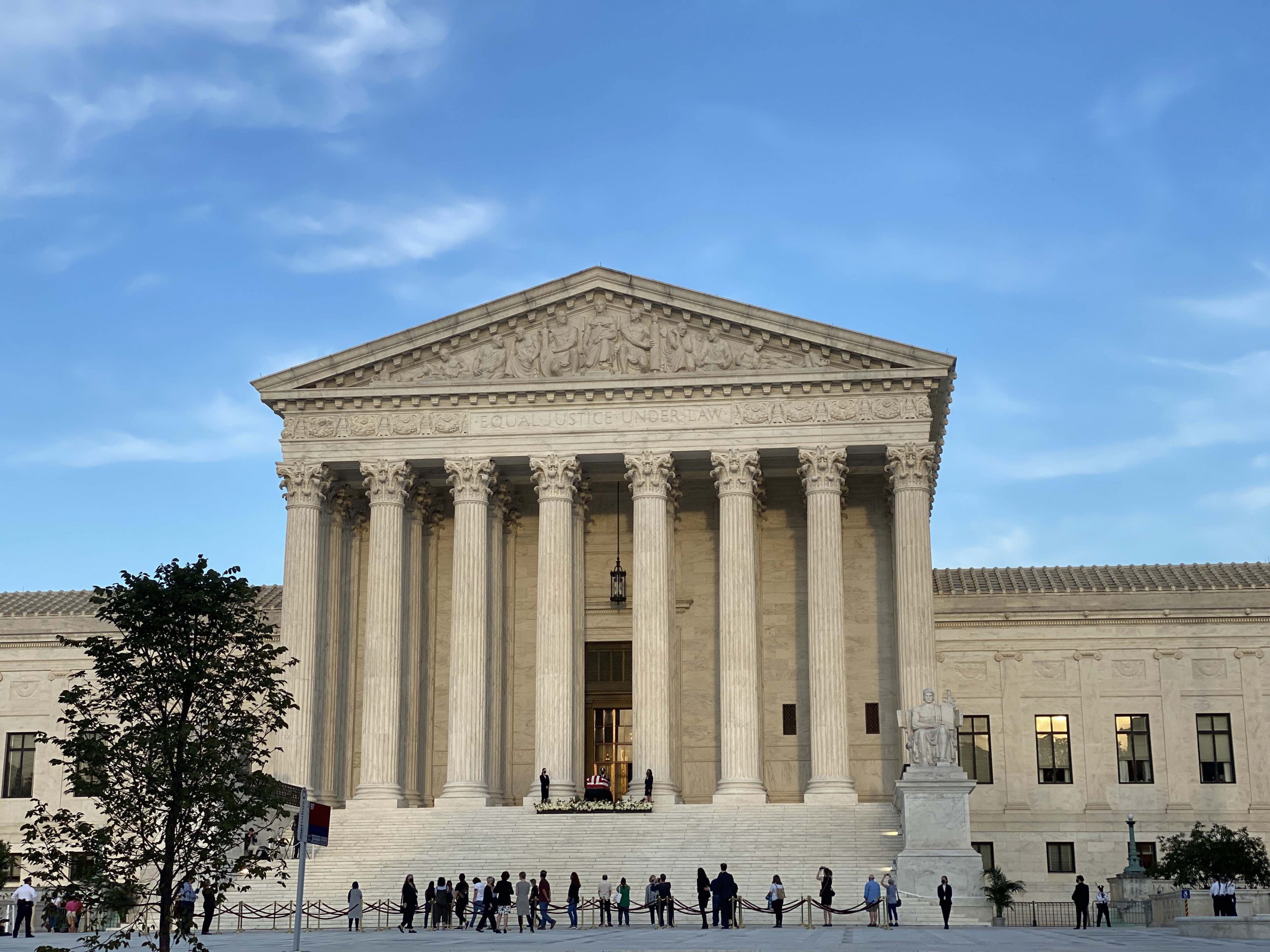
But the dispute might not yet be over. The ANCs that intervened in the case can pursue further appeals in the case in hopes of claiming some $534 million that has been set aside for them by the Department of the Treasury. “We’re in a situation where the tribes have the money that was allocated but the Alaska Native corporations still do not,” Nathan Yaa Ndakin Yeil McCowan, the chair of the Alaska Native Village Corporation Association, said during COVID-19 forum hosted by Harvard University last Friday. The Trump administration could also keep pushing. So far, Treasury has stood by the ANCs, believing they are just as entitled to the coronavirus relief fund as tribal governments. The most obvious route for an appeal is to ask the D.C. Circuit to rehear the case en banc, meaning it would be heard by a larger panel of judges. But it’s also possible for the Trump administration, or the ANCs, to take the matter directly to the U.S. Supreme Court, whose members paid tributes to the late Justice Ruth Bader Ginsburg in a ceremony at the U.S. Capitol on Friday. Ginsburg passed away on September 18 due to complications of metastatic pancreas cancer, the court announced last week. She was 87 years old.
The second and third payments appear to be have been distributed in a more consistent manner, according to usaspending.gov. These payments were based on a formula that Treasury has not disclosed but were presumably linked to expenditures and employment data submitted by tribes. Usaspending.gov was recently updated with COVID-19 spending data. As such, it includes coronavirus relief fund payments made to states and local governments, as well as to U.S. territories. Though the CARES Act, Congress allocated $150 billion in COVID-19 relief for tribes, states, local and territorial governments. The tribal set-aside was $8 billion. The law further directed Treasury to disburse the money “not later than 30 days” after its enactment, which was on March 27.https://t.co/0yYFAWzrcJ is publishing the payments made to tribes from the $8 billion coronavirus relief fund. How much did your Indian nation receive? #COVID19 #Coronavirus #CoronavirusReliefFund #CARESAct https://t.co/29OYlUMms2
— indianz.com (@indianz) September 25, 2020
Indianz.Com calculated that $534 million is being held for Alaska Native corporations based on representations made by government attorneys in court. The figure appears to be further confirmed by the Daily Treasury Statement, which shows $534 million remaining in the coronavirus relief fund. Should the legal dispute end with the D.C. Circuit’s ruling on Friday, the $534 million could be distributed to tribal governments, many of whom complained of underpayments due to Treasury’s decision to rely on Indian housing data for the first payment back in May. Many tribes instead wanted payments tied to their citizenship base, as originally anticipated before the Trump administration changed course. “The Confederated Tribes plaintiffs appreciate the court’s thorough, careful exposition of the statutory and historical factors making it clear that Alaska Native corporations are not Indian tribes, a term restricted to sovereign tribes enjoying a government-to-government relationship with the United States,” attorney Riyaz Kanji, who argued Confederated Tribes of the Chehalis Reservation v. Mnuchin before the D.C. Circuit on September 11, told Indianz.Com.In the end, a ruling that favored the ANCs today could have set a dangerous precedent for Indian Country moving forward as stated in the opinion: pic.twitter.com/gPp0WMShwO
— Jenni Monet (@jennimonet) September 25, 2020
D.C. Circuit Court of Appeals Decision
Confederated Tribes of the Chehalis Reservation v. Steven Mnuchin (September 25, 2020)
Search
Filed Under
Tags
More Headlines
Native America Calling: Finding success through the art of contemporary horsemanship
Testimony: Stephanie Bryan, Poarch Band of Creek Indians
Testimony: Michell Hicks, Eastern Band of Cherokee Indians
Testimony: Mark Macarro, Pechanga Band of Indians
Testimony: Patricia Leach, Catawba Nation
Testimony: Bryan Mercier, Bureau of Indian Affairs
Senate Committee on Indian Affairs holds business meeting and legislative hearing
Native America Calling: How Indigenous voices adapt to rapidly-evolving media
Native America Calling: PBS documentary ‘Knowledge Keepers’ explores Native scientific innovations
Testimony: Alicia Puente Cackley, Government Accountability Office
Testimony: Hilary Atkin, Department of Housing and Urban Development
Testimony: Bryan Warner, Cherokee Nation
VIDEO: H.R.741 – Stronger Engagement for Indian Health Needs Act of 2025
VIDEO: H.R.6021 – Archie Cavanaugh Migratory Bird Treaty Clarification Act
Senate Committee on Indian Affairs takes up Native housing
More Headlines
Testimony: Stephanie Bryan, Poarch Band of Creek Indians
Testimony: Michell Hicks, Eastern Band of Cherokee Indians
Testimony: Mark Macarro, Pechanga Band of Indians
Testimony: Patricia Leach, Catawba Nation
Testimony: Bryan Mercier, Bureau of Indian Affairs
Senate Committee on Indian Affairs holds business meeting and legislative hearing
Native America Calling: How Indigenous voices adapt to rapidly-evolving media
Native America Calling: PBS documentary ‘Knowledge Keepers’ explores Native scientific innovations
Testimony: Alicia Puente Cackley, Government Accountability Office
Testimony: Hilary Atkin, Department of Housing and Urban Development
Testimony: Bryan Warner, Cherokee Nation
VIDEO: H.R.741 – Stronger Engagement for Indian Health Needs Act of 2025
VIDEO: H.R.6021 – Archie Cavanaugh Migratory Bird Treaty Clarification Act
Senate Committee on Indian Affairs takes up Native housing
More Headlines