Indianz.Com > News > Press Release: Sen. Schatz (D-Hawaii) criticizes closure of Department of Education
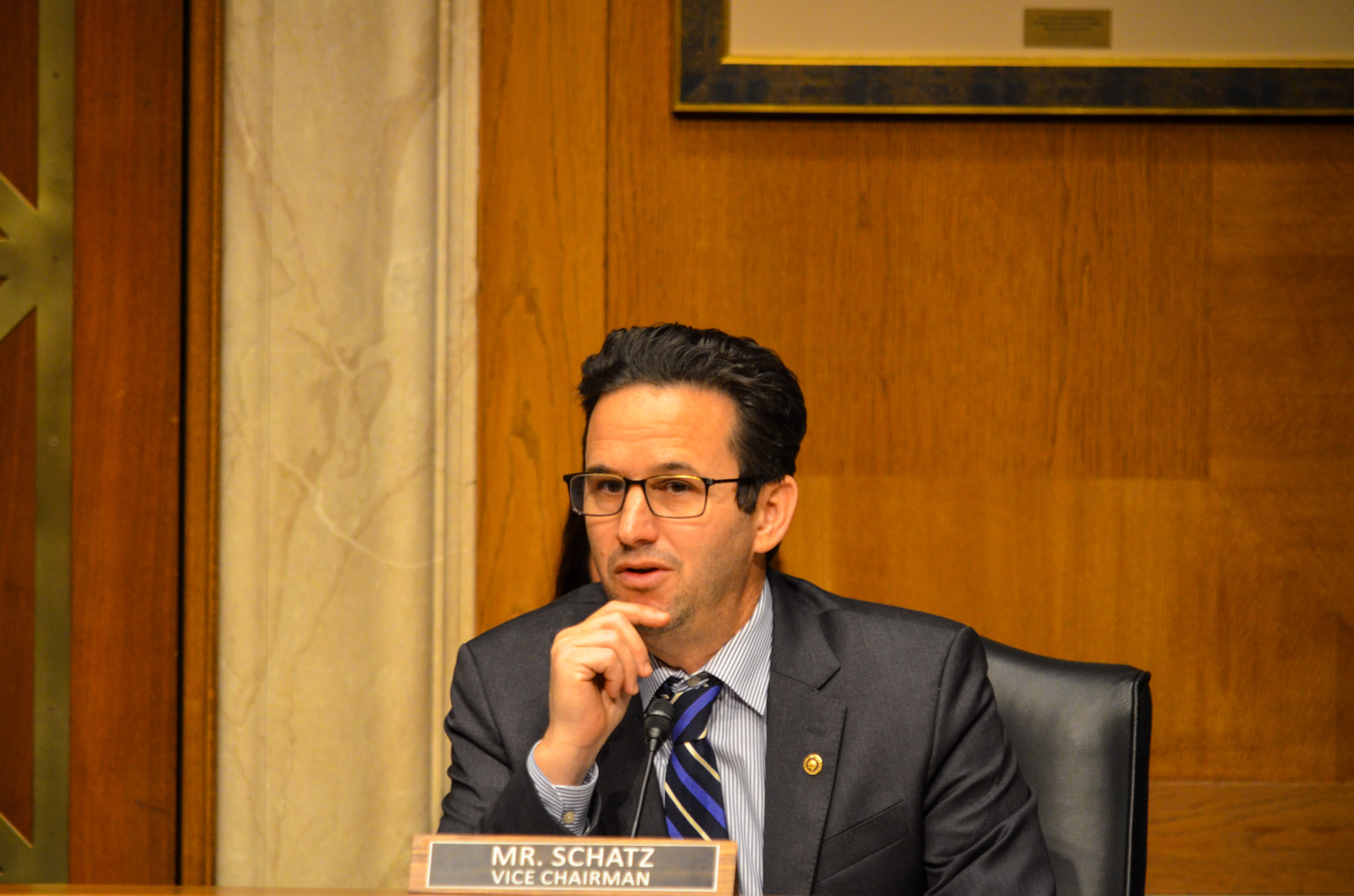
Schatz: Trump’s Plan To Dismantle Education Department Violates Federal Trust Responsibilities, Threatens Native Students
Monday, March 24, 2025
Indianz.Com
The following is the text of a March 20, 2025, news release from Sen. Brian Schatz (D-Hawaii), the vice chair of the Senate Committee on Indian Affairs.
HONOLULU — U.S. Senator Brian Schatz (D-Hawai‘i), vice chairman of the Senate Committee on Indian Affairs, released the following statement in response to President Donald Trump’s plan to dismantle the U.S. Department of Education (ED).
“One of the federal government’s core trust and treaty responsibilities to American Indians, Native Hawaiians, and Alaska Natives is to provide education. The Department of Education plays a critical role in Native education, on everything from special education and Impact Aid to Native language revitalization. Without a functional Department of Education, Native students – more than 90 percent of whom attend public schools – will be at the mercy of state governments that have no legal responsibility to meet their needs. That’s why President Trump’s plan to dismantle the Department is a betrayal of a sacred federal promise, and we have a duty to fight this reckless plan and protect Native students,” said Vice Chairman Schatz.
More than 92% of Native students attend public and charter K-12 schools, not Bureau of Indian Education (BIE) schools, as Secretary of Education Linda McMahon has incorrectly claimed.
Abolishing ED would be devastating for Native students and schools across the country. It would slash funding for protected populations, including Native students in public, charter, and BIE schools who rely on critical resources like Individuals with Disabilities Education Act (IDEA) special education services, Impact Aid, English Language Learner supports, and Every Student Succeeds Act (ESSA) Title VI Indian education programs. It would also mean less dedicated funding for teachers, sports, building repairs, school meal programs, transportation, and after-school tutoring/activities—leaving Native students with fewer educational opportunities.
For rural Native students, eliminating ED would lead to fewer choices and greater instability. High-poverty and smaller schools, especially those in rural Native communities, are at greater risk of closing if enrollment drops below a set minimum.
The damage would extend to Native higher education as well. Native students rely on federal loans and Pell Grants to afford college, with ED playing a key role in administering these programs. Without it, access to these funds would be severely limited. Tribal Colleges and Universities (TCUs), which depend on federal dollars for nearly three-quarters of their funding, could face catastrophic cuts if states decide not to maintain critical funding—pushing many to the brink of collapse and jeopardizing educational opportunities for future generations.
Search
Filed Under
Tags
More Headlines
Native America Calling: The changing landscape for subsistence hunting and fishing
Press Release: Oklahoma Indian Gaming Association weighs in on sports betting legislation
Press Release: Sen. Mike Rounds (R-South Dakota) calls for commission on crime in Indian Country
Press Release: Sen. Schatz (D-Hawaii) criticizes closure of Department of Education
NAFOA: 5 Things You Need to Know this Week (March 24, 2025)
Chuck Hoskin: Cherokee Nation lives up to its values
Native America Calling: Native in the Spotlight with Norma Kawelokū Wong
Montana Free Press: Bill addresses law enforcement on Flathead Reservation
Cronkite News: Republicans in Congress push for health care cuts
Native America Calling: Native Playlist with Morgan Toney, Tanaya Winder and The Reztones
KFF Health News: Medicaid cuts ‘a tremendous hit’ to Indian Country
Arizona Mirror: Trump administration removes Native contributions from Defense website
‘A historic victory’: Spirit Lake Nation reclaims land taken by federal government
Cronkite News: Democratic lawmaker Raúl Grijalva passes on at age of 77
Native America Calling: Native women who made history
More Headlines
Press Release: Oklahoma Indian Gaming Association weighs in on sports betting legislation
Press Release: Sen. Mike Rounds (R-South Dakota) calls for commission on crime in Indian Country
Press Release: Sen. Schatz (D-Hawaii) criticizes closure of Department of Education
NAFOA: 5 Things You Need to Know this Week (March 24, 2025)
Chuck Hoskin: Cherokee Nation lives up to its values
Native America Calling: Native in the Spotlight with Norma Kawelokū Wong
Montana Free Press: Bill addresses law enforcement on Flathead Reservation
Cronkite News: Republicans in Congress push for health care cuts
Native America Calling: Native Playlist with Morgan Toney, Tanaya Winder and The Reztones
KFF Health News: Medicaid cuts ‘a tremendous hit’ to Indian Country
Arizona Mirror: Trump administration removes Native contributions from Defense website
‘A historic victory’: Spirit Lake Nation reclaims land taken by federal government
Cronkite News: Democratic lawmaker Raúl Grijalva passes on at age of 77
Native America Calling: Native women who made history
More Headlines