Indianz.Com > News > Tim Giago: Bartering for butter at the Indian boarding school
Notes from Indian Country
Bartering for butter
Monday, November 1, 2021
As the years pass there are not too many of the boys and girls forced to attend boarding schools still living. As one of the survivors I write these columns to give some of those still alive a chuckle and to educate the younger generation about what their parents or grandparents went through at the boarding schools. Here is another memory story.
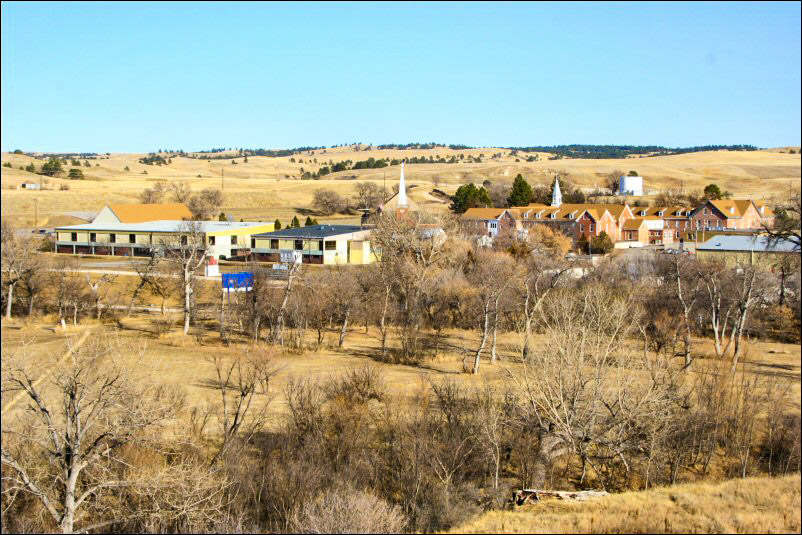
At the old Holy Rosary Mission boarding school we didn’t have a heck of a lot to barter with, but being the industrious Indian boys we were, we found our ways.
It is in the nature of the Indian boys to be horse traders. It was in our blood. And since we didn’t have money, that is hard cash, we found that one of the most valuable commodities at the school to barter with was the small cubes of butter we got at our meals.
Nearly all of the toys we had as boys were the toys we made for ourselves. Wire cowboys, horses and Indians were our favorites. The talented boys would take bailing wire and twist it into the shape of a cowboy or horse and then they would somehow get balls of pretty colored yarn and wind the yarn around the wire cowboys or Indians to fashion clothing. They even made small hats and feathers out of other materials that were quite realistic.
 Now this is where that bartered butter came to the fore. The boys that really knew how to bargain and trade would rush to their lockers, secure the jars of butter they had stored there, and spread it on the fresh buns while those of us not so fortunate ate our buns dry.
Three o’clock was called “bun time” and once when I wrote about it my daughter Denise said, “Well, maybe “bun time” had a different meaning then than it does today.” Makes sense.
And so as the school year progressed some boys never had a cube of butter ever because they had traded all of their butter away. It was not uncommon too hear two boys arguing and one saying, “Ok, you owe me six butters.” Other boys came off as wealthy merchants because they always had something to offer the other boys for their butters.
And serious brawls could erupt over the butters. One day Aloysius Day Boy punched out Alonzo Two Bears over a debt of butter. The fight was memorable because it was a one-punch affair. Aloysius, known as Chief Day Boy, landed a left hook to the temple of Alonzo and we all stood there in shock to see the bump rise on Alonzo’s temple rise so big and fast it grew to the size of an egg. All because Alonzo owed Chief Day Boy six butters.
Many years later, after I had started the Lakota Times newspaper in Pine Ridge, I was eating dinner at a restaurant in Gordon, Nebraska, when my classmate from Holy Rosary, Dickie Brewer, approached my table. He put two cubes of butter next to my plate and said with a wide grin, “Here are the two butters I owe you.”
None of us boarding school boys ever forgot about how we bartered with cubes of butter.
Alonzo Two Bears and his brother Pete ran away from Holy Rosary the day after the fight with Chief Day Boy. I heard the Chief mutter that day, “I guess I’ll never get to collect my butter.”
Now this is where that bartered butter came to the fore. The boys that really knew how to bargain and trade would rush to their lockers, secure the jars of butter they had stored there, and spread it on the fresh buns while those of us not so fortunate ate our buns dry.
Three o’clock was called “bun time” and once when I wrote about it my daughter Denise said, “Well, maybe “bun time” had a different meaning then than it does today.” Makes sense.
And so as the school year progressed some boys never had a cube of butter ever because they had traded all of their butter away. It was not uncommon too hear two boys arguing and one saying, “Ok, you owe me six butters.” Other boys came off as wealthy merchants because they always had something to offer the other boys for their butters.
And serious brawls could erupt over the butters. One day Aloysius Day Boy punched out Alonzo Two Bears over a debt of butter. The fight was memorable because it was a one-punch affair. Aloysius, known as Chief Day Boy, landed a left hook to the temple of Alonzo and we all stood there in shock to see the bump rise on Alonzo’s temple rise so big and fast it grew to the size of an egg. All because Alonzo owed Chief Day Boy six butters.
Many years later, after I had started the Lakota Times newspaper in Pine Ridge, I was eating dinner at a restaurant in Gordon, Nebraska, when my classmate from Holy Rosary, Dickie Brewer, approached my table. He put two cubes of butter next to my plate and said with a wide grin, “Here are the two butters I owe you.”
None of us boarding school boys ever forgot about how we bartered with cubes of butter.
Alonzo Two Bears and his brother Pete ran away from Holy Rosary the day after the fight with Chief Day Boy. I heard the Chief mutter that day, “I guess I’ll never get to collect my butter.”
Contact Tim Giago at najournalist1@gmail.com
Note: Content © Tim Giago
Search
Filed Under
Tags
More Headlines
Testimony: Alicia Puente Cackley, Government Accountability Office
Testimony: Hilary Atkin, Department of Housing and Urban Development
Testimony: Bryan Warner, Cherokee Nation
VIDEO: H.R.741 – Stronger Engagement for Indian Health Needs Act of 2025
VIDEO: H.R.6021 – Archie Cavanaugh Migratory Bird Treaty Clarification Act
Senate Committee on Indian Affairs takes up Native housing
Native America Calling: Native advocates assess barriers to upcoming elections
Native America Calling: An Indigenous-led opera retells a historic Tlingit act of resistance
Native America Calling: Shifting preservation policies pose risks to Native history
Chuck Hoskin: Cherokee Nation makes tribal government easy to reach
Native America Calling: Persistent heat puts strain on people, the environment, and the economy
Chuck Hoskin: Cherokee Nation creates opportunities close to home
Native America Calling: Increasing hurdles and uncertainty put strains on Native beef producers and farmers
Chuck Hoskin: Cherokee Nation keeps our language alive
‘Let’s go’: Peggy Flanagan wins Democratic primary for U.S. Senate seat in Minnesota
More Headlines
Testimony: Hilary Atkin, Department of Housing and Urban Development
Testimony: Bryan Warner, Cherokee Nation
VIDEO: H.R.741 – Stronger Engagement for Indian Health Needs Act of 2025
VIDEO: H.R.6021 – Archie Cavanaugh Migratory Bird Treaty Clarification Act
Senate Committee on Indian Affairs takes up Native housing
Native America Calling: Native advocates assess barriers to upcoming elections
Native America Calling: An Indigenous-led opera retells a historic Tlingit act of resistance
Native America Calling: Shifting preservation policies pose risks to Native history
Chuck Hoskin: Cherokee Nation makes tribal government easy to reach
Native America Calling: Persistent heat puts strain on people, the environment, and the economy
Chuck Hoskin: Cherokee Nation creates opportunities close to home
Native America Calling: Increasing hurdles and uncertainty put strains on Native beef producers and farmers
Chuck Hoskin: Cherokee Nation keeps our language alive
‘Let’s go’: Peggy Flanagan wins Democratic primary for U.S. Senate seat in Minnesota
More Headlines