Indianz.Com > News > Budget blueprint directs $20.5 billion to Indian Country programs

 youtu.be
 Budget blueprint directs $20.5 billion to Indian Country programs
Wednesday, August 11, 2021
Indianz.Com
A budget blueprint that just passed the U.S. Senate calls for $20.5 billion in spending for American Indian, Alaska Native and Native Hawaiian programs.
S.Con.Res.14 was approved by a narrow vote of 50 to 49 shortly before 4am on Wednesday morning. The measure allocates $20.5 billion to Indian Country programs over the next 10 fiscal years.
“For far too long, historical underfunding of federal programs serving Native communities and tribes has left them vulnerable,” said Sen. Brian Schatz (D-Hawaii), the chairman of the Senate Committee on Indian Affairs. “The budget reverses these systemic injustices through a $20.5 billion targeted investment.”
Overall, S.Con.Res.14 seeks $3.5 trillion in spending for federal programs. The measure covers fiscal years 2022 through 2031.
The resolution, however, does not actually appropriate the money. It mainly lays the groundwork for the funding that will be provided by Congress to the federal government in the coming years.
“The responsibility of the United States government to American Indians, Alaska Natives, and Native Hawaiians isn’t just for Democrats or Republicans to live up to. It’s a commitment that we all share,” Schatz said on the floor of the Senate on Monday. “This budget resolution will empower these Native communities like never before.”
No further consideration of S.Con.Res.14 is required by Congress, or in the Senate, which is controlled by Democrats. The chamber itself is evenly divided, with 50 Democrats serving alongside 50 Republicans. No Republicans voted for the budget blueprint.
The section of interest in S.Con.Res.14 reads:

COMMITTEE ON INDIAN AFFAIRS. — The Committee on Indian Affairs of the Senate shall report
changes in laws within its jurisdiction that increase the
deficit by not more than $20,500,000,000 for the period
of fiscal years 2022 through 2031.
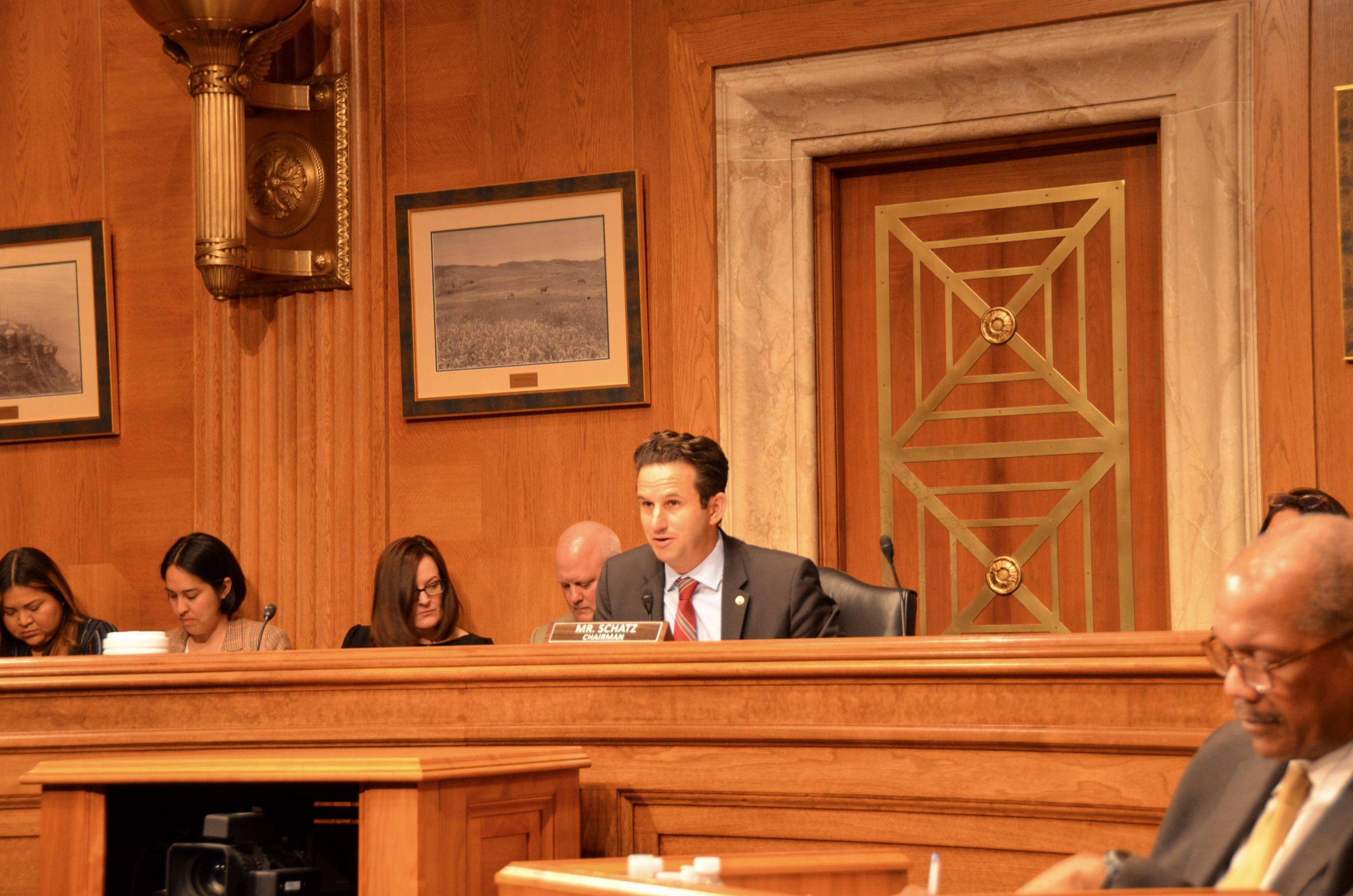
Mr. President, you know, this is a very important week in
the United States Senate. Our infrastructure bill is big, it is bold,
and it is bipartisan, and it reflects the needs of a population
especially important to me–Native communities and Indian Country
across the United States.
As chair of the Indian Affairs Committee, I have made it my mission
to support these communities. This legislation contains more than $11
billion in direct investments for Native communities, including $3.5
billion for clean water access and delivery, $3 billion for safe roads
and bridges, and $2 billion to close the digital divide for American
Indian, Alaska Native, and Native Hawaiian families. This bill will
have a direct and long-lasting impact, and I am proud to support it.
Since taking the committee gavel, I have worked with President Biden,
with the Presiding Officer, with the members of the committee, and my
colleagues in both Chambers to ensure that Native voices are always at
the table.
Our Tribal provisions in the American Rescue Plan and the
Infrastructure Investment and Jobs Act were the two largest investments
in Native communities in American history–the two largest investments
in Native communities in American history. Both bills contained
resources and policy reforms that were long awaited and desperately
needed, and they are already paying dividends.
But our work has to continue, and this historic budget resolution is
the next step. At its core, our budget is about restoring the middle
class and giving more Americans the opportunity to get into the middle
class.
It cuts taxes for millions of American families. It creates millions
of American jobs while tackling the climate crisis, and it is paid for
by the wealthy paying their fair share. No one who makes under $400,000
will see an increase in their taxes.
I used to hate charts. I used to not be a chart guy. I have a rule in
my office: If you are coming in to present to me, no PowerPoints. I
just don’t like charts.
But I am making an exception right now because it is really important
that the public understand what we are about to do.
We are going to lower costs for all Americans. We are going to cut
taxes for American families. We are going to create millions of jobs
while tackling the climate crisis. And it is going to be paid for by
requiring the wealthy to pay their fair share in taxes.
The budget also addresses Native communities specifically. For far
too long, historical underfunding of Federal programs serving Native
communities and Tribes has left them vulnerable. Today, one in three
Native Americans lives in poverty, and just 19 percent of Native
American students are attending college. Native Americans have a life
expectancy 5\1/2\ years lower than the general population, and Native
Americans are on the frontlines of the climate crisis.
This budget reverses these systemic injustices through a $20.5
billion targeted investment. The budget makes significant investments
in climate resiliency for Native communities and
gives them the tools that they need to mitigate the impacts of climate
change, deploy their own clean energy solutions on their own terms, and
restore and protect their homelands.
It ensures that Native students and families have more access to
Native language programs, early childhood education, and college. It
also includes historic investments in health and education programs to
provide much needed support to Native people across the country.
We have already made the biggest investment in Native communities in
American history, and we are not done yet. The responsibility of the
U.S. Government to American Indians, Alaska Natives, and Native
Hawaiians isn’t just for Democrats or Republicans to live up to. It is
a commitment that we all share.
This budget resolution will empower these Native communities like
never before, and it will make our country stronger, safer, and more
resilient.
I will be proud to move it forward.
I yield the floor.
Search
Filed Under
Tags
More Headlines
Native America Calling: How a young Ponca activist shaped the future of Native activism
Native America Calling: Tribes remain excluded from some major water policy decisions
Native America Calling: Assessing college campus safety in light of troubling allegations at Cornell University
Native America Calling: Native authors and book sellers reflect on a record year for banned books
Native America Calling: Native Playlist with Jeremy Dutcher and Mali Obomsawin
Native America Calling: What removing questions about race from the U.S. Census means for Native Americans
Chuck Hoskin: Cherokee Nation employees serve their communities
Native America Calling: One tribe breaks from the pack on prediction markets
Native America Calling: Finding success through the art of contemporary horsemanship
Testimony: Stephanie Bryan, Poarch Band of Creek Indians
Testimony: Michell Hicks, Eastern Band of Cherokee Indians
Testimony: Mark Macarro, Pechanga Band of Indians
Testimony: Patricia Leach, Catawba Nation
Testimony: Bryan Mercier, Bureau of Indian Affairs
Senate Committee on Indian Affairs holds business meeting and legislative hearing
More Headlines
Native America Calling: Tribes remain excluded from some major water policy decisions
Native America Calling: Assessing college campus safety in light of troubling allegations at Cornell University
Native America Calling: Native authors and book sellers reflect on a record year for banned books
Native America Calling: Native Playlist with Jeremy Dutcher and Mali Obomsawin
Native America Calling: What removing questions about race from the U.S. Census means for Native Americans
Chuck Hoskin: Cherokee Nation employees serve their communities
Native America Calling: One tribe breaks from the pack on prediction markets
Native America Calling: Finding success through the art of contemporary horsemanship
Testimony: Stephanie Bryan, Poarch Band of Creek Indians
Testimony: Michell Hicks, Eastern Band of Cherokee Indians
Testimony: Mark Macarro, Pechanga Band of Indians
Testimony: Patricia Leach, Catawba Nation
Testimony: Bryan Mercier, Bureau of Indian Affairs
Senate Committee on Indian Affairs holds business meeting and legislative hearing
More Headlines