Indianz.Com > News > Chuck Hoskin: Cherokee Nation provides food for our future
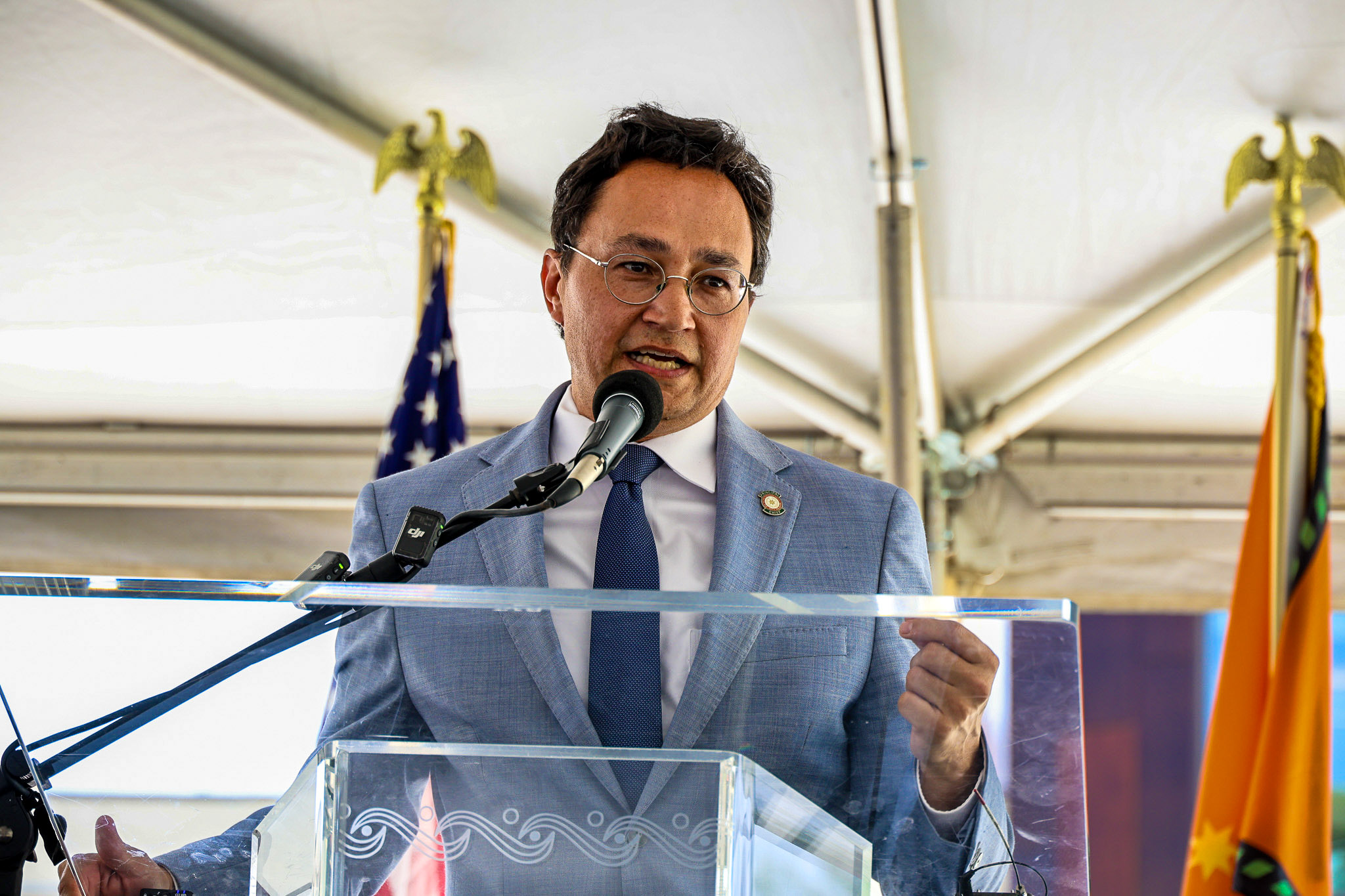
Cherokee Nation Proves Summer EBT Works
Monday, August 25, 2025
Cherokee Nation
Cherokee Nation stepped forward again this summer to meet a need too great to ignore: feeding hungry children.
During agrarian times, communities faced “hunger season” between planting and the harvest when food supplies would run low. Across Oklahoma and the Cherokee Nation Reservation, too many families face a modern hunger season each summer when school cafeterias are closed.
Cherokee Nation — along with neighboring tribes like Chickasaw Nation, Choctaw Nation and Muscogee Nation — shows that tribal governments in Oklahoma are leading the way when it comes to creating lasting solutions. Through the Summer Electronic Benefits Transfer program, the results from this summer are undeniable.
Cherokee Nation alone served nearly 50,000 students this summer. We served every eligible low-income child. Cherokee Nation invested $1.8 million from our budget and delivered $6 million in federal EBT funds for all eligible Oklahoma kids across our 7,000-square-mile reservation.
These funds not only helped feed Cherokee children but lifted entire communities. As a study conducted by the Indigenous Food and Agriculture Initiative clearly confirms, tribally administered Summer EBT significantly improves food security and ensures children have consistent access to healthy food during the summer months.
The funds made a difference for family budgets and local economies in northeast Oklahoma. We have heard years of hand wringing over inflation by politicians, particularly during election season. This rhetoric often seems to be all talk and no action. In contrast, Cherokee Nation actually did something about the impact of inflation. We delivered $6 million in grocery store spending power to families hit hardest by skyrocketing grocery prices. These low-income households spent those dollars locally, supporting their hometown economies.
Cherokee Nation’s commitment to food sovereignty and addressing hunger contrasts with the state of Oklahoma’s repeated refusal to participate in Summer EBT. While the state continues to decline federal resources that could feed hundreds of thousands of vulnerable children during the summer months, Cherokee Nation has embraced the responsibility. It is a choice we would make time and time again to ensure that our citizens, especially our youth, do not go hungry. Oklahoma’s decision is not only bad economics, it is unconscionable given the hunger issues in this state.
This is a guiding principle for us and an obligation to provide for our people on our own terms. It is rooted in our value of Gadugi, working together for the greater good, and our sovereign right of self-determination.
State elected leaders declined their duties, and Cherokee Nation continues to step up when they retreat. We will feed all children in need in northeast Oklahoma — Native and non-Native alike.
This effort is not a political stunt. We live in one of the 10 hungriest states in the country. It is a moral responsibility. Oklahoma’s refusal to participate is a moral failure, but one that the state can reverse next year if Governor Kevin Stitt will sign up for the program.
Just because it was an easy moral decision does not mean it was easy to implement. I want to personally thank our staff who worked tirelessly to enroll families, process benefits, and provide support.
According to the national hunger report, 82% of families receiving Summer EBT through tribes reported they had enough fruits and vegetables, compared with just 57% among non-participants. Well-nourished students have improved educational outcomes, adding long-term value to our investment beyond the initial value of turning federal dollars into meals. It turns out that providing resources to low-income families and empowering them to address their food needs actually works.
Tribal governments should not have to do this alone. The USDA systems are designed for states, not tribes. Despite the barriers, we proved Summer EBT works in Indian Country. With the right support, we can reach even more families.
For Cherokee Nation, this critical work is about more than numbers. It’s about the dignity of parents who no longer have to worry about the best way to stretch groceries to the end of the week. It’s about our youth being able to enjoy their summer and return to school well-nourished and ready to succeed. It’s about honoring our responsibility as Cherokees to care for our most vulnerable citizens.
Feeding children is not just a good political policy — it is the right thing to do.
Chuck Hoskin Jr.
is the 18th elected Principal Chief of the Cherokee Nation, the largest Indian
tribe in the United States. He is only the second elected Principal Chief of the
Cherokee Nation from Vinita, the first being Thomas Buffington, who served from
1899-1903. Prior to being elected Principal Chief, Hoskin served as the tribe’s
Secretary of State. He also formerly served as a member of the Council of the
Cherokee Nation, representing District 11 for six years.
Search
Filed Under
Tags
More Headlines
Testimony: Alicia Puente Cackley, Government Accountability Office
Testimony: Hilary Atkin, Department of Housing and Urban Development
Testimony: Bryan Warner, Cherokee Nation
VIDEO: H.R.741 – Stronger Engagement for Indian Health Needs Act of 2025
VIDEO: H.R.6021 – Archie Cavanaugh Migratory Bird Treaty Clarification Act
Senate Committee on Indian Affairs takes up Native housing
Native America Calling: Native advocates assess barriers to upcoming elections
Native America Calling: An Indigenous-led opera retells a historic Tlingit act of resistance
Native America Calling: Shifting preservation policies pose risks to Native history
Chuck Hoskin: Cherokee Nation makes tribal government easy to reach
Native America Calling: Persistent heat puts strain on people, the environment, and the economy
Chuck Hoskin: Cherokee Nation creates opportunities close to home
Native America Calling: Increasing hurdles and uncertainty put strains on Native beef producers and farmers
Chuck Hoskin: Cherokee Nation keeps our language alive
‘Let’s go’: Peggy Flanagan wins Democratic primary for U.S. Senate seat in Minnesota
More Headlines
Testimony: Hilary Atkin, Department of Housing and Urban Development
Testimony: Bryan Warner, Cherokee Nation
VIDEO: H.R.741 – Stronger Engagement for Indian Health Needs Act of 2025
VIDEO: H.R.6021 – Archie Cavanaugh Migratory Bird Treaty Clarification Act
Senate Committee on Indian Affairs takes up Native housing
Native America Calling: Native advocates assess barriers to upcoming elections
Native America Calling: An Indigenous-led opera retells a historic Tlingit act of resistance
Native America Calling: Shifting preservation policies pose risks to Native history
Chuck Hoskin: Cherokee Nation makes tribal government easy to reach
Native America Calling: Persistent heat puts strain on people, the environment, and the economy
Chuck Hoskin: Cherokee Nation creates opportunities close to home
Native America Calling: Increasing hurdles and uncertainty put strains on Native beef producers and farmers
Chuck Hoskin: Cherokee Nation keeps our language alive
‘Let’s go’: Peggy Flanagan wins Democratic primary for U.S. Senate seat in Minnesota
More Headlines