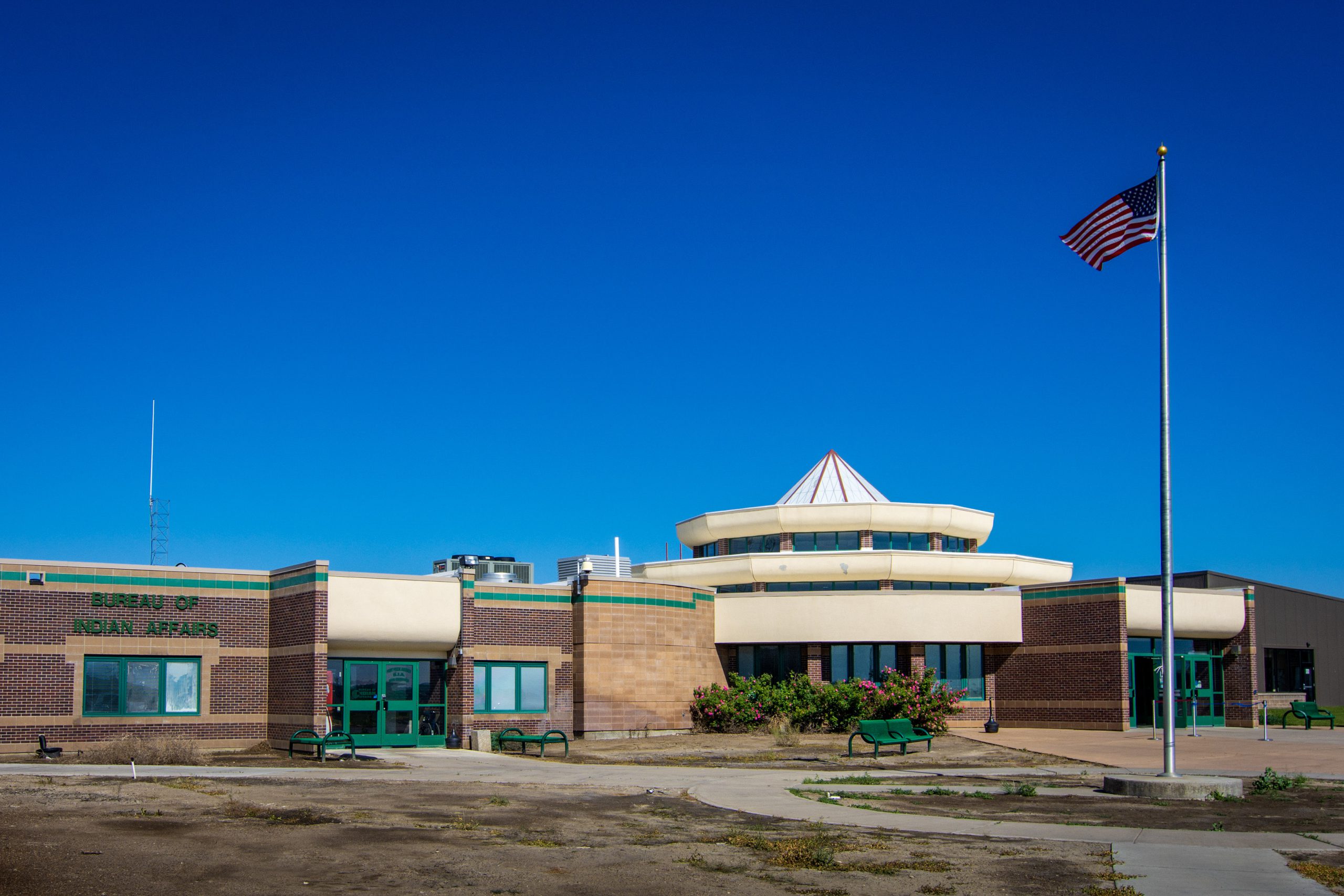
Fort Peck tribal members are suing Valley County seeking satellite voting locations, arguing that Indigenous voters have poor access to the polls.
Attorneys for the tribal voters say the absence of satellite voting locations in Frazer and Poplar violates the rights of the Fort Peck Assiniboine and Sioux tribes. Voters must drive 23 miles one way to vote in person and receive basic voter assistance available off the reservation. The reservation straddles Valley and Roosevelt counties. The tribes have asked both to improve voting access for tribal members in this year’s election.
The plaintiffs in the lawsuit, filed Monday in state District Court, are Sariah Old Elk, Terry Thompson, Angie Toce, Joseph Dolezilek, Delane Blount and Brandi Long-White. County commissioners in both Valley and Roosevelt counties, as well as Secretary of State Christi Jacobsen, are defendants.
One challenge, said Brett Healy, who specializes in voting rights in Indian Country, is that county courthouses, where local elections are headquartered, were located more than a century ago in off-reservation communities.
“The locations of these courthouses were a political decision mostly made in the West before Indians had the right to vote or had citizenship, and certainly long before there was an effective voting power,” Healy said. “And then the other portion of it is the vote by mail portion. Too many people say, ‘Well, that’s easy.’
“The U.S. postal system is inherently unequal because it’s still trapped in the amber of the 1900s, of where these postal locations are located and especially where they were not. They were not on Indian reservations.”
In-person voting begins October 8 in Montana. Absentee ballots will be mailed October 11.
The Valley County Clerk and Recorder, who oversees elections, declined to discuss satellite voting locations on the Fort Peck Reservation when contacted by Montana Free Press on Friday.
NEW: Indigenous voters in Montana are suing over officials' refusal to open satellite election offices on the Fort Peck Reservation. The lawsuit claims that the nearest poll sites are 20 to 30 miles away, unlawfully burdening voters on the reservation. https://t.co/hHx6yrxXUG
— Democracy Docket (@DemocracyDocket) October 1, 2024
The Fort Peck Tribes have offered county election officials building space and volunteers to staff satellite voting locations. Medicine Bear Complex in Poplar and the Freda Fourstar Omak’ce “One With Many Children” Community Hall in Frazer are locations the tribes would like to see used this election cycle. There were 1,100 people counted in those communities in the 2020 census.
The closest current polling place to Poplar is in Wolf Point, a 46-mile round trip. The over and back from Frazer to Glasgow is 58 miles. Federal courts have previously ruled that a 16-mile distance between Indigenous communities and polling places is too far, said Healy, who has successfully brought voting rights lawsuits in Nevada, Arizona, South Dakota and Montana.
In 2015, Indigenous voters compelled then Secretary of State Linda McCulloch to create satellite election locations on reservations. The result was a requirement that counties give tribal governments a month’s notice to request satellite voting sites.
Counties were obligated to study whether satellite offices were necessary.

The Fort Peck Tribes indicate that they haven’t seen any analysis from the counties, though they have asked for it. The 2015 agreement required tribes to provide a site for the satellite location, complete with phone and Internet connections, which the Fort Peck Tribes are offering to provide.
In 2012, Indigenous voters partnered with the American Civil Liberties Union to sue for voting access. The voters won, but only one Montana county, Big Horn, where the Crow Reservation is located, had followed through by 2014. In several cases, tribes across the state didn’t make their requests for satellite offices within the allowed one-month period.
Note: This story originally appeared on Montana Free Press. It is published under a Creative Commons license.Native America Calling: Native authors and book sellers reflect on a record year for banned books
Native America Calling: Native Playlist with Jeremy Dutcher and Mali Obomsawin
Native America Calling: What removing questions about race from the U.S. Census means for Native Americans
Chuck Hoskin: Cherokee Nation employees serve their communities
Native America Calling: One tribe breaks from the pack on prediction markets
Native America Calling: Finding success through the art of contemporary horsemanship
Testimony: Stephanie Bryan, Poarch Band of Creek Indians
Testimony: Michell Hicks, Eastern Band of Cherokee Indians
Testimony: Mark Macarro, Pechanga Band of Indians
Testimony: Patricia Leach, Catawba Nation
Testimony: Bryan Mercier, Bureau of Indian Affairs
Senate Committee on Indian Affairs holds business meeting and legislative hearing
Native America Calling: How Indigenous voices adapt to rapidly-evolving media
Native America Calling: PBS documentary ‘Knowledge Keepers’ explores Native scientific innovations
More Headlines