
However, Native interest in COVID-19 immunity has fallen considerably since the onset of the pandemic more than three years ago. According to data from the Centers for Disease Control and Prevention (CDC), only 81 percent of American Indian and Alaska Native adults received at least one dose of the vaccine as of March 2023, the lowest rate among all racial and ethnic groups in the United States. According to the data, only 75.8 percent of Native adults completed their “primary series” of the COVID-19 vaccine — which again was the lowest rate among racial and ethnic groups. Even as additional boosters have become available, rates of participation among American Indian and Alaska Native adults have not kept up with the rest of the nation. “Vaccination remains the best protection against COVID-19-related hospitalization and death,” Roselyn Tso, a citizen of the Navajo Nation who serves as director of the Indian Health Service, said after the latest vaccines received federal approval. “The virus that causes COVID-19 is always changing, and protection from COVID-19 vaccines declines over time,” Tso said in the September 22 statement. Hundreds of tribal leaders are expected to attend the White House Tribal Nations Summit, which Biden resumed after taking office in January 2021. The first event took place on November 15-16 of that year virtually due to the COVID-19 pandemic, which at the time had led to widespread closures and limited operations across Indian Country."She encourages everyone to stay current on their vaccinations so that, if they are exposed, they too will have milder symptoms," the Department of the Interior said in the statement.
— indianz.com (@indianz) December 4, 2023
The White House Tribal Nations Summit is taking place in Washington, D.C., on December 6-7.
As tribes and the rest of the nation opened their doors, the second White House Tribal Nations Summit was held in person at Interior’s headquarters in Washington on November 30 and December 1, 2022. The third event comes amid changes to Biden’s Indian affairs team in D.C. “Since day one, the administration has made our nation-to-nation relationships with tribal nations a top priority,” said Rose Petoskey, a citizen of the Grand Traverse Band of Ottawa and Chippewa Indians who recently joined the Biden administration as Senior Advisor to the White House Office of Intergovernmental Affairs and Director of Tribal Affairs. In remarks at the 80th annual convention of the National Congress of American Indians on November 13, Petoskey said she had been on the job at the White House for just three weeks. Previously, she had worked as a counselor to Assistant Secretary for Indian Affairs Bryan Newland, who also spoke at NCAI’s meeting in New Orleans, Louisiana, last month. “As in the past, the Tribal Nations Summit will feature new administration announcements and updates in our work to implement vital policy initiatives supporting tribal communities,” Petoskey said at NCAI. “The summit brings tribal leaders and top administrative officials together to have meaningful conversations about the most important issues facing tribal communities.” In her role in the nation’s capital, Petoskey succeeds PaaWee Rivera, a citizen of the Pueblo of Pojoaque who had been part of the Biden administration since January 2021. She was joined at NCAI’s convention by another relatively new member of the team — Elizabeth Reese, a citizen of the Pueblo of Nambe who serves as Senior Policy Advisor for Native Affairs at the White House. At NCAI, Reese pointed out that Biden has nominated, appointed and hired a “record number” of Native people to high-ranking jobs in the U.S. government. She said more than 80 are serving in key roles — including four federal judges confirmed so far, plus the first Native Hawaiian federal judge. “All of us Native people who are continuing to fight for Indian Country are part of an administration that is truly committed to supporting tribal sovereignty and upholding our trust and treaty responsibilities,” Reese told NCAI on November 13. “And to working in partnership with tribal nations to advance prosperity, dignity and safety for Native peoples.”“We hope to see you all there”: Rose Petoskey (Grand Traverse Band), the new Senior Advisor and Tribal Affairs Director at White House Office of Intergovernmental Affairs, announces White House Tribal Nations Conference on December 6-7 in Washington DC. @ncai1944 #NCAI80 #WHTNC pic.twitter.com/DsanycXHTY
— indianz.com (@indianz) November 13, 2023
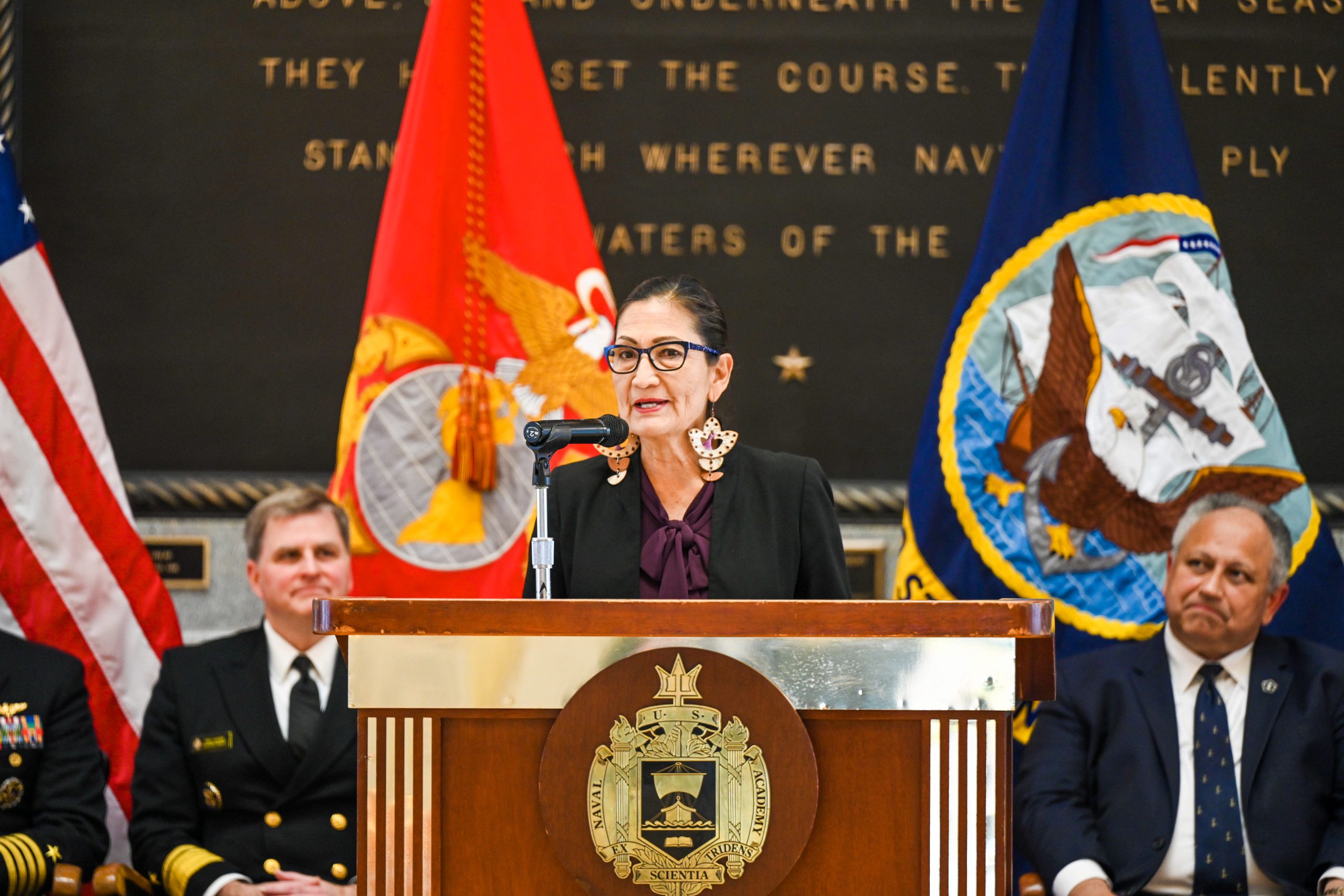
Biden is due to address the White House Tribal Nations Summit on Wednesday, the opening day of the event. He is also scheduled to take part in a campaign fundraiser on the same day as he mounts a second run for president. With the election taking place in November 2024, Biden and his team have been promoting numerous federal initiatives that have brought historic resources to Indian Country and to communities across the nation. As part of the effort, Haaland has been traveling widely, with recent trips to the state of Iowa, the Catawba Nation in South Carolina, the U.S. Naval Academy in Maryland, the state of Colorado and her home state of New Mexico. Even more recently, Haaland, Biden and First Lady Jill Biden took part in the lighting of the National Christmas Tree at the White House last Thursday. The Interior Department’s COVID-19 statement on Monday did not mention the secretary’s proximity to the president, unlike the June 2022 statement. “Thanks to the Interior Secretary Deb Haaland and the National Park Service Foundation,” Biden said at the ceremony. “They’re the one doing this.” Charles “Chuck” Sams III, a citizen of the Confederated Tribes of the Umatilla Indian Reservation, also took part in the National Christmas Tree Lighting on November 30. He is the first Native person to serve as director of the National Park Service, which is part of Interior. Haaland, a citizen of the Pueblo of Laguna, is the first Native person to lead Interior, the federal agency with the most trust and treaty responsibilities to tribes and their citizens. She also is the first Native person to serve in a presidential cabinet.“It’s about keeping our promises”: Elizabeth Reese (Nambe Pueblo), Senior Policy Advisor for Native Affairs at White House Domestic Policy Council, says President Joe Biden will oppose Republican efforts to cut historic levels of Indian Country funding. @ncai1944 #NCAI80 @POTUS pic.twitter.com/diAt59TRfn
— indianz.com (@indianz) November 13, 2023

Native America Calling: What removing questions about race from the U.S. Census means for Native Americans
Chuck Hoskin: Cherokee Nation employees serve their communities
Native America Calling: One tribe breaks from the pack on prediction markets
Native America Calling: Finding success through the art of contemporary horsemanship
Testimony: Stephanie Bryan, Poarch Band of Creek Indians
Testimony: Michell Hicks, Eastern Band of Cherokee Indians
Testimony: Mark Macarro, Pechanga Band of Indians
Testimony: Patricia Leach, Catawba Nation
Testimony: Bryan Mercier, Bureau of Indian Affairs
Senate Committee on Indian Affairs holds business meeting and legislative hearing
Native America Calling: How Indigenous voices adapt to rapidly-evolving media
Native America Calling: PBS documentary ‘Knowledge Keepers’ explores Native scientific innovations
Testimony: Alicia Puente Cackley, Government Accountability Office
Testimony: Hilary Atkin, Department of Housing and Urban Development
More Headlines