Indianz.Com > News > Chuck Hoskin: Cherokee Nation works to preserve our language
Cherokee Nation’s efforts in language preservation honored by First Lady
Monday, December 13, 2021
Cherokee Nation
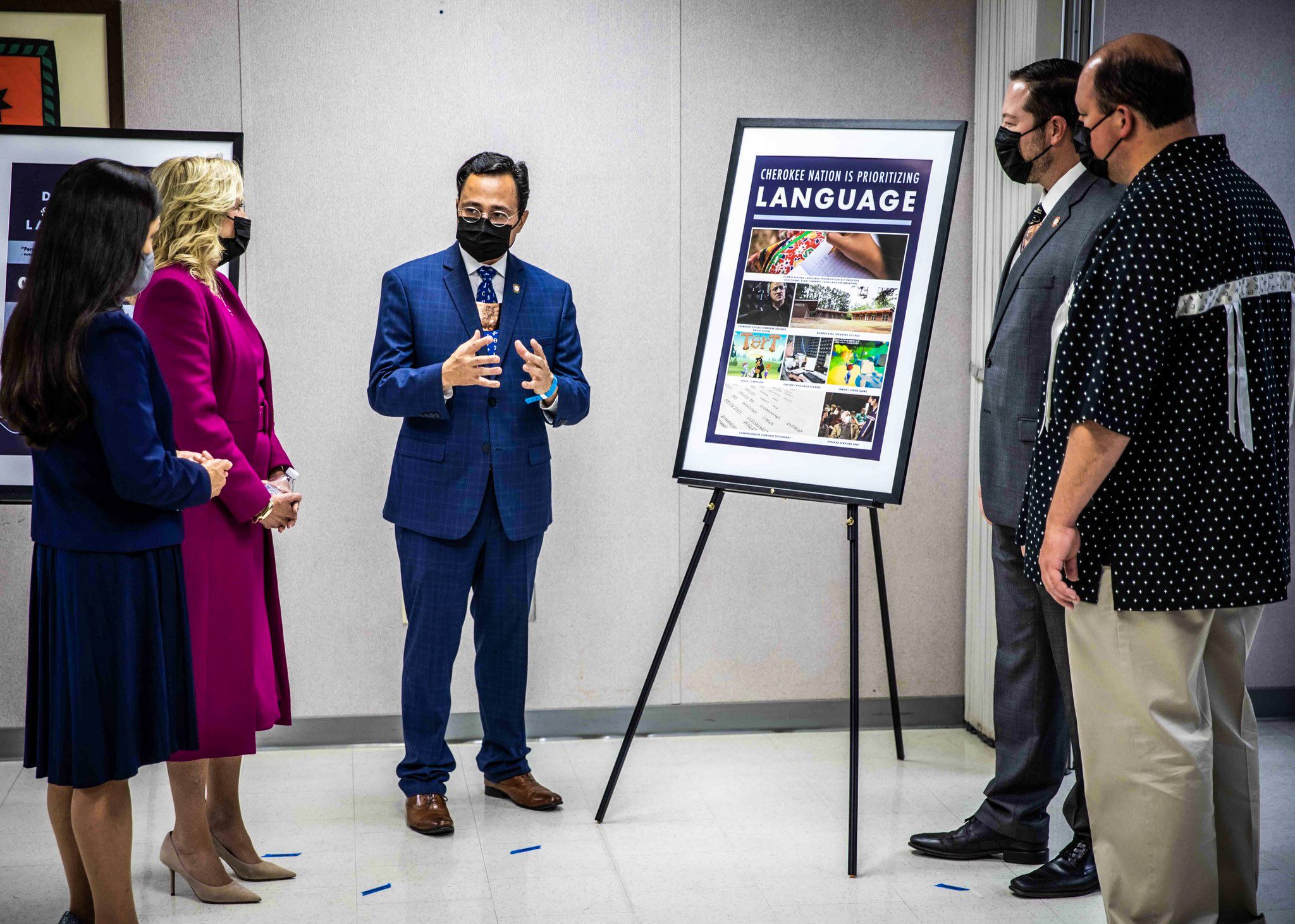
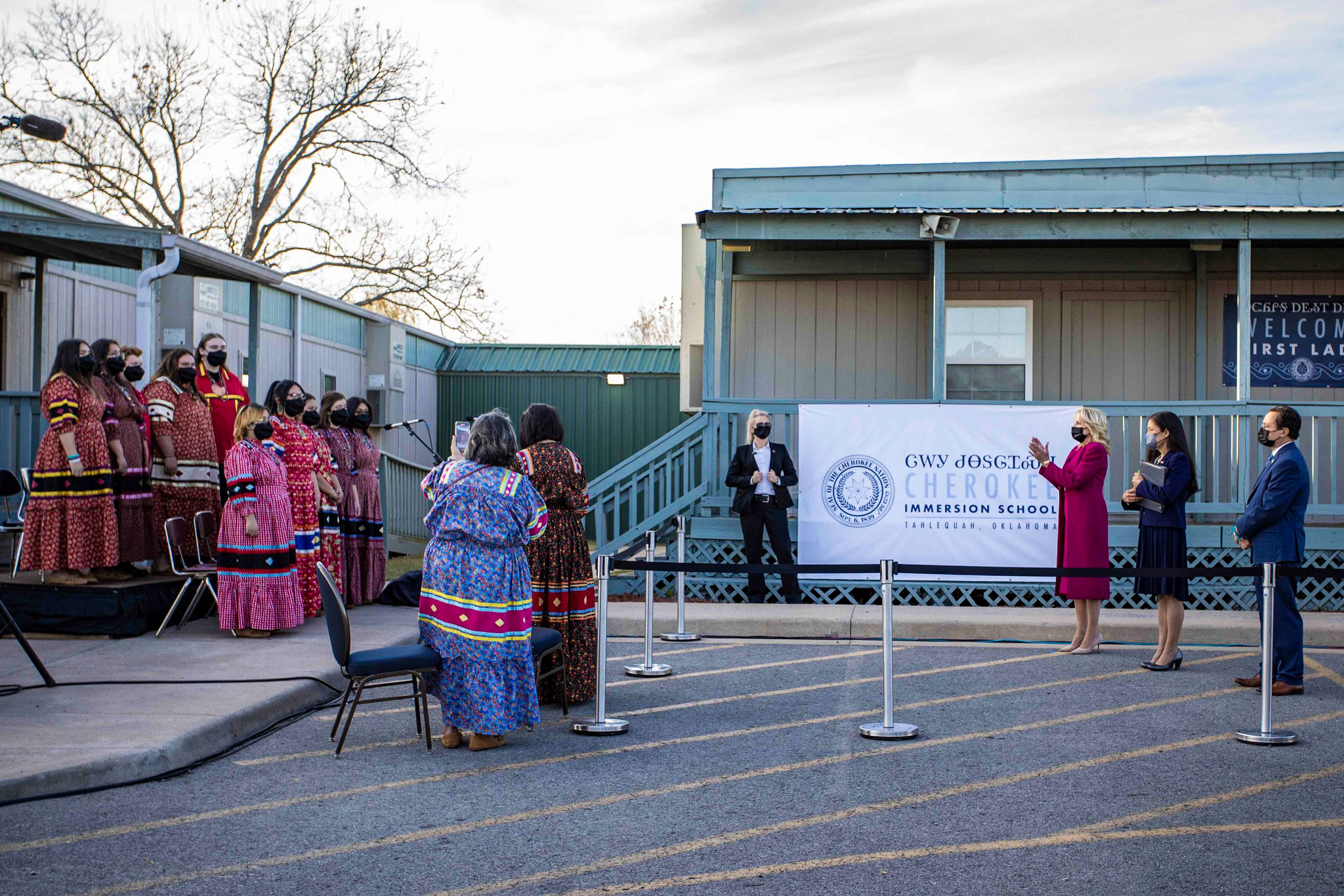
On a truly historic afternoon in early December, we hosted First Lady Dr. Jill Biden and U.S. Secretary of the Interior Deb Haaland on the Cherokee Nation Reservation to review our unique language development programs. We were honored to have this recognition from the highest levels of the U.S. government for our efforts to preserve and grow the Cherokee language.
The visiting dignitaries heard a performance in Cherokee by the Cherokee National Youth Choir, toured our Cherokee Immersion School, spoke with students and teachers at the school, and learned more about our many language programs.
Across our 7,000-square-mile reservation and in Cherokee homes across the country, we know our cultural identity is fundamentally rooted in our language. The Cherokee language is an unbroken chain that links back to time immemorial. It has survived despite extraordinary odds, outlasting European contact and colonization, war, and forced removal on the Trail of Tears. Our language outlasted a federal Indian policy that for most of the 20th century — the time of my grandfather’s generation — threatened to dismantle the entire Cherokee Nation.
Chuck Hoskin Jr.
is the 18th elected Principal Chief of the Cherokee Nation, the largest Indian
tribe in the United States. He is only the second elected Principal Chief of the
Cherokee Nation from Vinita, the first being Thomas Buffington, who served from
1899-1903. Prior to being elected Principal Chief, Hoskin served as the tribe’s
Secretary of State. He also formerly served as a member of the Council of the
Cherokee Nation, representing District 11 for six years.
Search
Filed Under
Tags
More Headlines
Press Release: National Museum of the American Indian hosts Native art market
AUDIO: Sea Lion Predation in the Pacific Northwest
Native America Calling: Tribal colleges see an uncertain federal funding road ahead
Native America Calling: Short films taking on big stories
Native America Calling: Advocates push back against new obstacles to Missing and Murdered Indigenous Relatives momentum
Native America Calling: For all its promise, AI is a potential threat to culture
NAFOA: 5 Things You Need to Know this Week (November 24, 2025)
Chuck Hoskin: Cherokee Nation invests in rural transportation
Native America Calling: Native candidates make strides in local elections
National Congress of American Indians returns incumbents and welcomes newcomers to leadership
National Congress of American Indians chooses leadership at big convention
‘Not voting is still a vote’: Native turnout drops amid changes in political winds
Native America Calling: Indigenous voices speak up, but have little clout at COP30
‘It’s bull****’: Indian Country confronts challenges at largest inter-tribal conference
Native America Calling: The constant burden on tribal hunters to justify their treaty rights
More Headlines
AUDIO: Sea Lion Predation in the Pacific Northwest
Native America Calling: Tribal colleges see an uncertain federal funding road ahead
Native America Calling: Short films taking on big stories
Native America Calling: Advocates push back against new obstacles to Missing and Murdered Indigenous Relatives momentum
Native America Calling: For all its promise, AI is a potential threat to culture
NAFOA: 5 Things You Need to Know this Week (November 24, 2025)
Chuck Hoskin: Cherokee Nation invests in rural transportation
Native America Calling: Native candidates make strides in local elections
National Congress of American Indians returns incumbents and welcomes newcomers to leadership
National Congress of American Indians chooses leadership at big convention
‘Not voting is still a vote’: Native turnout drops amid changes in political winds
Native America Calling: Indigenous voices speak up, but have little clout at COP30
‘It’s bull****’: Indian Country confronts challenges at largest inter-tribal conference
Native America Calling: The constant burden on tribal hunters to justify their treaty rights
More Headlines