Indianz.Com > News > Assistant Secretary nominee Bryan Newland vows to ‘build back better’ after COVID-19
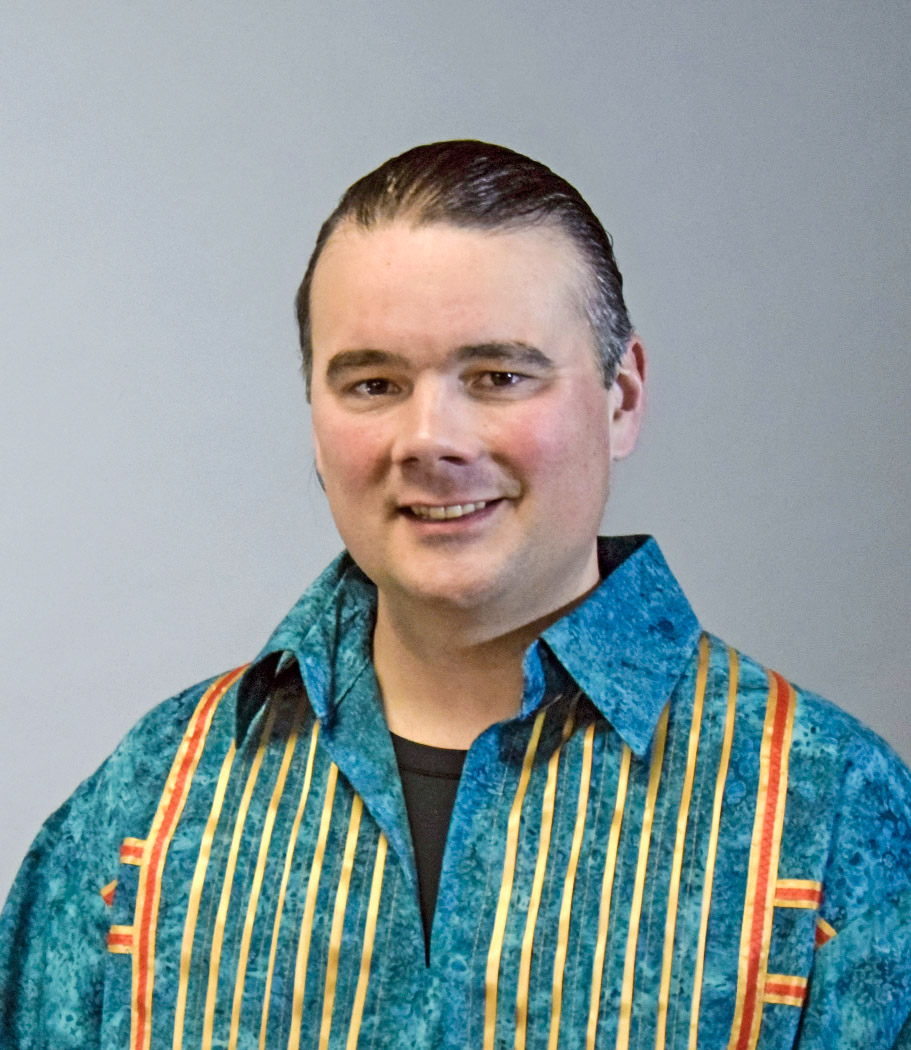
Assistant Secretary nominee Bryan Newland vows to ‘build back better’ after COVID-19
Bay Mills citizen comes directly from tribal government to Biden administration
Wednesday, June 9, 2021
Indianz.Com
• LIVE at 2:30PM Eastern: Nomination Hearing
WASHINGTON, D.C —
It’s a big day for Bryan Newland, who has been nominated to serve as the Assistant Secretary for Indian Affairs in the Joe Biden administration.
Newland, a citizen of the Bay Mills Indian Community, goes before the
Senate Committee on Indian Affairs for his nomination hearing on Wednesday afternoon. He
prepared an opening statement as part of the confirmation process, highlighting his goals and priorities should he be confirmed by the U.S. Senate.
“If confirmed, I will bring that perspective with me to the Department of the Interior. We must help Indian Country build back better after the pandemic,” Newland says in his written testimony. “We must also respond with urgency to the violence against Indigenous women and children. And we must lay the foundation for the next generation of Native children to succeed.”
“I believe that tribal governments, rather than federal agencies, are best-suited to respond to the challenges their communities face,” continues Newland, who currently serves as Principal Deputy Assistant Secretary for Indian Affairs at the Department of the Interior. “Our job is to be a collaborative trustee and ensure that Indian Country drives our work.”
“With your consent, I will be a leader for these important efforts,” Newland tells the committee.
newland060921
Newland, an attorney, previously served at Interior during the Barack Obama administration. In his prepared remarks, he cites his efforts to help strengthen tribal sovereignty over their own homelands through laws like the Helping Expedite and Advance Responsible Tribal Home Ownership Act, also known as the HEARTH Act.
“We reformed leasing on Indian lands, putting timelines in place so that other families wouldn’t have the same delays my parents faced,” Newland states in reference to his upbringing on his tribe’s reservation in Michigan, where he lived in tribal housing before his family became the first in the community with a home mortgage backed by the Bureau of Indian Affairs.
“Working with this committee, we saw the bipartisan enactment and implementation of the HEARTH Act, putting tribes back in control of leasing and home mortgages on tribal lands,” he says of his prior efforts at Interior.
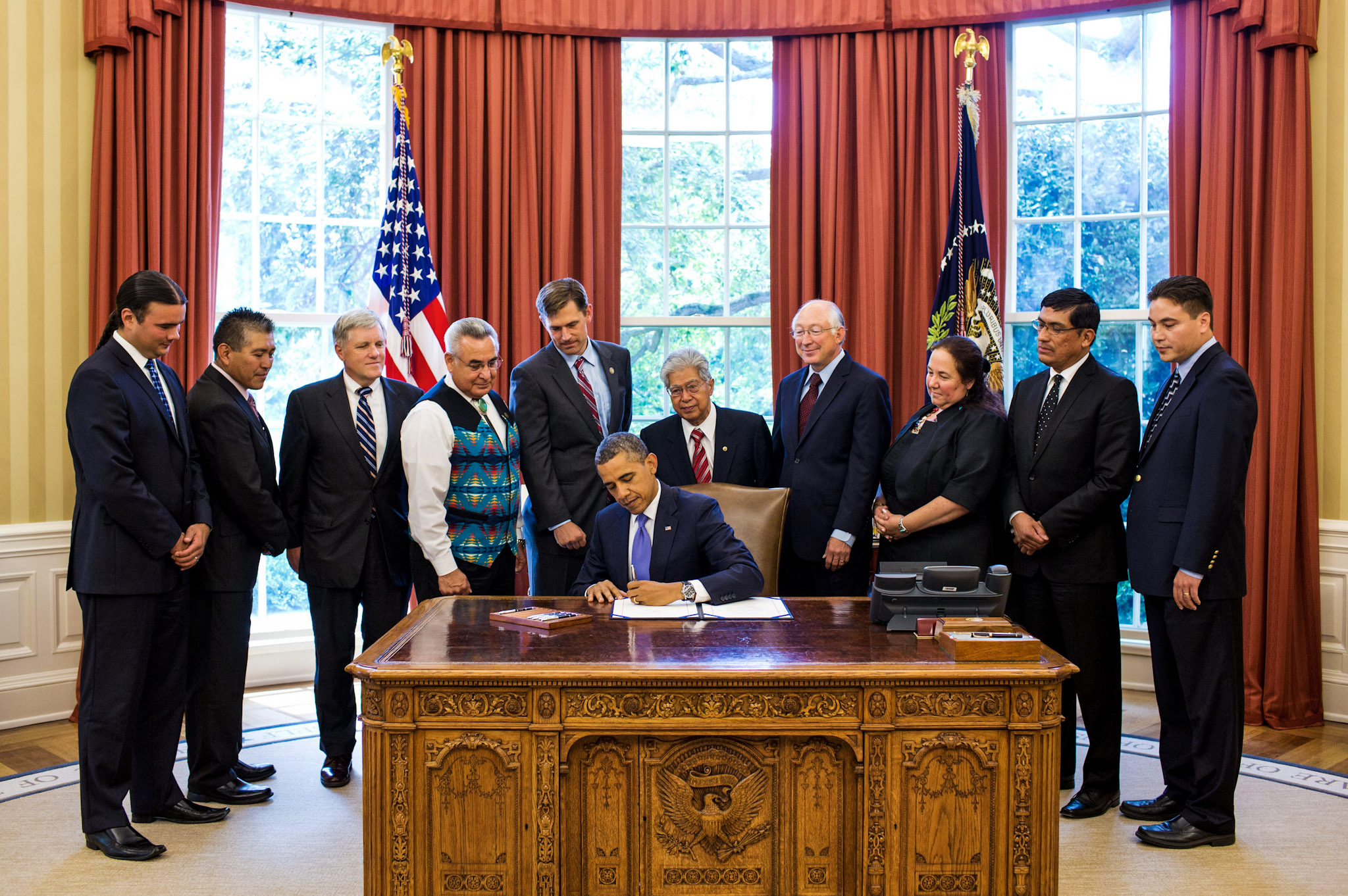 President Barack Obama signs the Helping Expedite and Advance Responsible Tribal Home Ownership Act, also known as the HEARTH Act, into law at the White House on July 30, 2012. Bryan Newland, who was serving as a policy adviser at the Department of the Interior at the time, is seen on the far left.
Photo: Pete Souza / White House
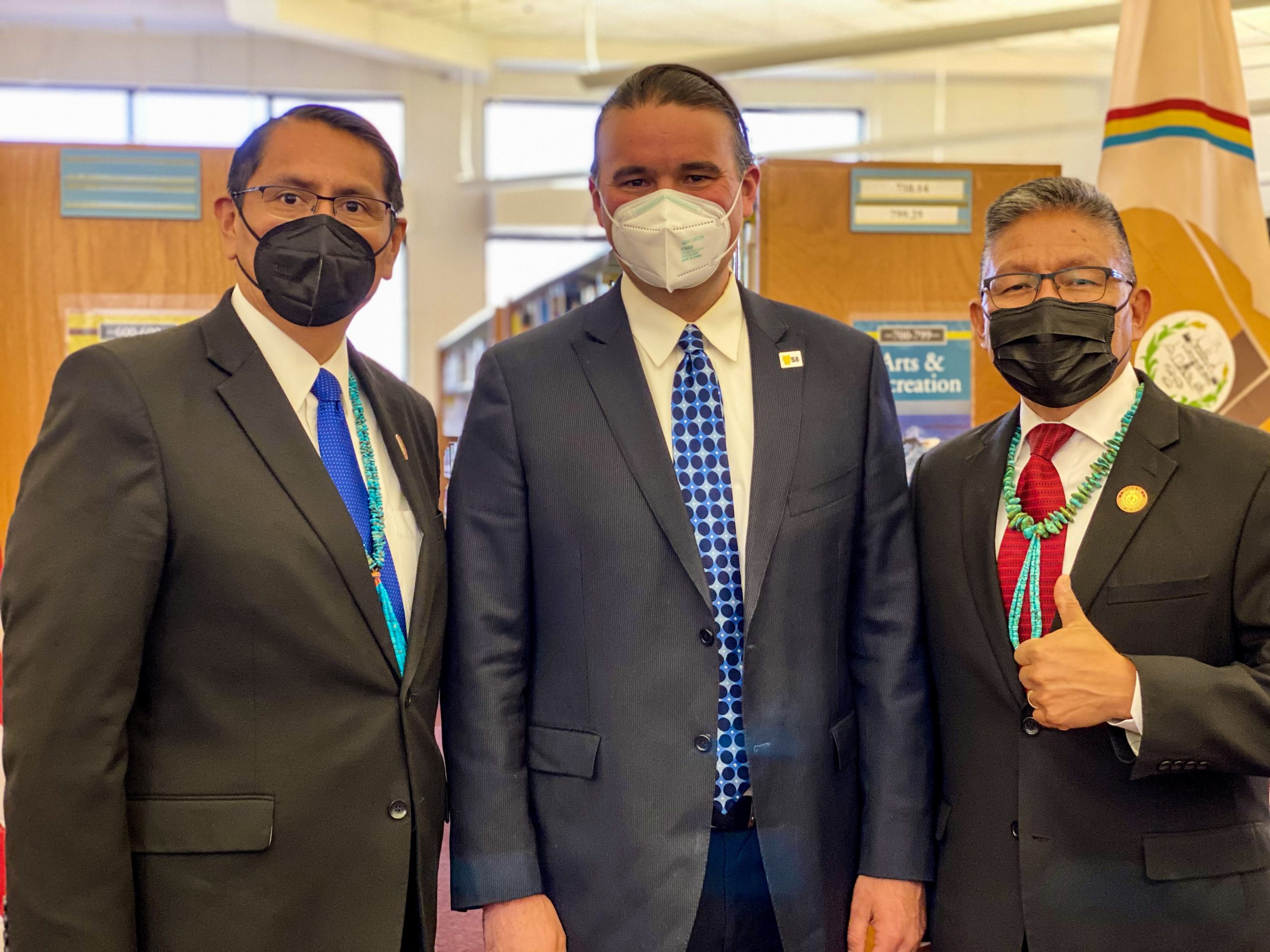 From left, Navajo Nation President Jonathan Nez, Assistant Secretary of Indian Affairs nominee Bryan Newland and Navajo Nation Vice President Myron Lizer pose in Window Rock, Arizona, the capital of the Navajo Nation, on April 22, 2021. Photo: Navajo Nation Office of President and Vice President
Assistant Secretary for Indian Affairs
The Assistant Secretary for Indian Affairs post was established in 1977. It’s a political position at the Department of the Interior, meaning the person who is chosen is selected by the current president of the United States.
At Interior, the Assistant Secretary oversee the Bureau of Indian Affairs and the Bureau of Indian Education. The recently-created Bureau of Trust Funds Administration, which is taking over most of the duties of the Office of the Special Trustee for American Indians, also falls under the position.
If confirmed, Newland would be the 14th person to serve as the Assistant Secretary. All have hailed from federally-recognized tribal nations:
• 1977–1978: Forrest Gerard (Blackfeet Nation)
• 1979–1981: William E. Hallett (Ohkay Owingeh and Navajo Nation)
• 1981–1984: Kenneth L. Smith (Warm Springs Tribes)
• 1985–1989: Ross Swimmer (Cherokee Nation)
• 1989–1993: Eddie Frank Brown (Pascua Yaqui Tribe and Tohono O’odham Nation)
• 1993–1997: Ada E. Deer (Menominee Nation)
• 1997–2001: Kevin Gover (Pawnee Nation)
• 2001–2003: Neal A. McCaleb (Chickasaw Nation)
• 2004–2005: Dave Anderson (Lac Courte Oreilles Band of Lake Superior Ojibwe and Choctaw Nation)
• 2007–2008: Carl J. Artman (Oneida Nation)
• 2009–2012: Larry Echo Hawk (Pawnee Nation)
• 2012–2015: Kevin K. Washburn (Chickasaw Nation)
• 2018-2021: Tara “Katuk” Mac Lean Sweeney (Native Village of Barrow Traditional Iñupiat Government and Iñupiat Community of the Arctic Slope)
• 1979–1981: William E. Hallett (Ohkay Owingeh and Navajo Nation)
• 1981–1984: Kenneth L. Smith (Warm Springs Tribes)
• 1985–1989: Ross Swimmer (Cherokee Nation)
• 1989–1993: Eddie Frank Brown (Pascua Yaqui Tribe and Tohono O’odham Nation)
• 1993–1997: Ada E. Deer (Menominee Nation)
• 1997–2001: Kevin Gover (Pawnee Nation)
• 2001–2003: Neal A. McCaleb (Chickasaw Nation)
• 2004–2005: Dave Anderson (Lac Courte Oreilles Band of Lake Superior Ojibwe and Choctaw Nation)
• 2007–2008: Carl J. Artman (Oneida Nation)
• 2009–2012: Larry Echo Hawk (Pawnee Nation)
• 2012–2015: Kevin K. Washburn (Chickasaw Nation)
• 2018-2021: Tara “Katuk” Mac Lean Sweeney (Native Village of Barrow Traditional Iñupiat Government and Iñupiat Community of the Arctic Slope)
Senate Committee on Indian Affairs Notice
Nomination Hearing to consider Bryan Todd Newland to serve as Assistant Secretary for Indian Affairs, U.S. Department of the Interior (June 9, 2021)
Search
Filed Under
Tags
More Headlines
Press Release: National Museum of the American Indian hosts Native art market
AUDIO: Sea Lion Predation in the Pacific Northwest
Native America Calling: Tribal colleges see an uncertain federal funding road ahead
Native America Calling: Short films taking on big stories
Native America Calling: Advocates push back against new obstacles to Missing and Murdered Indigenous Relatives momentum
Native America Calling: For all its promise, AI is a potential threat to culture
NAFOA: 5 Things You Need to Know this Week (November 24, 2025)
Chuck Hoskin: Cherokee Nation invests in rural transportation
Native America Calling: Native candidates make strides in local elections
National Congress of American Indians returns incumbents and welcomes newcomers to leadership
National Congress of American Indians chooses leadership at big convention
‘Not voting is still a vote’: Native turnout drops amid changes in political winds
Native America Calling: Indigenous voices speak up, but have little clout at COP30
‘It’s bull****’: Indian Country confronts challenges at largest inter-tribal conference
Native America Calling: The constant burden on tribal hunters to justify their treaty rights
More Headlines
AUDIO: Sea Lion Predation in the Pacific Northwest
Native America Calling: Tribal colleges see an uncertain federal funding road ahead
Native America Calling: Short films taking on big stories
Native America Calling: Advocates push back against new obstacles to Missing and Murdered Indigenous Relatives momentum
Native America Calling: For all its promise, AI is a potential threat to culture
NAFOA: 5 Things You Need to Know this Week (November 24, 2025)
Chuck Hoskin: Cherokee Nation invests in rural transportation
Native America Calling: Native candidates make strides in local elections
National Congress of American Indians returns incumbents and welcomes newcomers to leadership
National Congress of American Indians chooses leadership at big convention
‘Not voting is still a vote’: Native turnout drops amid changes in political winds
Native America Calling: Indigenous voices speak up, but have little clout at COP30
‘It’s bull****’: Indian Country confronts challenges at largest inter-tribal conference
Native America Calling: The constant burden on tribal hunters to justify their treaty rights
More Headlines