Indianz.Com > News > Doug George-Kanentiio: The tragic legacy of Ruth Bader Ginsburg
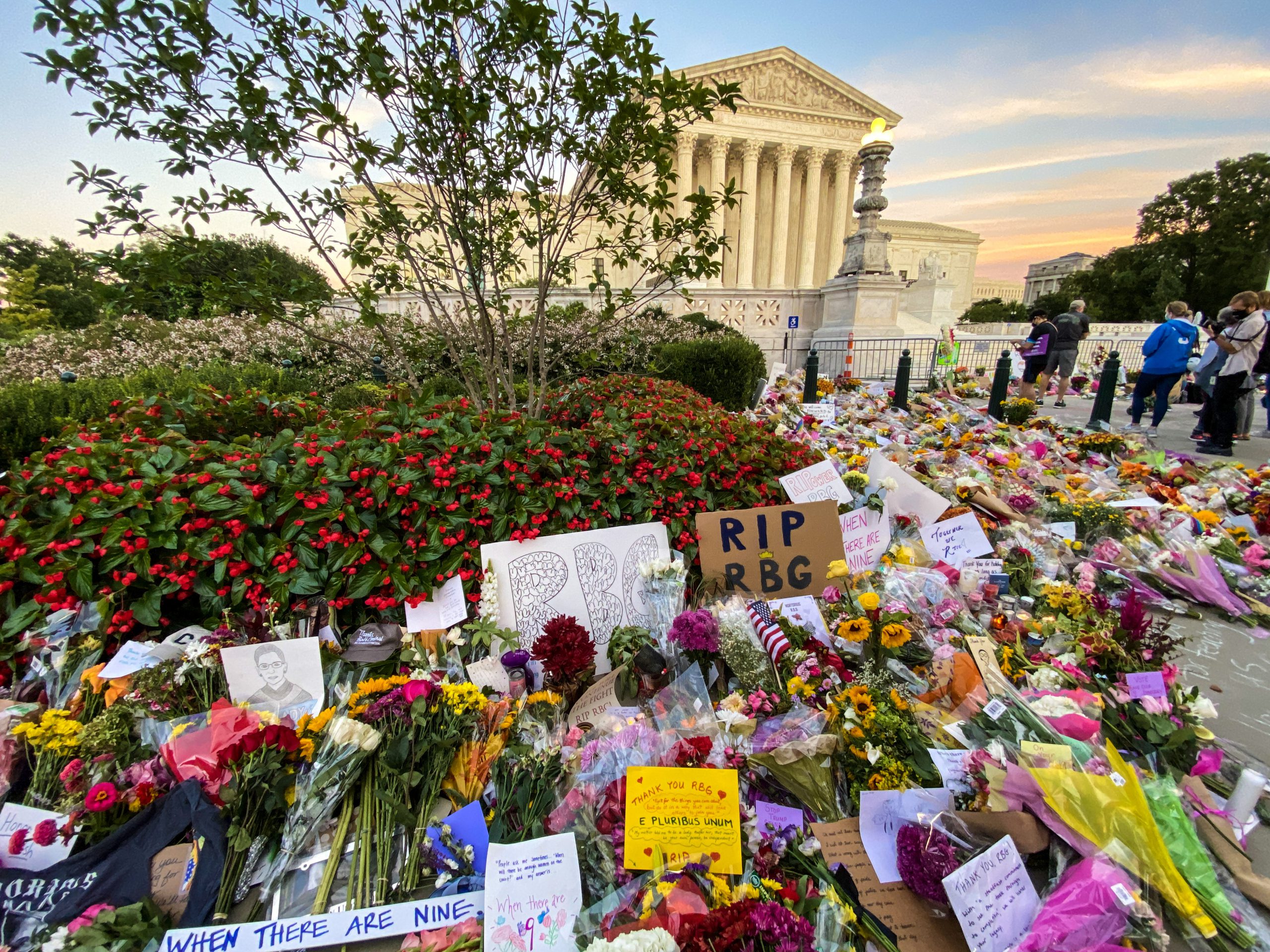
Ruth Bader Ginsburg and the Iroquois
A Tragic Legacy
Perhaps it is not that the late U.S. Supreme Court Justice Ruth Bader Ginsburg was hostile to Indigenous people but that in her legal career they had no presence, no bearing. They were, as she is cited in writing, advocates for a distinct status which was “rekindling the embers of sovereignty that long ago went cold.”
Justice Ginsburg was a rightfully praised defender of human rights and specifically those of women. She wanted them to enjoy full equality under American law and to brush aside those elements of discrimination which qualified their constitutional rights. She had difficulty in accepting the historical fact of aboriginal separation and the claim that a group of “Americans” would not only assert their independence but seek redress for the theft of their lands based upon the enforcement of treaty law.
Ginsburg would have a difficult time with the Haudenosaunee (Six Nations Iroquois) Confederacy since it specifically rejected U.S. citizenship, refused to endorse the suffragette cause in that it sought the right to vote, waged an ongoing struggle to compel individual states and the federal government to abide by their treaties and to have all levels of American government refrain from exercising any jurisdiction on its territories.
Towards the end of her career as a Justice she did become more sensitive to Native issues and supported the recent McGrit v. Oklahoma ruling which affirmed that indigenous people living on their treaty lands in eastern Oklahoma were exempt from state laws.
This Constitution, and the Laws of the United States which shall be made in Pursuance thereof; and all Treaties made, or which shall be made, under the Authority of the United States, shall be the supreme Law of the Land; and the Judges in every State shall be bound thereby, any Thing in the Constitution or Laws of any State to the Contrary notwithstanding.
Ginsburg ignored the intent and meaning of this section which binds the nation to adhere to its treaties and is the supreme law of the land without any time or legal qualification. As she tried to dismiss the claimants in the Sherrill case using a “laches” defense (when too much time has passed to warrant a legal claim) she ignored the fact that the Haudenosaunee can, and have, shown ongoing efforts to have their stolen lands returned to them and that at no instance in the past 216 years (and in some instances before) since the signing of the Canandiagua Treaty in 1794 has the Confederacy abandoned its press for justice.
But complicating the Sherrill case is that the plaintiff Oneida Indian Nation was not, and is not now, a member of the Confederacy. It can be shown that the Oneida Indian Nation has no basis as a government under either Haudenosaunee or U.S. laws and can only date its existence to 1992 when it was formed as a requisite for a gambling compact with New York State.
In effect, the Oneida Indian Nation was the weakest possible entity to press for the collective treaty rights of the Haudenosaunee. It did not exist in 1794 nor cannot prove it has governed the Oneida people since time immemorial.
The OIN was encouraged to pursue a disastrous legal tactic in which it threatened to name thousands of homeowners in the claim area as defendants. This led to the inevitable decision by the Supreme Court since it has never given such power to any Native nation nor has it acknowledged the self determination status of truly sovereign Native nations-a reasonable inference given Article 6.
Ginsburg also added another layer to all ready bad “Indian” law in that she affirmed the source of all U.S. claims to control over indigenous people is rooted in the racist series of edicts passed by the Catholic Church called the Doctrines of Discovery.
The papacy was throughly corrupt in the 15th century and the arrival of European ships into regions which were not Christian gave them access to wealth by trade which much of that consisting of slavery. Like the Romans before them the Church needed a thin veneer of legality to steal lands and enslave humans so the popes beginning with Nicholas V in 1452 and leading to the notorious Alexander VI (the Borgia pope) in 1493 held that any non-Christian entity could be forcibly subdued and their resources taken by a Christian power based upon “discovery.”
Perhaps Justice Ginsburg did not know her own ancestors were compelled to pay for Cristobal Colon’s journeys (aka Columbus) since their property was being taken by Queen Isabella and King Ferdinand as the Jews were forcibly expelled from a newly united Spain. It is said that ship loads of refugee Jews were departing for Africa at the port of Palos at the same time as Colon set sail westwards.
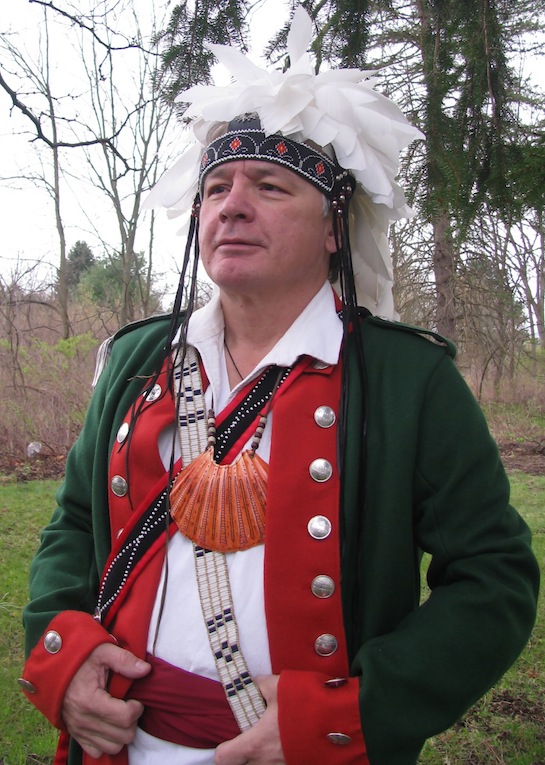
Doug George-Kanentiio, Akwesasne Mohawk, is the
vice-president of the Hiawatha Institute for Indigenous Knowledge. He has served
as a Trustee for the National Museum of the American Indian, is a former land
claims negotiator for the Mohawk Nation and is the author of numerous books and
articles about the Mohawk people. He may be reached via e-mail at:
Kanentiio@aol.com or by calling 315-415-7288.
Note: Content copyright © Doug George-Kanentiio
Search
Filed Under
Tags
More Headlines
Native America Calling: How a young Ponca activist shaped the future of Native activism
Native America Calling: Tribes remain excluded from some major water policy decisions
Native America Calling: Assessing college campus safety in light of troubling allegations at Cornell University
Native America Calling: Native authors and book sellers reflect on a record year for banned books
Native America Calling: Native Playlist with Jeremy Dutcher and Mali Obomsawin
Native America Calling: What removing questions about race from the U.S. Census means for Native Americans
Chuck Hoskin: Cherokee Nation employees serve their communities
Native America Calling: One tribe breaks from the pack on prediction markets
Native America Calling: Finding success through the art of contemporary horsemanship
Testimony: Stephanie Bryan, Poarch Band of Creek Indians
Testimony: Michell Hicks, Eastern Band of Cherokee Indians
Testimony: Mark Macarro, Pechanga Band of Indians
Testimony: Patricia Leach, Catawba Nation
Testimony: Bryan Mercier, Bureau of Indian Affairs
Senate Committee on Indian Affairs holds business meeting and legislative hearing
More Headlines
Native America Calling: Tribes remain excluded from some major water policy decisions
Native America Calling: Assessing college campus safety in light of troubling allegations at Cornell University
Native America Calling: Native authors and book sellers reflect on a record year for banned books
Native America Calling: Native Playlist with Jeremy Dutcher and Mali Obomsawin
Native America Calling: What removing questions about race from the U.S. Census means for Native Americans
Chuck Hoskin: Cherokee Nation employees serve their communities
Native America Calling: One tribe breaks from the pack on prediction markets
Native America Calling: Finding success through the art of contemporary horsemanship
Testimony: Stephanie Bryan, Poarch Band of Creek Indians
Testimony: Michell Hicks, Eastern Band of Cherokee Indians
Testimony: Mark Macarro, Pechanga Band of Indians
Testimony: Patricia Leach, Catawba Nation
Testimony: Bryan Mercier, Bureau of Indian Affairs
Senate Committee on Indian Affairs holds business meeting and legislative hearing
More Headlines