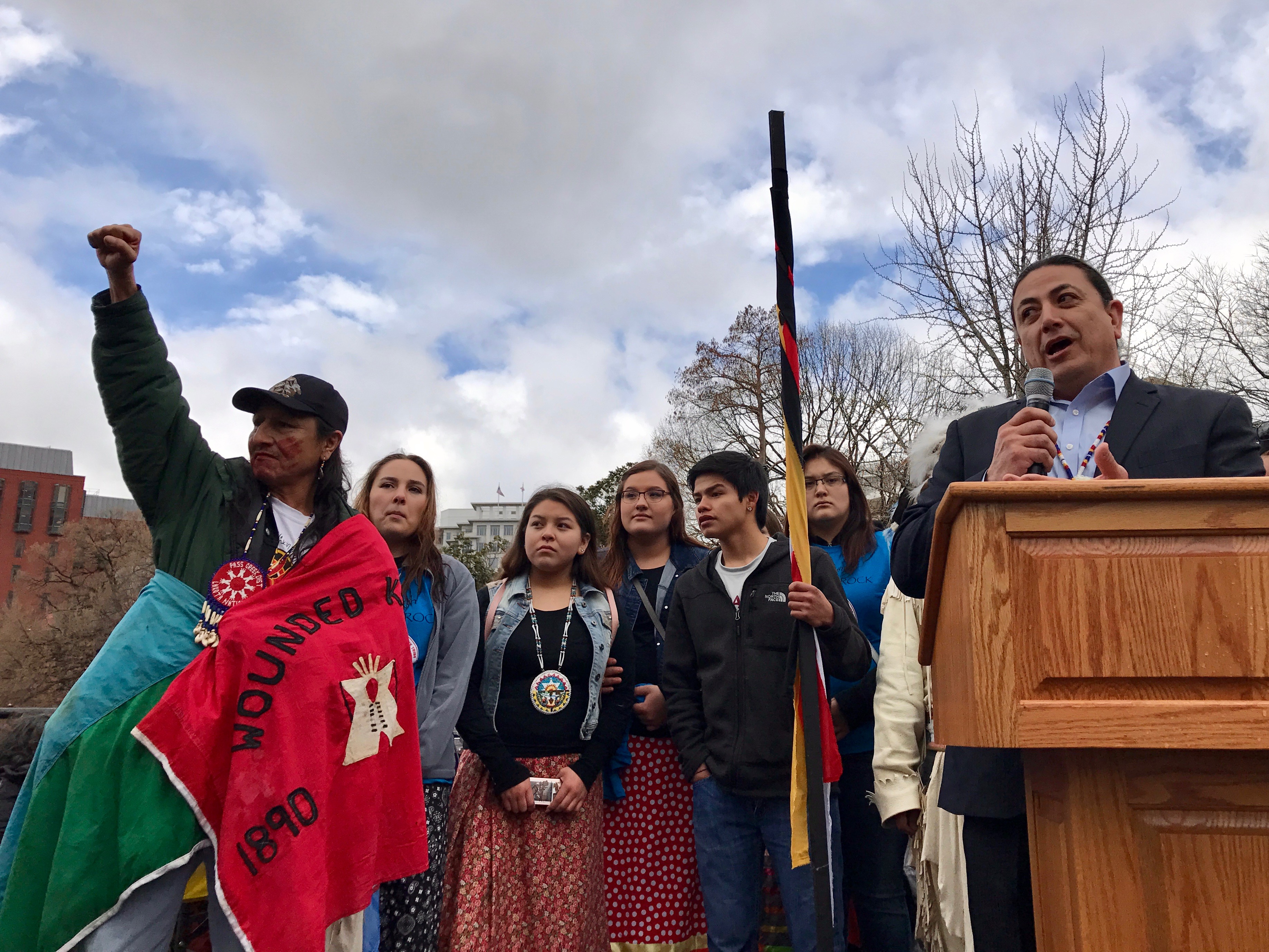
We will continue to battle the operation of this pipeline in court and remind everyone that just because the oil is flowing now doesn’t mean that it can’t be stopped
--Chairman Dave Archambault II, Standing Rock Sioux Tribe
The announcement came as the Advisory Council on Historic Preservation, an independent federal agency, released a report that was commissioned in response to the #NoDAPL movement. Tribes long complained about the lack of consultation regarding infrastructure projects and, more specifically, about the way they have been treated by the U.S. Army Corps of Engineers, which issued the easement for the pipeline in February. While the 20-page document is not binding on any federal agency, the council is urging the addition of tribal liaisons and the establishment of protocols that require decision-makers -- rather than staff -- consult with tribes. It also recommends companies that are seeking federal approval for projects to employ tribal experts. "I believe that federal projects, in particularly infrastructure development, and the preservation of our cultural resources are not mutually exclusive. Accordingly, the ACHP offers this report to encourage federal agencies to make significant improvements in their consultation with tribes affected by these infrastructure projects,” Milford Wayne Donaldson, the chairman of the council, said in a press release. Consultation is at the heart of the lawsuit in federal court. The tribes assert their concerns about sacred sites and other cultural resources were ignored by the Army Corps as it reviewed the path of the pipeline, which runs through a mix of public and private lands. The Obama administration rejected those claims as its responded to the case. But top officials were clearly bothered by the way the Army Corps handled the matter and looked for ways to delay the final easement in North Dakota in order to address the concerns. Even Obama suggested a reroute, a scenario envisioned by federal regulations. On December 4. 2016, as tens of thousands of veterans traveled to the #NoDAPL encampment, the Department of the Army announced that it wasn't going to approve the easement until the completion of an environmental impact statement, or EIS. The decision was seen as a huge victory for tribal interests. But the actual order for the EIS didn't come until January 18, barely two days before before Trump took office. On January 24, he signed an executive order that paved the way for the Army to cancel the review. “We will continue to battle the operation of this pipeline in court and remind everyone that just because the oil is flowing now doesn’t mean that it can’t be stopped,” Chairman Archambault said. “The courts can stop it by demanding that the administration be held accountable for the full environmental impact statement it initiated and then abandoned.” Advisory Council on Historic Preservation Report:
Improving Tribal Consultation in Infrastructure Projects (May 24, 2017)
Join the Conversation