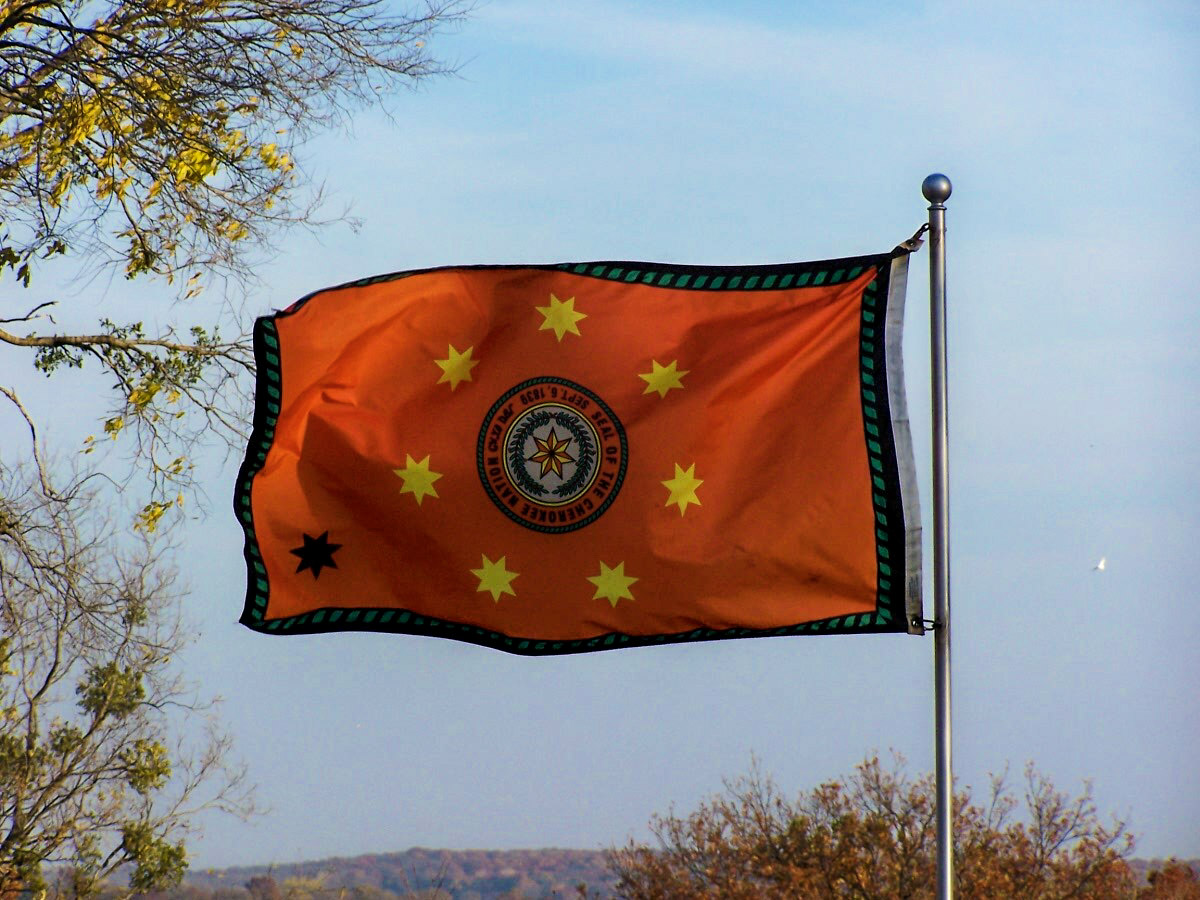
Throughout March, in recognition of Women’s History Month, we have celebrated and honored Cherokee women who have shaped our culture, our history and our future.
We are grateful for the powerful legacy of Cherokee women like Dr. Isabel Cobb, the first female physician in Indian Territory, and Mary Golda Ross, a trailblazing aerospace engineer who helped America win the space race. Cherokee Nation would not be what it is today without Wilma Mankiller, the first woman to serve as Principal Chief, and Sara Hill, the first Native woman to serve as a federal judge in Oklahoma.
Cherokee Nation is proud to be a matrilineal society where the strength of women is central to our identity. In the 1850s, we opened the Cherokee National Female Seminary – the first higher education institution for women west of the Mississippi. That commitment to empowering women continues today, especially in our modern government and workforce.
Today, women make up more than 71% of the Cherokee Nation’s nearly 6,000 employees, and 53% of our executive directors are women. Recently, we named three proven leaders to head up key departments – Sally Wilson in Indian Child Welfare; Patricia Kidwell Mancillas in ONE FIRE Victim Services; and Sydnee Krenek in Natural Resources. Their vision is shaping our Nation’s continued progress.
At the Cabinet level, women serve in critical leadership roles: Secretary of State Shella Bowlin, Treasurer Janees Taylor, Delegate to Congress Kim Teehee and Secretary of Natural Resources Christina Justice each bring expertise and dedication that strengthen our government and ensure we continue building a brighter future.
Cherokee women also hold over 40% of the seats on the Council of the Cherokee Nation, where they help shape policies that impact generations to come. Councilors Sasha Blackfox-Qualls, Candessa Tehee, Lisa Hall, Melvina Shotpouch, Kendra McGeady, Dora Patzkowski and Julia Coates are strong champions for their constituents and all Cherokees families.
We also honor those Cherokee women whose names may not be in the history books, but whose influence is no less powerful. They are mothers and grandmothers, sisters and aunts, teachers, social workers, lawyers, scientists, doctors and nurses, and so many other essential roles. They do not always receive the recognition they deserve, but without them, our families, communities, and economy would not function.
In the past few years, we have worked to establish a more female-friendly work environment with expanded leave policies and a higher minimum wage. These steps help our employees continue serving the Cherokee people while meeting their family obligations.
As we come to the end of Women’s History Month, we celebrate the Cherokee women — past and present — who propel our Nation forward and inspire future generations to lead.
Native America Calling: Alaska Native leadership and land rights advocacy through the generations
Native America Calling: Native in the Spotlight with Gabriella Cázares-Kelly
Native America Calling: How a young Ponca activist shaped the future of Native activism
Native America Calling: Tribes remain excluded from some major water policy decisions
Native America Calling: Assessing college campus safety in light of troubling allegations at Cornell University
Native America Calling: Native authors and book sellers reflect on a record year for banned books
Native America Calling: Native Playlist with Jeremy Dutcher and Mali Obomsawin
Native America Calling: What removing questions about race from the U.S. Census means for Native Americans
Chuck Hoskin: Cherokee Nation employees serve their communities
Native America Calling: One tribe breaks from the pack on prediction markets
Native America Calling: Finding success through the art of contemporary horsemanship
Testimony: Stephanie Bryan, Poarch Band of Creek Indians
Testimony: Michell Hicks, Eastern Band of Cherokee Indians
Testimony: Mark Macarro, Pechanga Band of Indians
More Headlines